
Cross-threading guide
How to reduce cross-threading on bottle capping machines.
Practical guide to reducing cross-threaded caps on bottle capping machines by improving cap placement, bottle alignment, torque and tooling.
Discuss this requirement →Cross-threading happens when the cap starts incorrectly on the bottle thread. It can cause leaks, poor appearance, rejects and customer complaints. The fix is usually a combination of cap placement, bottle alignment and controlled tightening.
Cross-threading happens when the cap starts incorrectly on the bottle thread. It can cause leaks, poor appearance, rejects and customer complaints. The fix is usually a combination of cap placement, bottle alignment and controlled tightening.
Practical guide to reducing cross-threaded caps on bottle capping machines by improving cap placement, bottle alignment, torque and tooling.
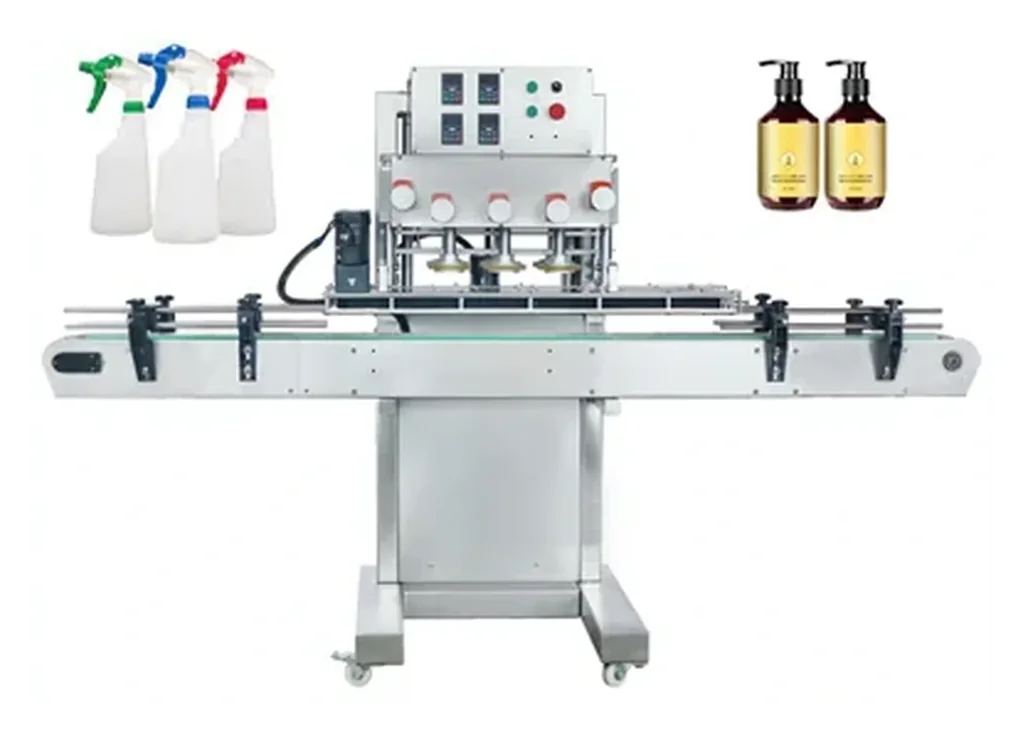
Discuss this requirement →A cap that lands at an angle is likely to cross-thread. Feed route, chute, pick-up and placement should be checked before torque settings.
The cap and neck need to meet squarely. Worn guides, unstable bottles or poor conveyor timing can create misalignment.
Excess downward force or aggressive tightening can worsen cross-threading, especially on light bottles or soft caps.
Photos and dimensions can start the discussion. Physical bottle and cap samples are normally the best way to confirm tooling, cap feeding, bottle support and realistic output.
No. Cap moulding, bottle neck quality, cap placement and bottle instability can all contribute.
Sometimes, but cap starting and alignment should be checked first.
Higher speeds reduce time for cap settling and make bottle control more sensitive.
Where a cap spins, shaves material or loses retention, stop increasing the setting and inspect both the cap and bottle thread. Cross-threading describes the wrong engagement path; stripping describes damage to the holding profile.
Diagnose stripped threads