
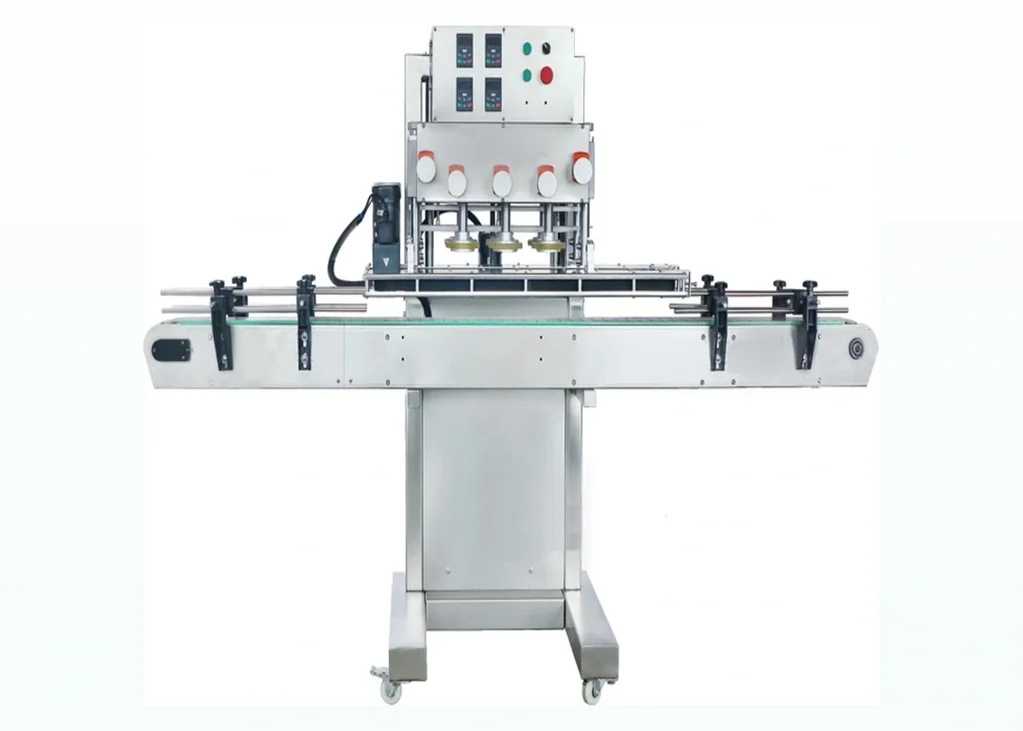
Screw capping machine
Automatic belt / spindle screw capping machine
Inline belt and spindle capping for round plastic bottles and higher-output screw-cap lines where repeatable torque and conveyor stability are required.
Ask about this machine →Automatic and semi-automatic screw capping systems for plastic and glass bottles, including inline screw cappers, belt/spindle cappers and bowl-fed cap handling.
The right capping system depends on closure geometry, bottle stability, torque or seating requirement, cap presentation and integration with your existing line.
Inline belt and spindle capping for round plastic bottles and higher-output screw-cap lines where repeatable torque and conveyor stability are required.
Ask about this machine →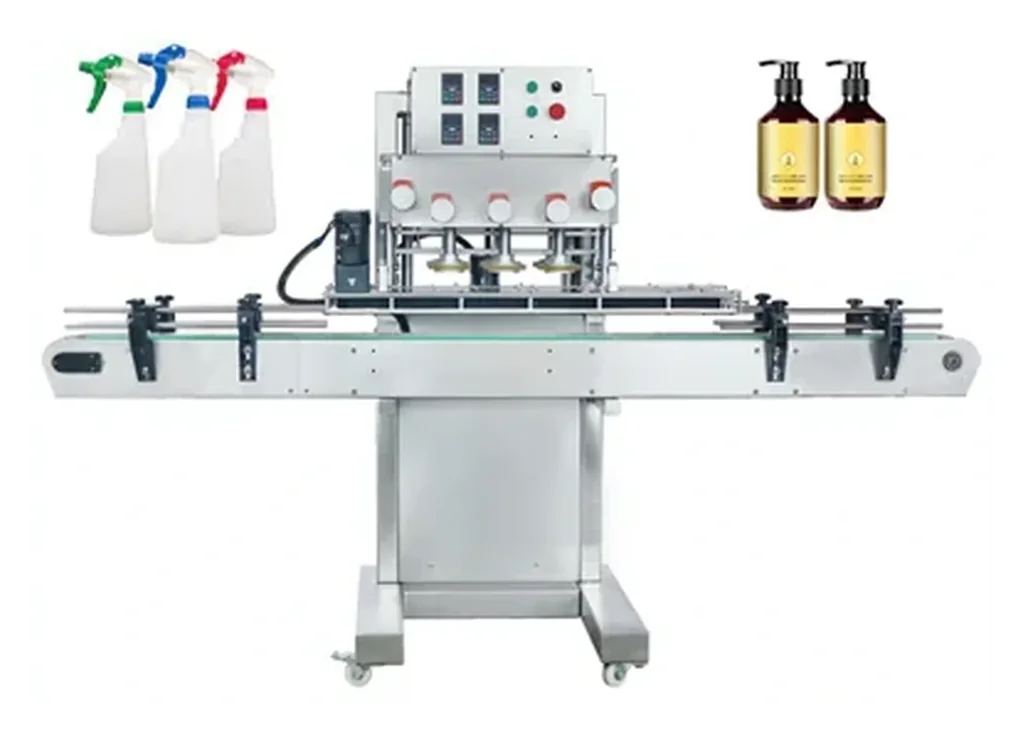
Production screw-capping route for spray bottles, pump closures and standard screw caps with adjustable guides and stable in-line handling.
Ask about this machine →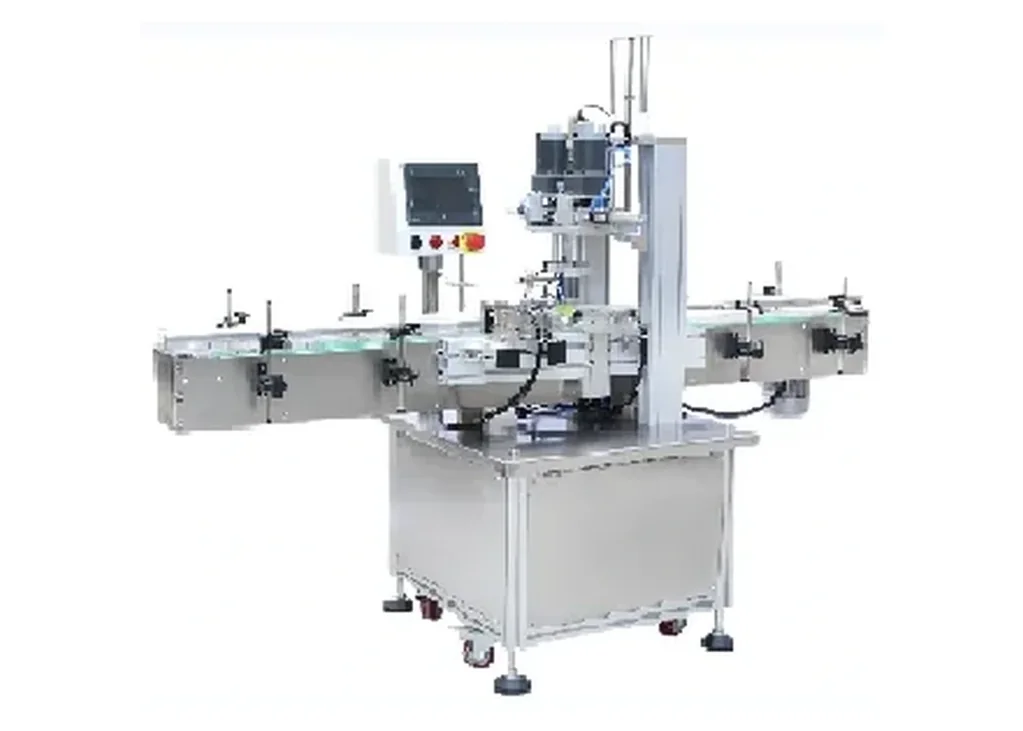
Space-saving inline capping for compact production rooms, laboratories and pilot lines where layout and fast changeover are important.
Ask about this machine →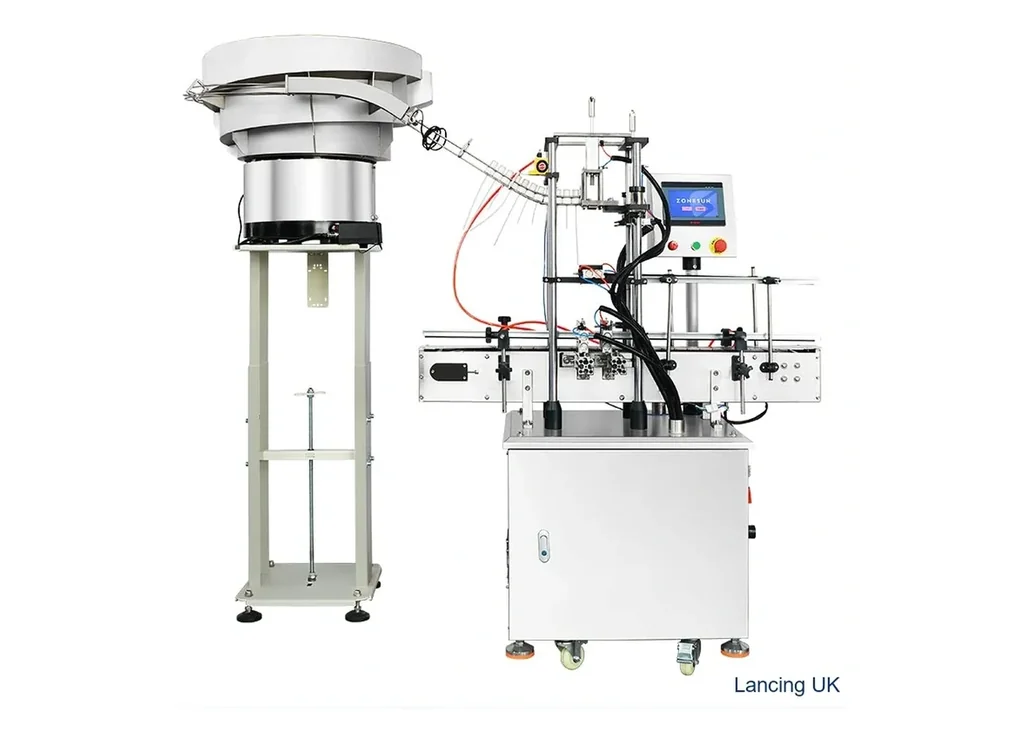
Automatic screw cap handling with bowl feeding for threaded closures where operator cap placement would limit line speed or consistency.
Ask about this machine →Choose a screw capping machine for threaded closures where the cap must be applied to a set torque without damaging the liner, neck finish or bottle. The machine style depends on bottle stability, cap diameter, cap presentation and the speed required.
Common applications include drinks, sauces, personal care, cosmetics, healthcare, oils, household products and contract packing lines using standard threaded closures, sprays, droppers or pump caps.
Send cap diameter, cap height, thread type, liner details, bottle size, bottle material and target output. These details decide whether manual cap placement, a bowl feeder, a cap elevator or an inline automatic capper is the best route.
Photos, dimensions and target output help shortlist the correct machine. Physical samples can then be checked before the final capping specification is confirmed.
A chuck capper tightens one cap at a time with a shaped chuck, while belt or spindle systems can tighten caps as bottles travel through an inline machine. The right choice depends on speed, cap style and bottle stability.
Often yes, but change parts, torque range, bottle guides and cap feed tooling must be checked against each cap and bottle combination.
The visible machine examples on this page are a starting point. Final selection depends on samples and line information, especially where a cap looks simple but behaves differently under torque, pressure, feeding or conveyor handling.
Check cap diameter, cap height, liner, thread or seating method, bottle neck finish, bottle material and how firmly the container can be held while the closure is applied.
Confirm whether caps will be placed by hand, presented from a bowl, elevated from bulk storage or orientated by a custom track. Feeding can be the limiting factor on automatic systems.
Agree how a good cap will be checked: torque, tamper-band formation, seated height, leak risk, visual alignment, operator access and repeatability during changeover.
Compare this route with the parent closure technology guide, the capping route matrix, the torque and quality guide and the quote checklist. For deeper specialist information use Screw Cappers UK where the closure type is already confirmed.
Send bottle and cap detailsThese model-level pages use published first-party Lancing specifications as a screening guide. Final speed, tooling, footprint and acceptance conditions must be confirmed with the actual bottle, closure, product condition and production layout.
Operator-assisted bottle capping with automatic bottle clamping, manual or automatic cycling and replaceable cap tooling.
Review the LU-XG6100-class specification →A compact conveyor-based route for standard screw caps, spray closures and pump collars where floor space and format changes matter.
Review the LU-XG1870-class specification →A continuous inline route for round bottles with guiding belts, spindle tightening and optional automatic cap feeding.
Review the LU-XG440B-class specification →No. A plastic tamper-evident screw cap arrives with its thread and breakaway band already formed; an aluminium ROPP closure is formed onto the bottle by rollers. They need different tooling, neck-finish evidence and acceptance checks.
Review plastic banded screw caps →They can when the threaded base, hinge, lid and outside contact area are compatible with the capping tool. The lid state, feeding behaviour, bottle support and protection of decorated surfaces should be proven with production closures.
Review hinged closure capping →Stripping can follow overloading, incompatible components, damaged threads, poor initial engagement, bottle rotation or a capper that continues tightening after the thread has failed. Stop increasing the setting and inspect good, failed and unused components first.
Diagnose stripped threads →Include cap diameter and height, external ribs or smooth areas, liner or seal, tamper feature, hinge or dispenser, bottle neck reference, accepted cap height and the opening or torque method. Supply normal production batches and every required format.