
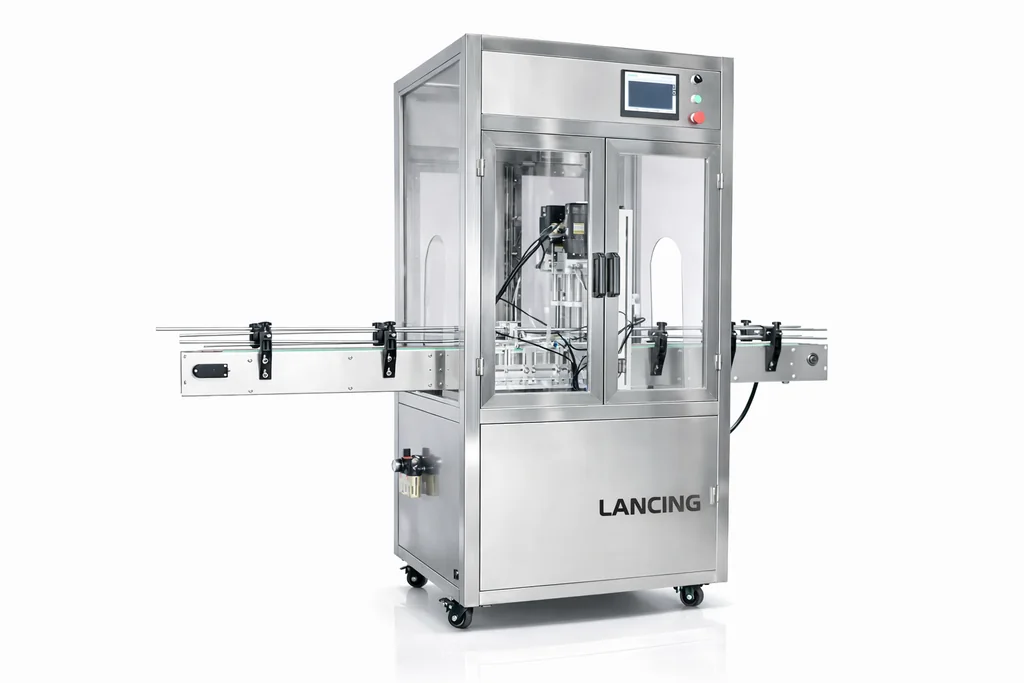
Filling, capping and labelling lines for bottle production.
Integrated filling, capping and labelling line advice for UK bottle production. Plan capper selection, conveyors, accumulation, coding and layout.
Discuss this requirement →Capping is often only one part of the production line. The capper should be planned alongside filling, labelling, coding, conveyors, accumulation and operator access so the complete line runs consistently.
Capping is often only one part of the production line. The capper should be planned alongside filling, labelling, coding, conveyors, accumulation and operator access so the complete line runs consistently.

Integrated filling, capping and labelling line advice for UK bottle production. Plan capper selection, conveyors, accumulation, coding and layout.
Discuss this requirement →A high-speed capper will not help if the filler, cap feeder or labeller cannot keep pace. Each step needs a realistic output target.
Light, tall or shaped bottles can tip or move out of alignment at transfers, so conveyor design and accumulation matter.
If new products, bottle sizes or closures are planned, changeover and spare space should be reviewed during the initial layout.
Photos and dimensions can start the discussion. Physical bottle and cap samples are normally the best way to confirm tooling, cap feeding, bottle support and realistic output.
Capping equipment can be planned with filling, labelling, coding, conveyors and accumulation depending on the project.
Mismatched machine speeds, poor accumulation, slow cap feeding and unstable bottle transfers are common causes.
Yes. Layout affects conveyor length, operator access, cap feeding, changeover and future expansion.