
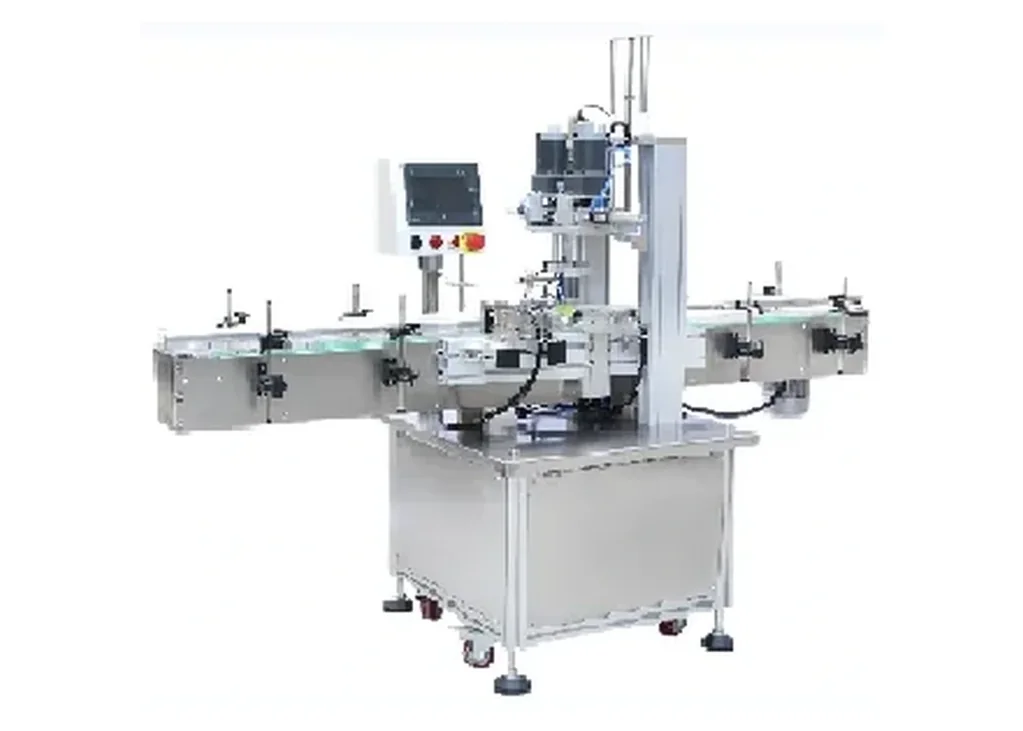
Line layout guide
How to plan a capping line layout before buying machinery.
Guide to planning a capping line layout, including conveyors, cap feeding, bottle spacing, operator access, labelling and future expansion.
Discuss this requirement →A good capping machine can still underperform if the line layout is wrong. Conveyor length, bottle spacing, cap feeding, access and downstream equipment all affect the final output.
A good capping machine can still underperform if the line layout is wrong. Conveyor length, bottle spacing, cap feeding, access and downstream equipment all affect the final output.
Guide to planning a capping line layout, including conveyors, cap feeding, bottle spacing, operator access, labelling and future expansion.
Discuss this requirement →Map filling, cap placement, capping, labelling, coding, inspection and packing before choosing floor space for the capper.
Cap elevators, bowls and tracks need space and operator access. They should not be treated as an afterthought.
Leave access for guide adjustment, tooling changes, cleaning and maintenance. Tight spaces can slow every product change.
Photos and dimensions can start the discussion. Physical bottle and cap samples are normally the best way to confirm tooling, cap feeding, bottle support and realistic output.
It depends on bottle size, infeed control, cap feeding and downstream equipment. Always allow room for guides, sensors, reject points and access.
It depends on layout, operator access and cap feed position. This should be confirmed during line planning.
Often yes, if the conveyor height, speed, bottle stability and access are suitable.