
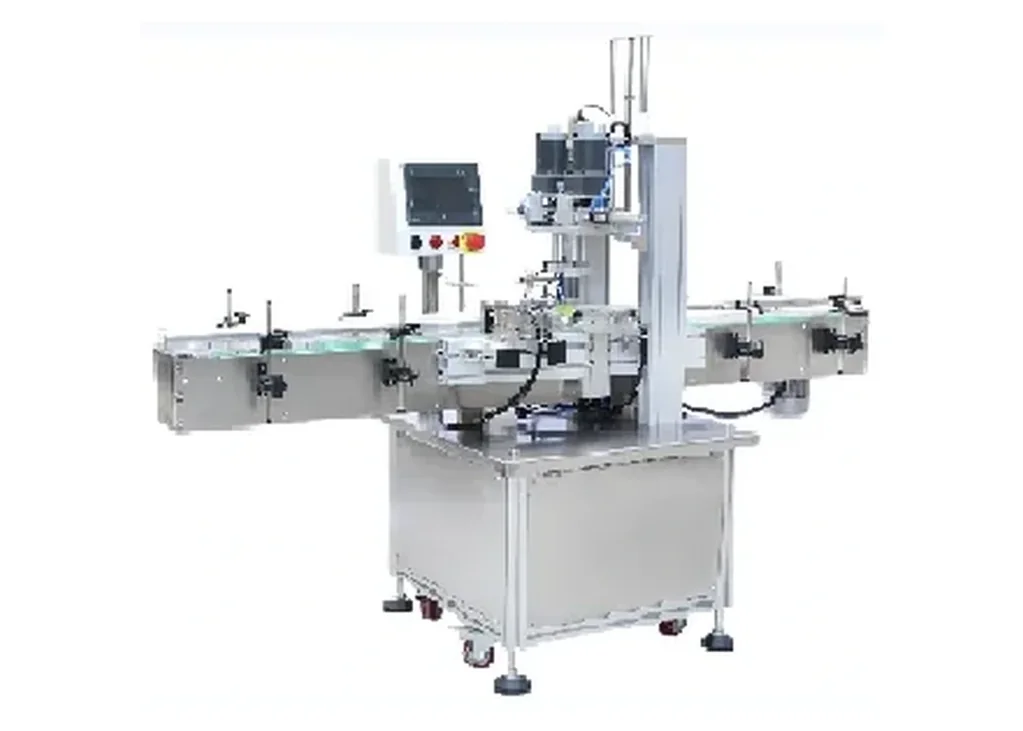
Inline capper
Inline capping machines for conveyor-fed production
Inline capping can reduce manual handling and keep filling, capping, labelling, coding and accumulation moving through one practical production flow.
Ask about this application →Inline capping can reduce manual handling and keep filling, capping, labelling, coding and accumulation moving through one practical production flow.
Lancing can help shortlist practical capping machinery after reviewing cap type, neck finish, bottle stability, output target, torque requirement and the way caps are presented to the machine.
Inline capping can reduce manual handling and keep filling, capping, labelling, coding and accumulation moving through one practical production flow.
Ask about this application →An inline capper is useful when bottles already travel on a conveyor or when you want capping to connect with filling, labelling and coding equipment. The design needs enough control over bottle spacing and cap presentation.
Side belts, guide rails, timing screws, indexing and bottle clamps may be needed depending on container shape. Tall or flexible bottles need extra attention before machine selection.
Manual cap placement may be practical at lower speeds. Bowl feeders, cap elevators or specialist pump/trigger feeding systems can be added when output or consistency demands it.
Photos, dimensions and target output help identify the most likely capping route. Physical samples are normally the best way to confirm tooling, cap feeding and bottle support.
No. Compact inline machines can be suitable for moderate speeds when the goal is better flow and reduced handling.
Often yes, but bottle transfer height, conveyor width, product spacing and line control need to be checked.
Not always. It depends on output and operator involvement. Automatic cap sorting is usually specified when manual cap placement becomes the bottleneck.