
Guide
What is a capping machine?
A capping machine applies, tightens, seats or seals a closure onto a bottle or container so the finished pack is secure and ready for handling.
Ask about this application →A capping machine applies, tightens, seats or seals a closure onto a bottle or container so the finished pack is secure and ready for handling.
Lancing can help shortlist practical capping machinery after reviewing cap type, neck finish, bottle stability, output target, torque requirement and the way caps are presented to the machine.
A capping machine applies, tightens, seats or seals a closure onto a bottle or container so the finished pack is secure and ready for handling.
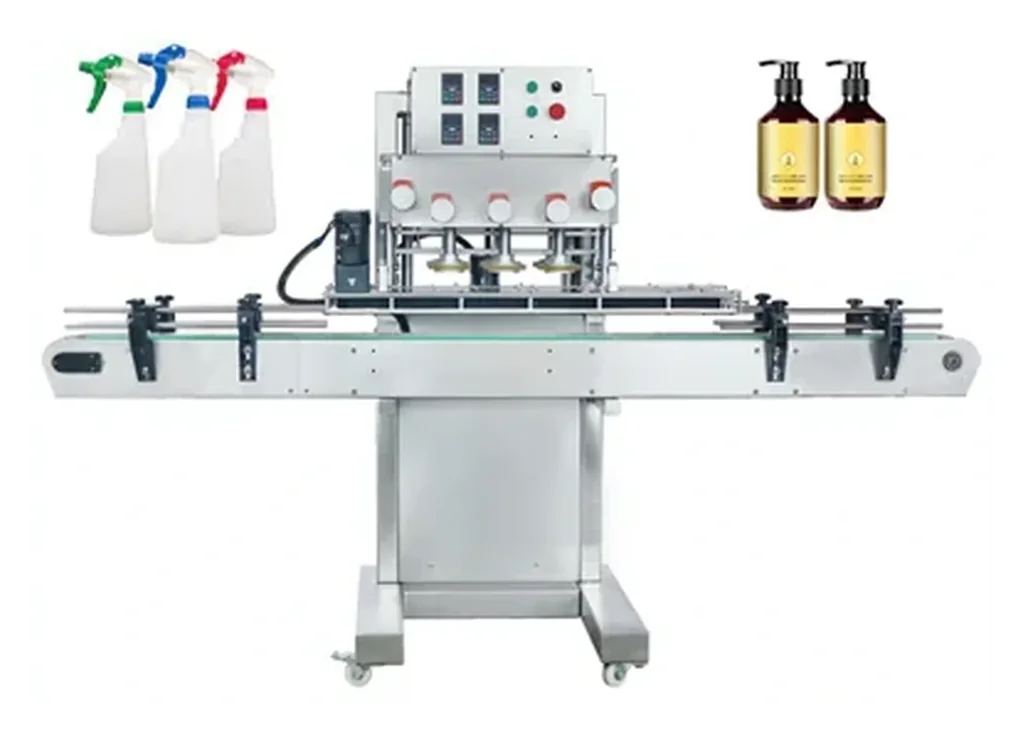
Ask about this application →Depending on the closure, a capper may tighten a screw cap, form an aluminium ROPP closure, apply a pump, tighten a trigger sprayer, press a cap into place or feed and orient caps for automatic application.
Common types include semi-automatic chuck cappers, inline screw cappers, spindle cappers, ROPP cappers, pump cappers, trigger cappers and cap feeding systems.
Start with the closure, then check bottle size, stability, material, torque or sealing requirement, output target and whether the line needs automatic cap feeding.
Photos, dimensions and target output help identify the most likely capping route. Physical samples are normally the best way to confirm tooling, cap feeding and bottle support.
No. Capping machines can be specified for screw caps, ROPP closures, pumps, triggers, droppers and press caps.
Not always. A capper can be stand-alone or integrated with filling, labelling, coding and conveyors.
The closure type is the starting point because it determines the capping head, feed method and handling route.