
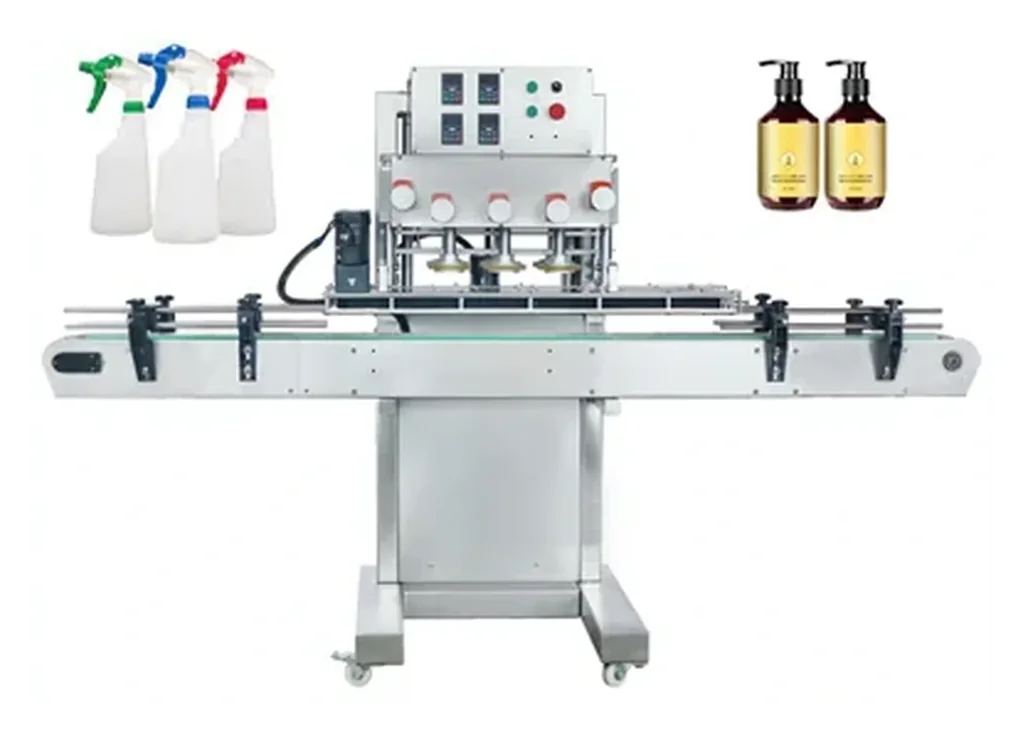
Bottle capping machines for plastic and glass containers
Choose a bottle capper around the closure first, then confirm bottle stability, torque, output and whether the line needs manual or automatic cap presentation.
Ask about this application →Choose a bottle capper around the closure first, then confirm bottle stability, torque, output and whether the line needs manual or automatic cap presentation.
Lancing can help shortlist practical capping machinery after reviewing cap type, neck finish, bottle stability, output target, torque requirement and the way caps are presented to the machine.

Choose a bottle capper around the closure first, then confirm bottle stability, torque, output and whether the line needs manual or automatic cap presentation.
Ask about this application →Plastic bottles can be light, flexible or tapered, so side belts, bottle grippers and controlled torque can be important. Screw caps, pumps and trigger sprays each need a different handling method.
Glass bottles are often used with ROPP closures, metal caps or premium screw closures. Machine selection depends on neck finish, pilfer band, bottle height and whether the process is semi-automatic or inline.
Target output, changeover frequency and cap feeding method determine whether a bench machine, compact inline capper or fully automatic capping line is the right route.
Photos, dimensions and target output help identify the most likely capping route. Physical samples are normally the best way to confirm tooling, cap feeding and bottle support.
Small runs often suit semi-automatic or compact inline capping, depending on how much operator involvement is acceptable.
Sometimes, but bottle handling and torque settings must be checked. Glass and plastic containers often need different support and change parts.
Send bottle photos, cap dimensions, neck finish, bottle size, target output and whether caps are placed by hand or need automatic feeding.