
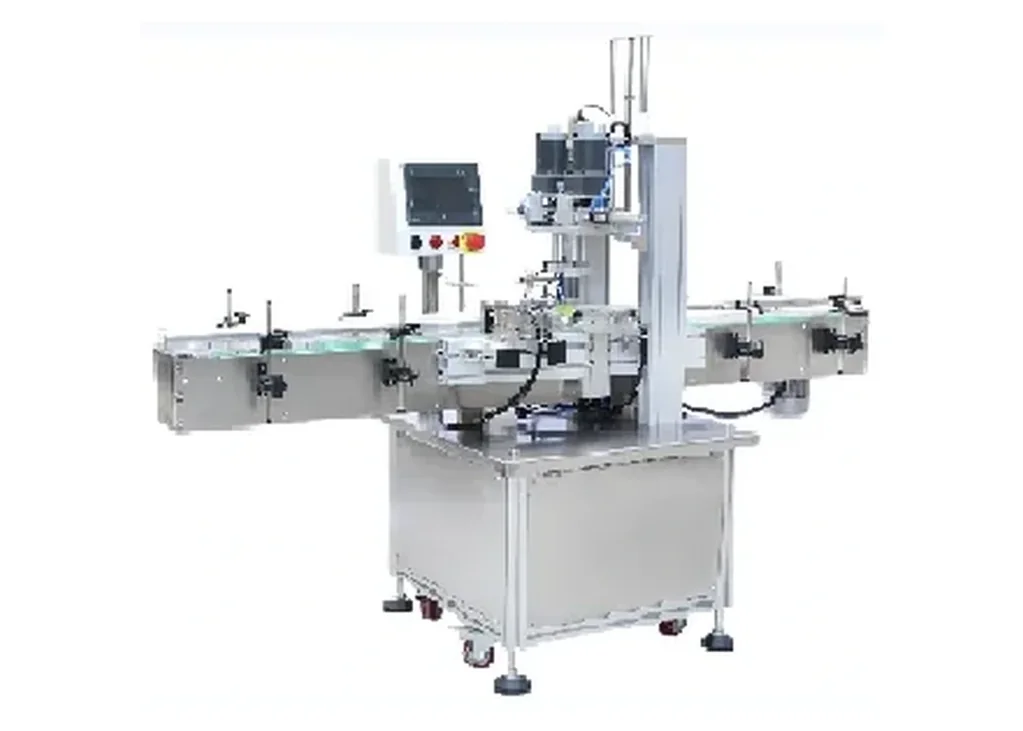
Press-on capping machines for snap caps and push-on closures.
Press-on capping machines for push-on caps, snap caps and non-threaded closures. UK advice for bottle support, head pressure and closure seating.
Discuss this requirement →Press-on capping uses controlled downward force rather than screw torque. It is used for snap caps, push-on caps, plugs and closures that must be seated squarely on the bottle neck without damaging the container.
Press-on capping uses controlled downward force rather than screw torque. It is used for snap caps, push-on caps, plugs and closures that must be seated squarely on the bottle neck without damaging the container.

Press-on capping machines for push-on caps, snap caps and non-threaded closures. UK advice for bottle support, head pressure and closure seating.
Discuss this requirement →Too little force leaves the closure unseated. Too much force can damage the cap, distort the bottle or create product leakage.
Lightweight plastic containers, tapered bottles and narrow bases may need side belts, nests or guided support during pressing.
A press-on closure relies on cap and neck geometry. Samples should be tested to confirm repeatable seating before final machine selection.
Photos and dimensions can start the discussion. Physical bottle and cap samples are normally the best way to confirm tooling, cap feeding, bottle support and realistic output.
No. Press-on caps are normally controlled by seating force, travel and bottle support rather than rotational torque.
Yes, if the cap can be presented reliably and the bottle is stable enough for automatic positioning and seating.
Uneven seating can be caused by cap orientation, poor neck alignment, variable bottle height or insufficient support under the closure.