
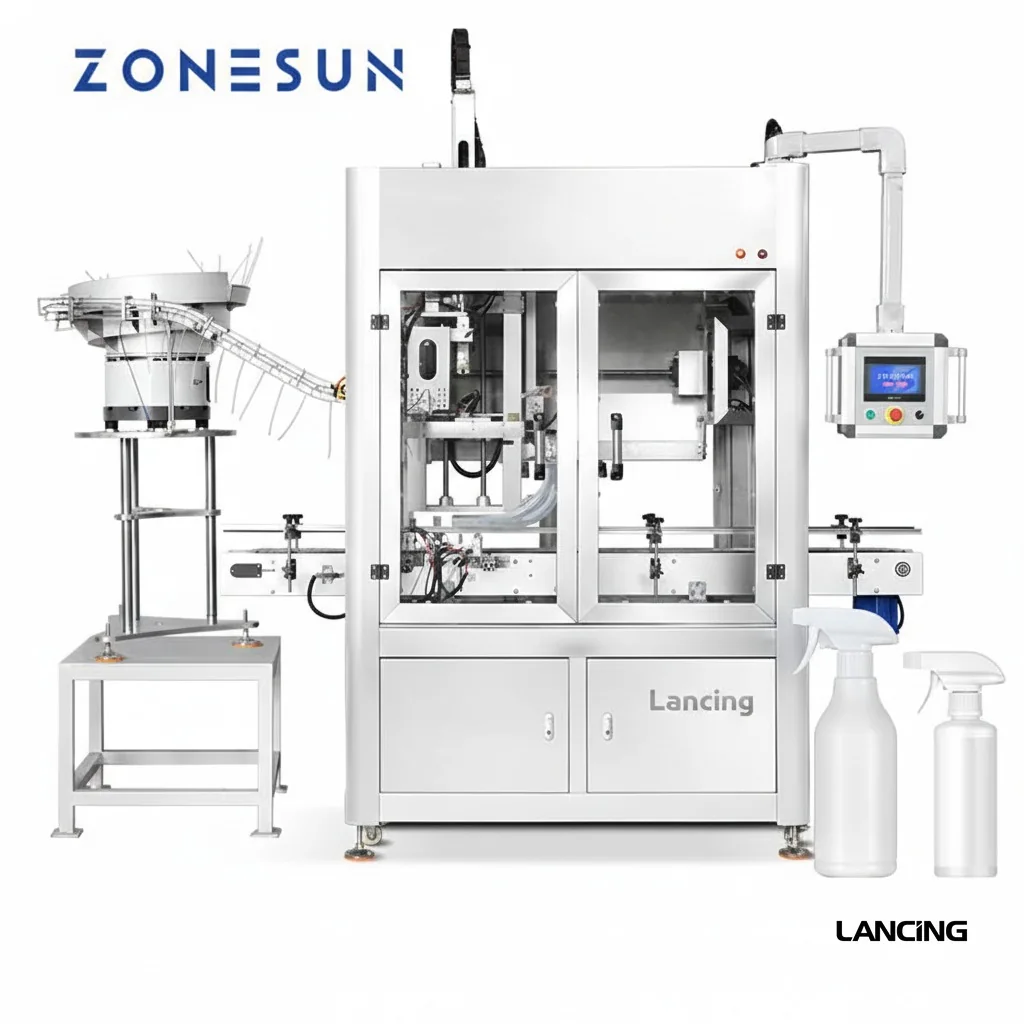
Plastic bottles
Plastic bottle capping machines for light and shaped containers
Plastic bottles often need careful handling because they can be flexible, tall, tapered or easy to deform under torque.
Ask about this application →Plastic bottles often need careful handling because they can be flexible, tall, tapered or easy to deform under torque.
Lancing can help shortlist practical capping machinery after reviewing cap type, neck finish, bottle stability, output target, torque requirement and the way caps are presented to the machine.
Plastic bottles often need careful handling because they can be flexible, tall, tapered or easy to deform under torque.
Ask about this application →Lightweight plastic bottles can rotate, compress or lean during tightening. Guide rails, side belts, bottle clamps or nests may be needed depending on the container.
Plastic bottle lines often use screw caps, flip-top caps, pumps, sprays, trigger heads and droppers. Each closure needs the correct feed route and tightening method.
HDPE, PET and other plastic bottles can behave differently under load. Send actual bottle samples when possible so support and torque can be checked.
Photos, dimensions and target output help identify the most likely capping route. Physical samples are normally the best way to confirm tooling, cap feeding and bottle support.
Yes, but flexible containers often need extra support during tightening to avoid distortion or poor cap seating.
Screw caps, pumps, trigger sprayers, flip tops, droppers and press caps are common, with different machine requirements.
Often yes, provided bottle spacing and stability can be controlled through the capping section.