
Capping machinery specialists — UK supply, installation and support01494 623015 · sales@lancinguk.com
Cap applicator machines

Cap applicator machines for placing and tightening bottle closures.

A cap applicator machine may place a cap, start thread engagement, tighten the cap or combine several of those steps. The right specification depends on whether the cap is already on the bottle, fed automatically, placed by hand or needs pick-and-place control.

cap applicator machines UK

Practical specification points for this capping route.

A cap applicator machine may place a cap, start thread engagement, tighten the cap or combine several of those steps. The right specification depends on whether the cap is already on the bottle, fed automatically, placed by hand or needs pick-and-place control.

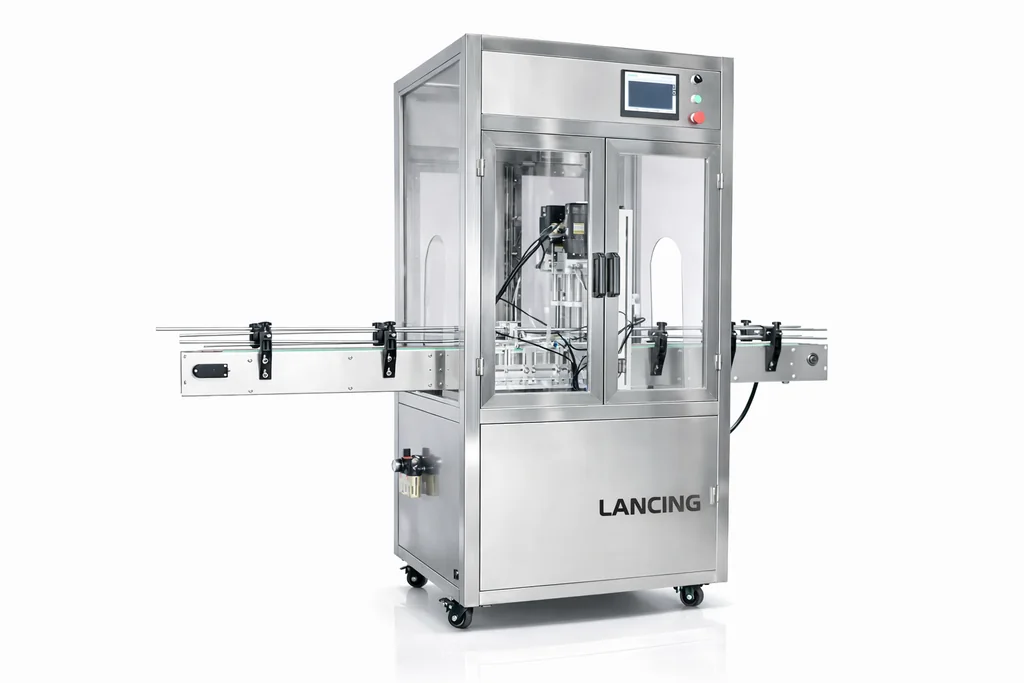
Automatic guarded capping machine with conveyor
Cap applicator machines

Cap applicator machines for placing and tightening bottle closures.

Cap applicator machines for placing and tightening caps on bottles. UK support for screw caps, pumps, triggers, press caps and capping line integration.

Discuss this requirement →

Useful details to confirm

  • Is the cap placed by hand or machine?
  • Does the cap need tightening or pressing?
  • Bottle stability and neck access
  • Cap feeding or placement method
  • Line speed and spacing
Selection notes

What to check before selecting machinery.

Application and tightening are separate issues

Some products only need controlled tightening after manual placement. Others need automatic cap pick-up, placement and then tightening. Defining the task prevents over-specification.

Closure geometry matters

Flat screw caps, ribbed caps, pumps, triggers and press-on caps all behave differently during application. Cap shape influences whether a chuck, belt, spindle, press head or pick-and-place unit is most suitable.

Bottle control prevents errors

Bottle support is critical. A cap applicator cannot perform reliably if the container twists, tips, flexes or arrives misaligned under the head.

Next step

Send bottle, cap and output details before final machine selection.

Photos and dimensions can start the discussion. Physical bottle and cap samples are normally the best way to confirm tooling, cap feeding, bottle support and realistic output.

FAQ

Common questions

Is a cap applicator the same as a capper?

In many cases the terms overlap. A cap applicator may focus on cap placement, while a capper usually refers to final tightening, sealing or closing.

Can cap application be added to an existing line?

Often yes, depending on conveyor space, bottle control and where caps are introduced.

What causes poor cap application?

Common causes include unstable bottles, cap mis-orientation, poor neck access, wrong torque setting or inconsistent cap placement.

Call nowContact us