
Startup capping guide
Capping machines for startups and growing brands.
Capping machine guide for startups and growing brands. Compare bench-top, semi-automatic and automatic cappers before investing in equipment.
Discuss this requirement →Startups often need a capping route that improves consistency without locking the business into the wrong machine too early. The best first step usually depends on batch size, closure type and how many products are likely to be launched.
Startups often need a capping route that improves consistency without locking the business into the wrong machine too early. The best first step usually depends on batch size, closure type and how many products are likely to be launched.
Capping machine guide for startups and growing brands. Compare bench-top, semi-automatic and automatic cappers before investing in equipment.
Discuss this requirement →A compact or semi-automatic capper can be the right first investment if bottle and cap formats are still changing.
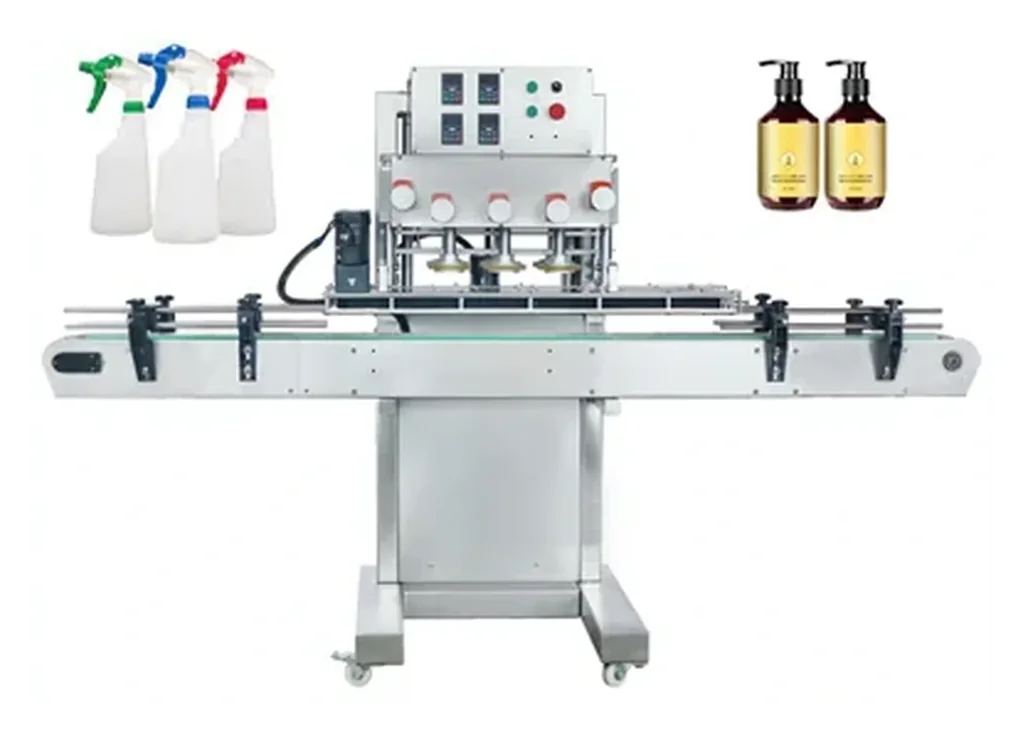
Do not choose a machine only by speed. Screw caps, pumps, triggers and ROPP closures need different handling.
Consider whether future production will need cap feeding, conveyors, labelling or filling integration.
Photos and dimensions can start the discussion. Physical bottle and cap samples are normally the best way to confirm tooling, cap feeding, bottle support and realistic output.
Often a bench-top or semi-automatic machine, but it depends on cap type, target output and bottle stability.
Not always. Cap feeding adds cost and complexity and is best justified by output, consistency or labour savings.
Yes, but final machine selection should normally wait until bottle and cap samples are confirmed.