
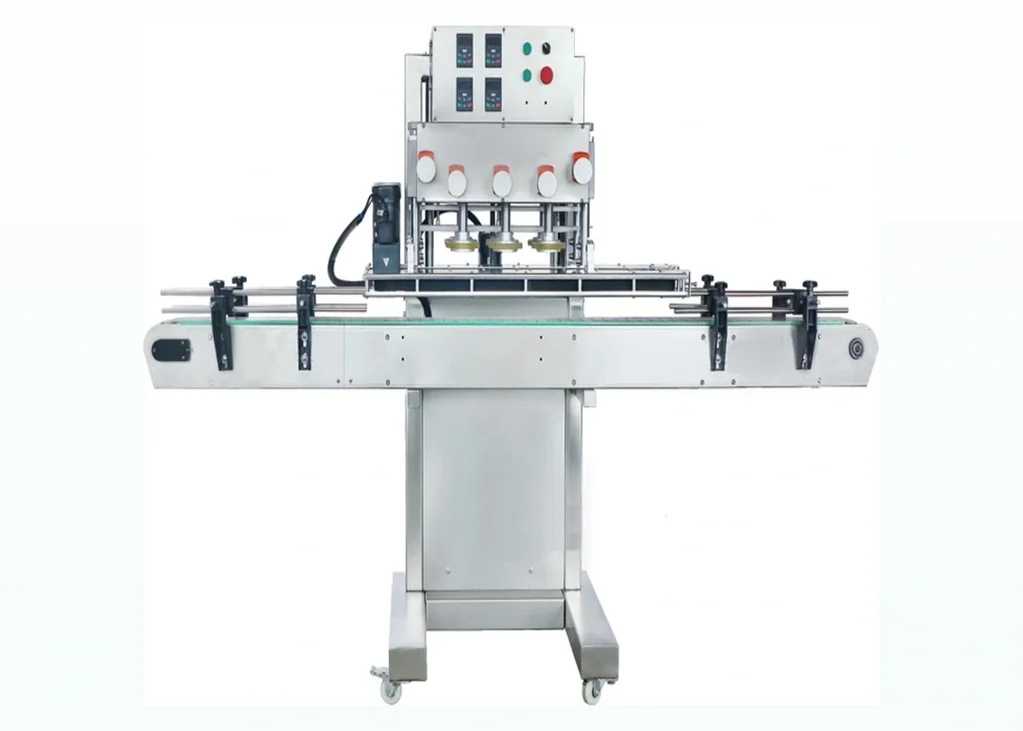
Screw capping machine
Automatic belt / spindle screw capping machine
Inline belt and spindle capping for round plastic bottles and higher-output screw-cap lines where repeatable torque and conveyor stability are required.
Ask about this machine →A practical guide to the specification factors that affect capping machine cost, from manual placement to automatic cap feeding and line integration.
The right capping system depends on closure geometry, bottle stability, torque or seating requirement, cap presentation and integration with your existing line.
Inline belt and spindle capping for round plastic bottles and higher-output screw-cap lines where repeatable torque and conveyor stability are required.
Ask about this machine →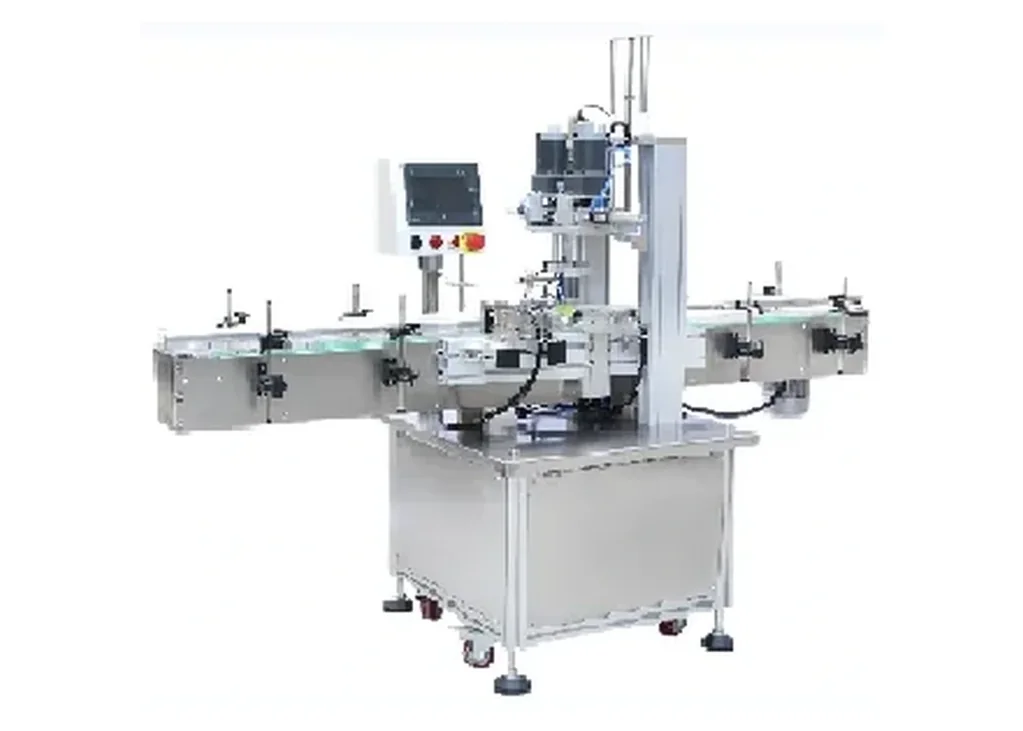
Space-saving inline capping for compact production rooms, laboratories and pilot lines where layout and fast changeover are important.
Ask about this machine →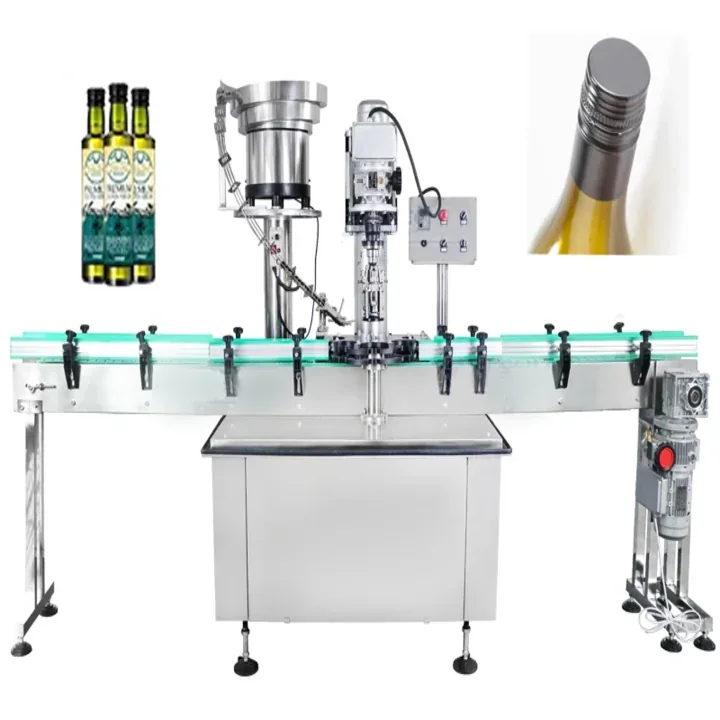
Automatic ROPP capping with conveyor, cap sorting and line integration for beverage, oil and premium bottle production.
Ask about this machine →Cap type, output speed, bottle stability, cap feeding, guarding, conveyor requirements and integration with filling or labelling equipment all affect the final specification.
Manual or semi-automatic capping can suit short runs and low-volume production. Automatic systems cost more because they add product handling, cap feeding, controls and integration.
A quote is more accurate when the supplier can check your actual bottle, closure, liner, neck finish and output target instead of estimating from photos alone.
Photos, dimensions and target output help shortlist the correct machine. Physical samples can then be checked before the final capping specification is confirmed.
You can get an initial indication, but accurate pricing normally needs bottle and cap details, output requirement and feeding expectations.
Yes. Automatic cap feeding can significantly affect cost, but it may be essential for consistent output and lower operator involvement.
Machine price is only one part of a capping project. Two quotations for apparently similar equipment can cover different levels of cap handling, change parts, controls, guarding, documentation, testing and site work. Compare the boundaries of supply before comparing totals.
| Scope element | Why it changes cost | Question to resolve |
|---|---|---|
| Capping method and tooling | Chuck, spindle, ROPP, pressing, crimping and specialist closure routes need different heads and format parts. | Which exact container-and-closure combinations are included? |
| Cap placement and feeding | Manual placement, bowl feeding, elevators, tracks and pick-and-place systems have different complexity and sample requirements. | Who places the cap, and how will bulk caps arrive at the machine? |
| Container handling | Unstable, handled, flexible or offset-neck packs can require guides, clamps, pucks or dedicated change parts. | Which format represents the greatest handling risk? |
| Controls and inspection | Line interlocks, recipes, missing-cap detection, reject systems and interfaces add engineering and validation work. | What faults must be detected and what should the line do? |
| Testing and documentation | Extended trials, FAT protocols, manuals, drawings, risk information and customer-specific records change the deliverable. | What evidence is needed before shipment and at site acceptance? |
| Installation and integration | Positioning, conveyors, services, guarding interfaces, commissioning and training depend on the real production area. | What is included at the customer site and what remains the customer's responsibility? |
| Future formats | Designing for untested bottles or caps can require extra adjustment range or later tooling. | Which future formats are evidenced now and which should be quoted separately after samples? |
A quotation is easier to compare when it identifies inclusions, exclusions, sample assumptions, utilities, test material, delivery scope and acceptance criteria. Avoid selecting solely on a headline throughput or a photograph of a similar machine; the value lies in how completely the proposed system addresses the actual pack and line.