
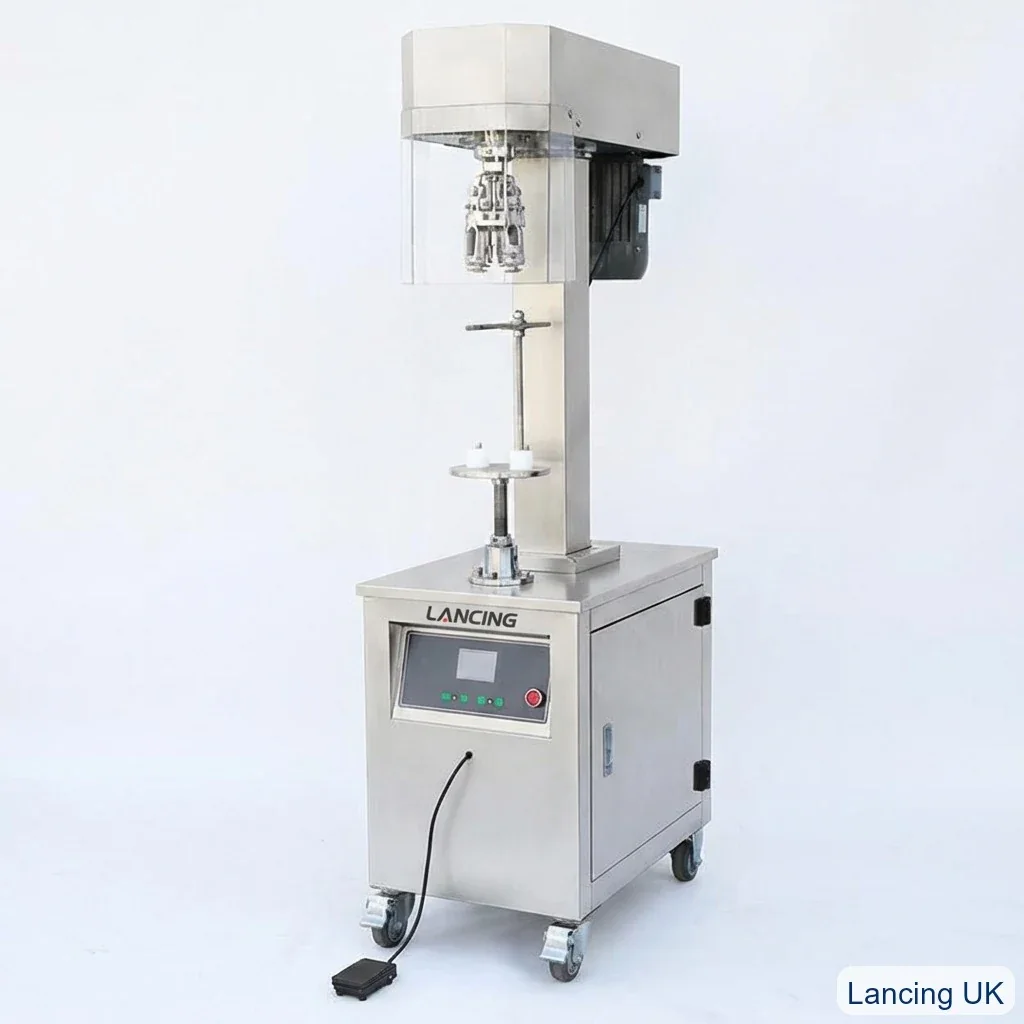
Semi-automatic capping machines for controlled batch production
A semi-automatic capper can improve torque repeatability and operator consistency without the cost or footprint of a fully automatic cap feeding line.
Ask about this application →A semi-automatic capper can improve torque repeatability and operator consistency without the cost or footprint of a fully automatic cap feeding line.
Lancing can help shortlist practical capping machinery after reviewing cap type, neck finish, bottle stability, output target, torque requirement and the way caps are presented to the machine.

A semi-automatic capper can improve torque repeatability and operator consistency without the cost or footprint of a fully automatic cap feeding line.
Ask about this application →Semi-automatic cappers suit short runs, product development, contract packing, seasonal lines and lower-speed production where an operator can place the bottle or cap but still needs repeatable capping results.
The semi-automatic route can include chuck capping for screw caps, semi-automatic ROPP capping for aluminium closures, hand-loaded pump tightening and specialist fixtures for awkward bottles or closures.
Bottle height, cap diameter, neck finish, thread start, liner compression, tamper band and torque setting all affect the tooling and control method. Samples are useful before final specification.
Photos, dimensions and target output help identify the most likely capping route. Physical samples are normally the best way to confirm tooling, cap feeding and bottle support.
Yes, it is often the practical first step when production volumes do not yet justify automatic cap feeding or full inline integration.
Many businesses start with semi-automatic capping and later move to automatic cap feeding or inline machines as volumes increase.
Many semi-automatic cappers can be specified for repeatable tightening, but the exact torque control method depends on the closure and machine style.