
Cap placement guide
Manual cap placement versus automatic cap feeding.
Compare manual cap placement and automatic cap feeding before choosing a capping machine. UK advice on output, labour, changeover and cap complexity.
Discuss this requirement →Not every capping line needs automatic cap feeding from day one. Manual cap placement can be practical for short runs, awkward closures and flexible production, while automatic feeding can reduce labour and improve consistency at higher volumes.
Not every capping line needs automatic cap feeding from day one. Manual cap placement can be practical for short runs, awkward closures and flexible production, while automatic feeding can reduce labour and improve consistency at higher volumes.
Compare manual cap placement and automatic cap feeding before choosing a capping machine. UK advice on output, labour, changeover and cap complexity.
Discuss this requirement →Operators can handle varied caps without feeder change parts, but output and consistency may be limited.
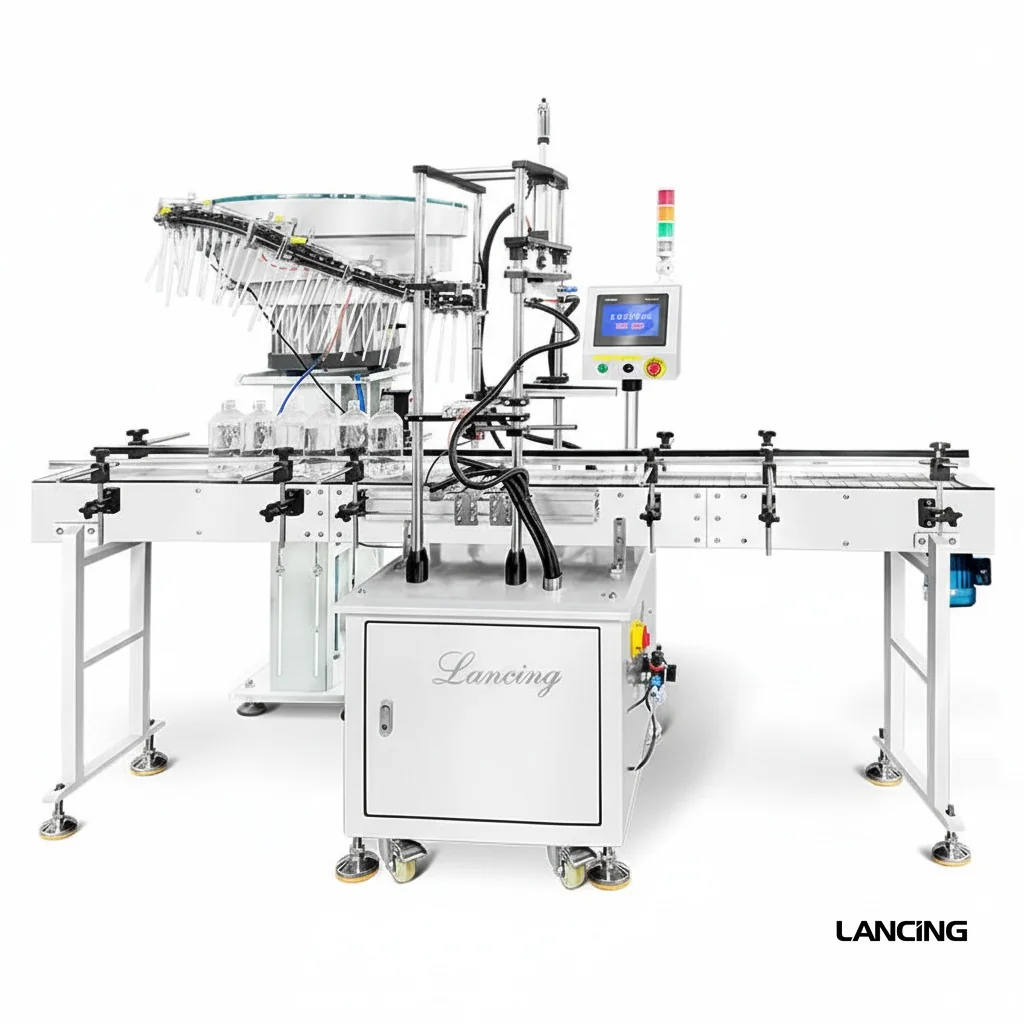
A cap feeder can remove a repetitive task, but it needs closure-specific design and space.
Simple flat caps may feed readily. Pumps, triggers and unusual shapes may need specialist handling or remain semi-automatic for longer.
Photos and dimensions can start the discussion. Physical bottle and cap samples are normally the best way to confirm tooling, cap feeding, bottle support and realistic output.
No. It can be the right route for low volume, frequent changeover or difficult closures.
Usually when labour, speed, consistency or operator fatigue becomes the limiting factor.
Sometimes, depending on the machine design and cap feeding feasibility.
For manual placement, record the time and attention needed to present caps correctly, including replenishment and changes between closure types. For an automatic route, ask the same questions about hopper loading, emptying, tooling changes and restart checks. This gives both options a comparable operating boundary.
Where one difficult closure accounts for a small part of production, ask whether it should define the whole line or be handled through a separate agreed route. Keep the commercial importance and frequency of each format visible rather than treating every possible cap as an equal requirement.
No. Ask the quotation to name how caps are supplied, oriented, placed and tightened. Identify any manual operation explicitly so that staffing and output plans reflect the actual offered machine configuration.