
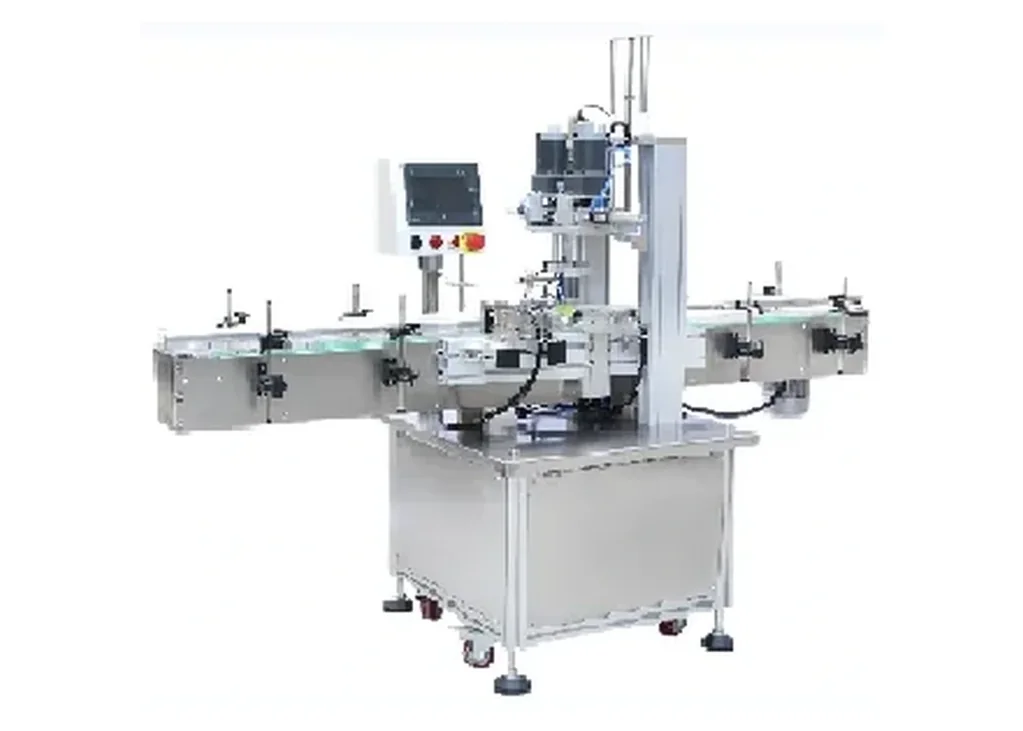
Compact capping machine
Compact inline screw capping machine
Space-saving inline capping for compact production rooms, laboratories and pilot lines where layout and fast changeover are important.
Ask about this machine →How to decide whether your bottle line needs a semi-automatic capper, compact inline machine or fully automatic cap feeding and capping system.
The right capping system depends on closure geometry, bottle stability, torque or seating requirement, cap presentation and integration with your existing line.
Space-saving inline capping for compact production rooms, laboratories and pilot lines where layout and fast changeover are important.
Ask about this machine →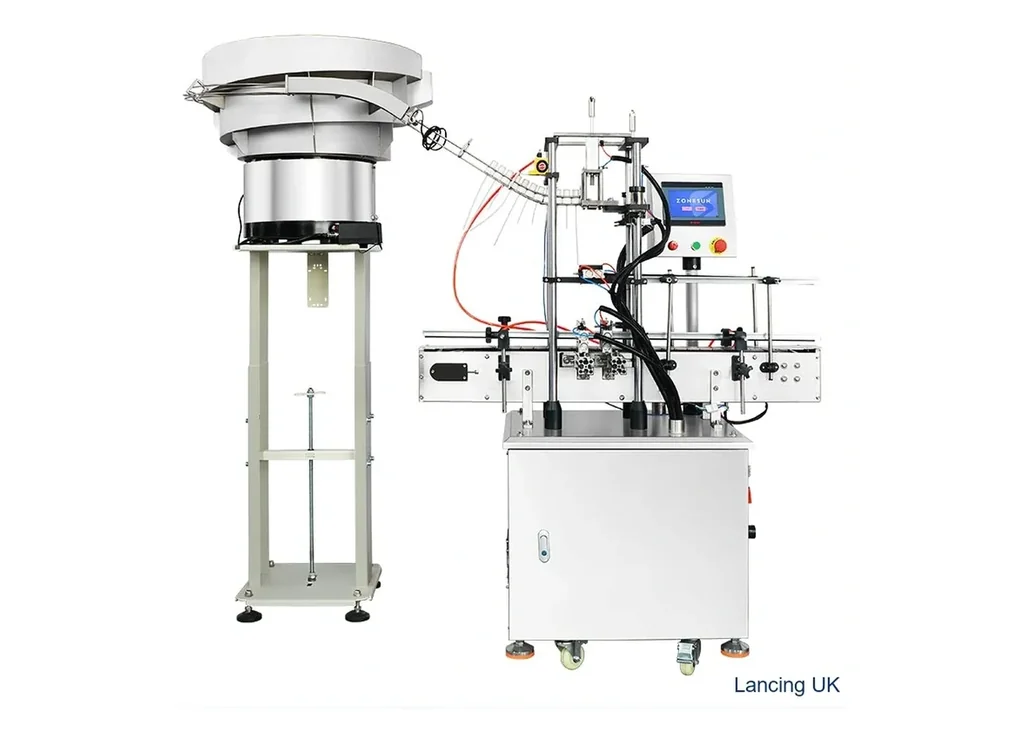
Automatic screw cap handling with bowl feeding for threaded closures where operator cap placement would limit line speed or consistency.
Ask about this machine →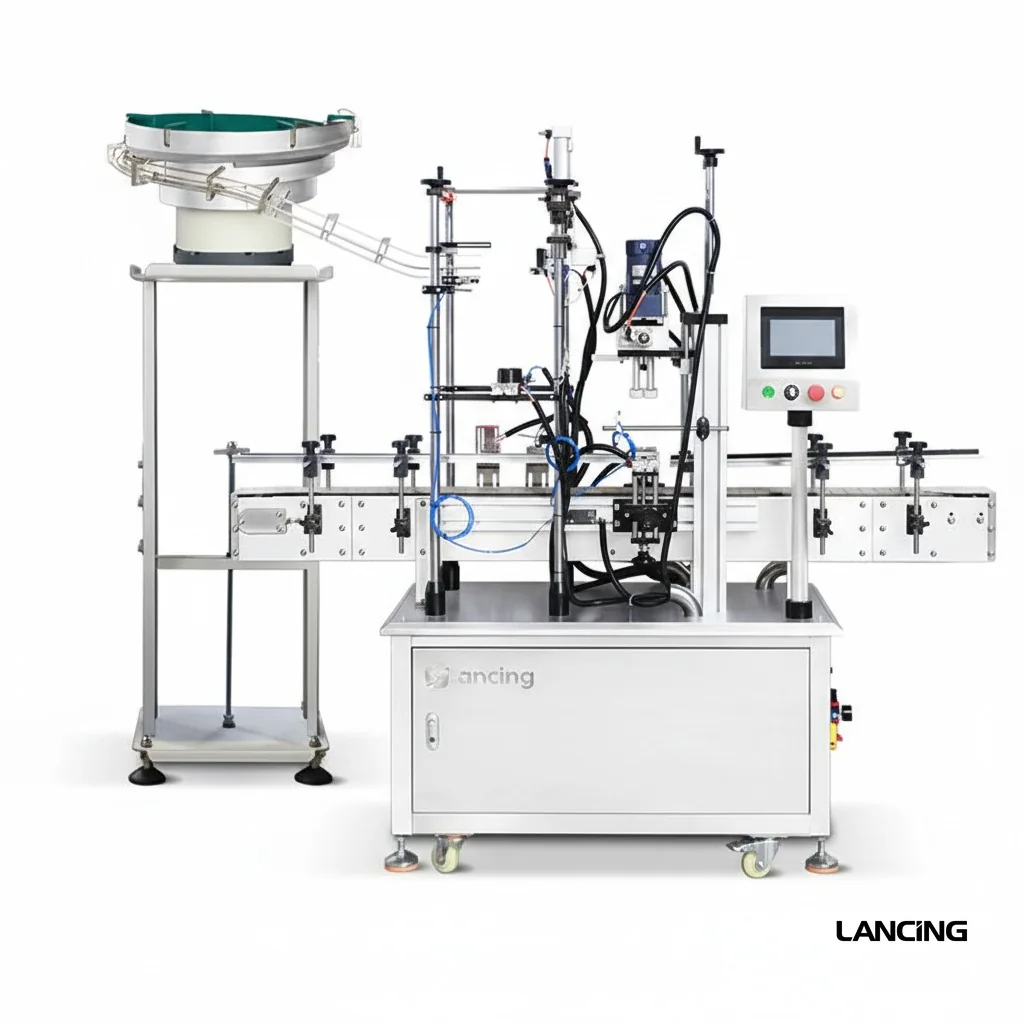
Automatic pump closure capping with vibrating bowl sorting and guided bottle transfer for cosmetic and personal-care lines.
Ask about this machine →Semi-automatic capping can work well for short runs, frequent product changes, low-volume production and applications where manual cap placement is acceptable.
Automatic capping becomes more attractive when output targets rise, operator involvement must fall, cap placement must be consistent or the capping process needs integration with filling and labelling.
A flexible semi-automatic machine may be better for many small batches. A dedicated automatic line may be better for repeated production of the same bottle and cap.
Photos, dimensions and target output help shortlist the correct machine. Physical samples can then be checked before the final capping specification is confirmed.
Usually, but only if the bottle, cap and feed system are suited to automatic handling. Poor cap feeding or unstable bottles can limit output.
Contract packers often need flexibility. The best choice depends on batch sizes, closure variety, changeover time and required throughput.