
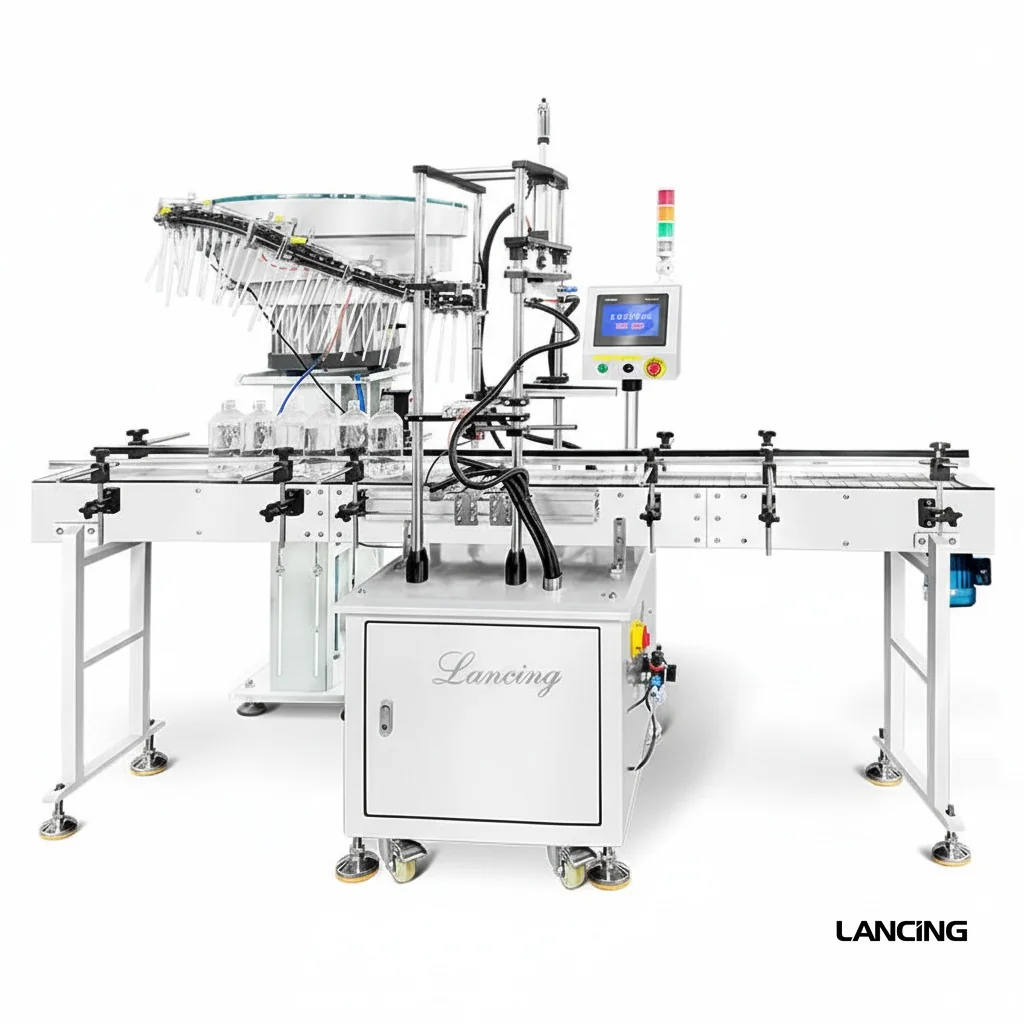
Bowl-fed capping
Bowl-fed capping machines for automatic cap handling.
Bowl-fed capping machines for automatic cap sorting, feeding and bottle capping. UK advice for screw caps, pumps, triggers and difficult closures.
Discuss this requirement →Bowl-fed capping machines combine a capping head or tightening system with a cap orientation route. The feeder is just as important as the capper because poor cap presentation causes missed caps, jams and inconsistent output.
Bowl-fed capping machines combine a capping head or tightening system with a cap orientation route. The feeder is just as important as the capper because poor cap presentation causes missed caps, jams and inconsistent output.
Bowl-fed capping machines for automatic cap sorting, feeding and bottle capping. UK advice for screw caps, pumps, triggers and difficult closures.
Discuss this requirement →Caps with liners, tamper-evident bands, pump tubes or trigger heads need different feeding methods. The bowl, track, chute and pick-off point must be designed around the actual closure.
Bowl feeding is normally considered when the same cap is run regularly and the saving in operator time justifies the additional machine complexity.
Physical caps are usually needed before final feeder design because small moulding details can affect orientation and stability.
Photos and dimensions can start the discussion. Physical bottle and cap samples are normally the best way to confirm tooling, cap feeding, bottle support and realistic output.
No. Some systems use manual placement, elevators or special feed routes. Bowl feeding is used when automatic orientation is the right route for the cap and output.
Sometimes, but large differences in diameter, height or shape often need change parts or separate tooling.
Some can be fed automatically, but pump and trigger geometry often requires specialist handling rather than a standard cap bowl.