
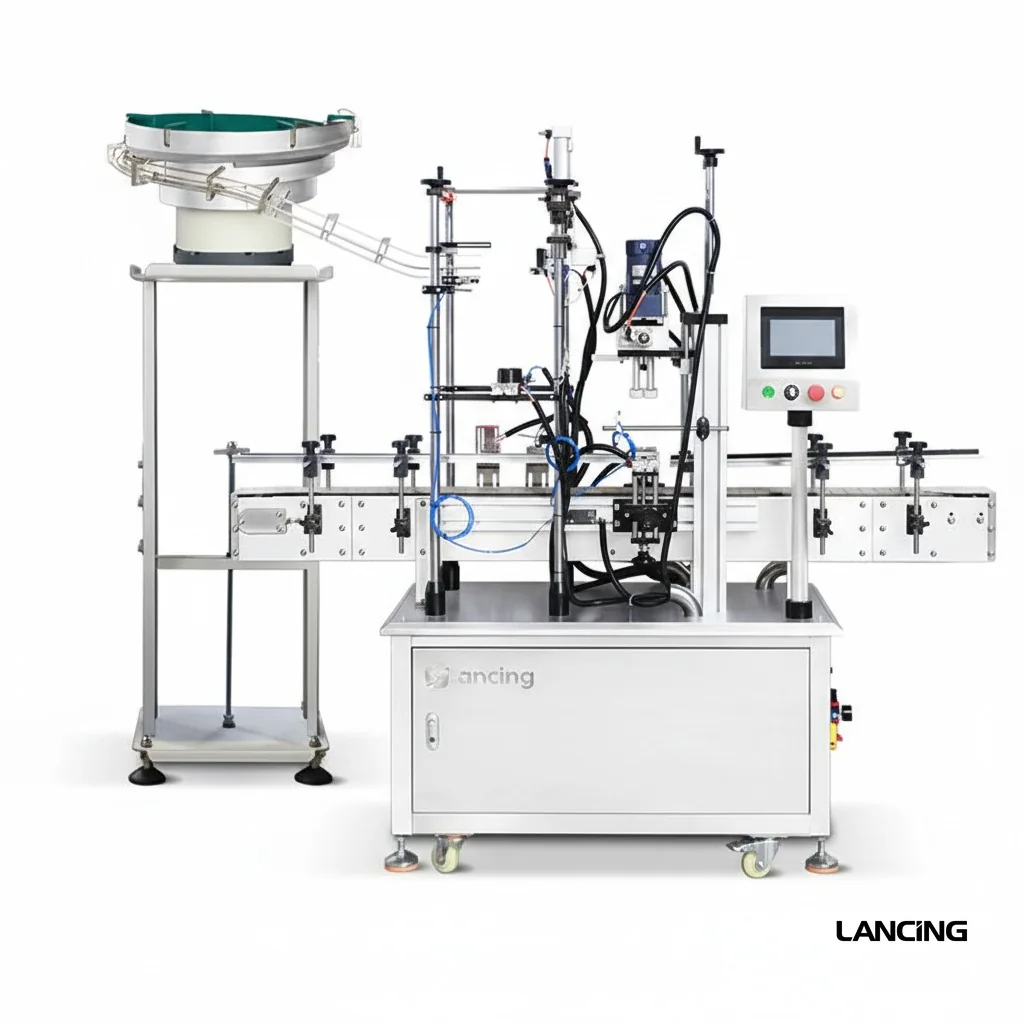
Cap feeding
Cap feeding guide for automatic capping lines
Cap feeding is often the difference between a useful automatic capper and a line that still relies too heavily on the operator.
Ask about this application →Cap feeding is often the difference between a useful automatic capper and a line that still relies too heavily on the operator.
Lancing can help shortlist practical capping machinery after reviewing cap type, neck finish, bottle stability, output target, torque requirement and the way caps are presented to the machine.
Cap feeding is often the difference between a useful automatic capper and a line that still relies too heavily on the operator.
Ask about this application →Manual cap placement can be sensible at low speeds or where caps are difficult to feed. Automatic feeding becomes more attractive when operator workload, consistency or speed becomes a constraint.
Options can include vibrating bowl feeders, centrifugal sorting, cap elevators, hoppers and specialist pump or trigger feeding systems. The best route depends on cap geometry and required output.
Cap diameter, height, weight, shape, top/bottom difference, ribs, liners and orientation requirements all affect the sorting method. Always check real caps, not just drawings.
Photos, dimensions and target output help identify the most likely capping route. Physical samples are normally the best way to confirm tooling, cap feeding and bottle support.
No. Some caps feed well from bowls, while pumps, triggers and awkward closures can need specialist handling or manual placement.
Sometimes, but it is better to plan the capping machine and feed route together so space, controls and bottle timing are compatible.
A cap elevator lifts caps from a bulk hopper to a sorting or presentation system, reducing the need for constant operator topping-up at the bowl.
Automatic capping projects often depend as much on cap feeding as on the tightening head. A cap may be easy to tighten once placed but difficult to orientate, separate, pick or transfer at the required pace.
| Feeding point | What to check | Why it affects the capping machine |
|---|---|---|
| Bulk cap behaviour | Caps nesting, tangling, static, deformation or inconsistent moulding. | Controls whether a bowl, elevator, pick-and-place or manual placement route is practical. |
| Orientation | Threaded side, nozzle direction, trigger head angle, dip tube and cap top geometry. | Incorrect orientation can stop automatic placement even when the capping head is suitable. |
| Transfer to bottle | Track exit, chute, pick head, cap starwheel or operator presentation. | Determines whether the cap meets the bottle squarely before torque or press force is applied. |
| Line control | Sensor positions, bottle spacing, cap present checks, missing cap handling and conveyor stops. | Prevents capper faults from affecting filling, labelling and accumulation. |