
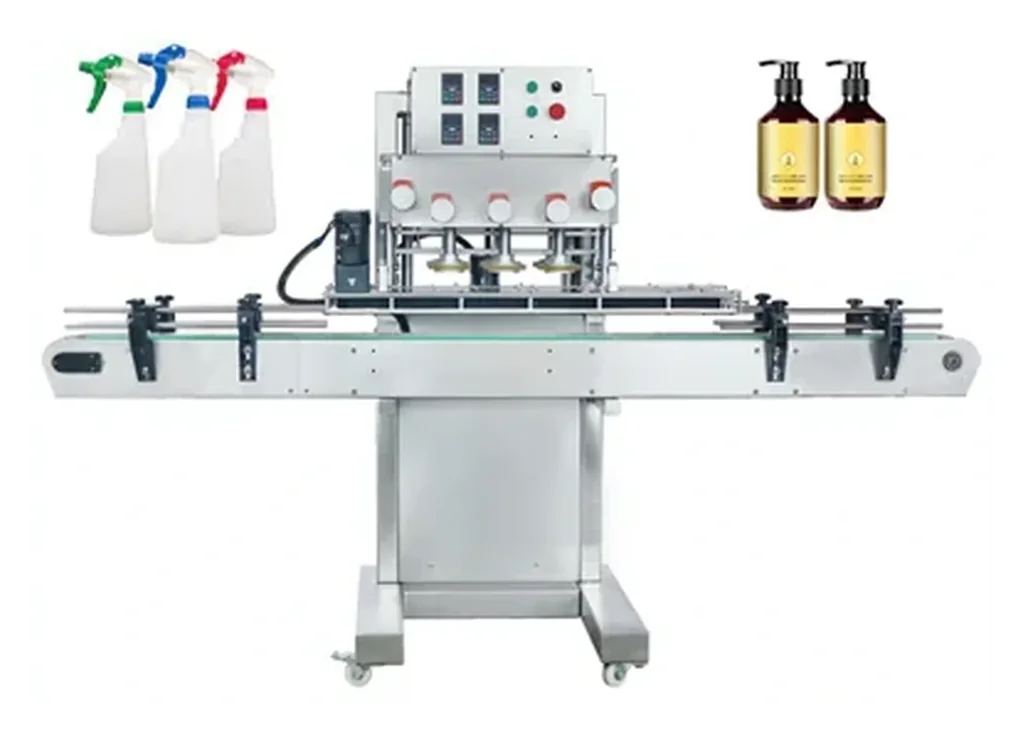
Torque capping machines for repeatable closure application
Controlled tightening helps protect product quality by applying caps consistently around the closure design, liner compression and bottle neck finish.
Ask about this application →Controlled tightening helps protect product quality by applying caps consistently around the closure design, liner compression and bottle neck finish.
Lancing can help shortlist practical capping machinery after reviewing cap type, neck finish, bottle stability, output target, torque requirement and the way caps are presented to the machine.

Controlled tightening helps protect product quality by applying caps consistently around the closure design, liner compression and bottle neck finish.
Ask about this application →Under-tightened caps can leak or loosen; over-tightened caps can damage threads, distort liners or make the pack difficult to open. The correct torque range depends on the closure, liner and bottle.
Chuck style, spindle settings, capping head, bottle grip, cap feed and container stability all affect torque repeatability. The machine must be specified around the complete cap and bottle combination.
Lancing can review cap and bottle samples to understand the tightening route before a machine is specified. This is especially useful for lightweight bottles, difficult closures or frequent changeovers.
Photos, dimensions and target output help identify the most likely capping route. Physical samples are normally the best way to confirm tooling, cap feeding and bottle support.
The correct torque depends on cap size, liner, thread, bottle material and product requirement. It should be confirmed with samples and your packaging specification.
Usually yes, but the adjustment range and changeover method depend on the capping machine and closure type.
ROPP capping forms and seals an aluminium closure onto the neck finish, so the control method differs from standard threaded screw-cap torque.