
Capping machinery specialists — UK supply, installation and support01494 623015 · sales@lancinguk.com
Chuck capping machines

Chuck capping machines for controlled cap tightening.

Chuck cappers tighten a closure with a shaped head, making them useful where cap control, bottle support and repeatable application are more important than simple hand tightening.

Chuck capping

Specify the capper around the closure, bottle and production target.

Lancing can help shortlist practical capping machinery after reviewing cap type, neck finish, bottle stability, output target, torque requirement and the way caps are presented to the machine.

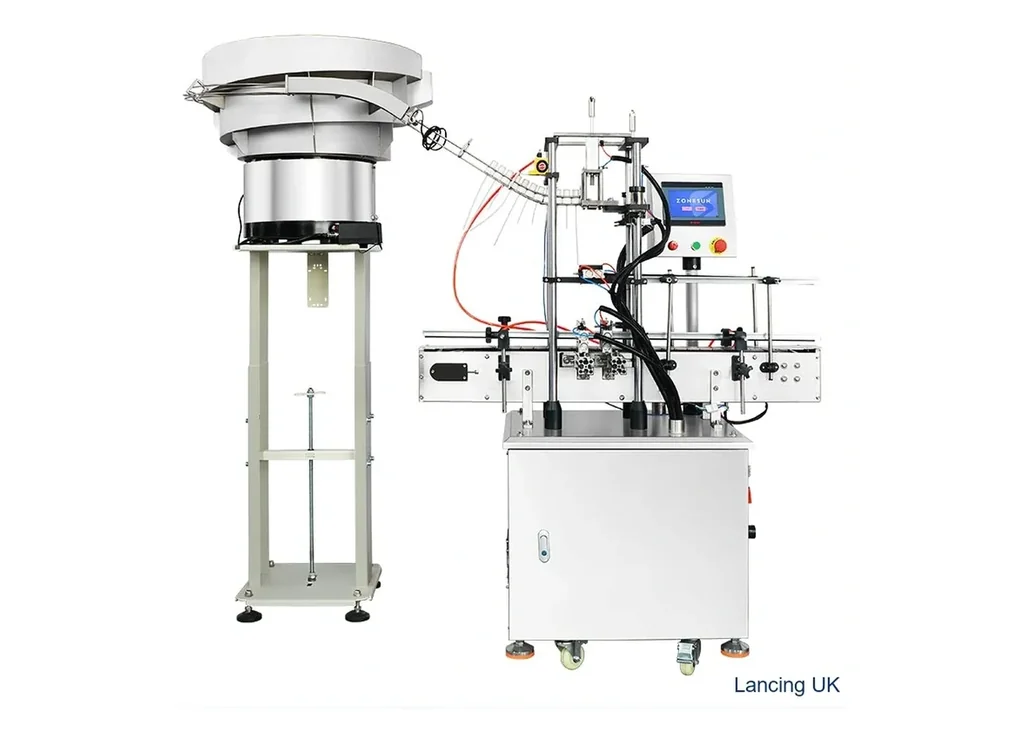
Semi automatic screw capping machine for controlled cap tightening
Chuck capping

Chuck capping machines for controlled cap tightening

Chuck cappers tighten a closure with a shaped head, making them useful where cap control, bottle support and repeatable application are more important than simple hand tightening.

Ask about this application →

Useful details for a quote

  • Cap diameter, height and closure type
  • Bottle height, diameter, shape and material
  • Target bottles per minute or per hour
  • Manual cap placement or automatic cap feeding
  • Existing filler, labeller, conveyor or line layout
Selection notes

Which cap and bottle features affect chuck capping?

Where chuck capping fits

A chuck capper is often used for threaded closures, lower to medium speeds, controlled torque requirements and applications where a cap needs a positive grip during tightening.

Tooling and cap fit

The chuck must suit the cap diameter, height, profile and material. Closures with ribs, smooth sides, liners or tamper bands can need different tooling or torque settings.

Bottle support

Bottle nests, clamps or guides may be required where the bottle is light, flexible, tall or difficult to hold under torque. This is especially important on small or shaped containers.

Next step

Send bottle and cap information before final machine selection.

Photos, dimensions and target output help identify the most likely capping route. Physical samples are normally the best way to confirm tooling, cap feeding and bottle support.

FAQ

Common questions

What is a chuck capper?

A chuck capper uses a capping head or chuck to grip and tighten one closure at a time to the required application method.

Is a chuck capper the same as a spindle capper?

No. A chuck capper typically grips one cap with a shaped chuck, while spindle or belt systems tighten caps as bottles move through an inline machine.

Can chuck tooling be changed for different caps?

Often yes, but each cap diameter, height and profile should be checked before committing to a changeover plan.

Chuck capper questions

Questions that determine whether a chuck route is practical.

When is a chuck capper preferred over a spindle capper?

A chuck capper is considered when a shaped tool can engage the closure positively and the bottle can be located for a controlled tightening cycle. It may suit caps that do not provide a reliable side-wheel contact surface, but the final choice still depends on cap placement, bottle stability, output and changeover requirements.

Compare chuck and spindle capping →

Does every cap need a different capping chuck?

Closures with materially different diameters, external profiles or sensitive surfaces can need different chucks or inserts. A stated cap diameter range does not guarantee one tool will grip every cap. Group the formats by real contact geometry and prove each required closure with samples.

How should bottle rotation be prevented during chuck capping?

The bottle can be controlled with clamps, guides, starwheels, anti-rotation features or another support designed for the container. The restraint must prevent turning without crushing, marking or distorting the bottle. Test at production fill weight.

What should be checked after a chuck or insert change?

Confirm the correct tool identity, secure fitting, cap engagement, release, bottle position, applied setting and finished cap condition. Run first-off samples and check torque or seating, cap height, decoration, thread start and the required leak or opening method before full production.

Plan repeatable changeovers →
Call nowContact us