
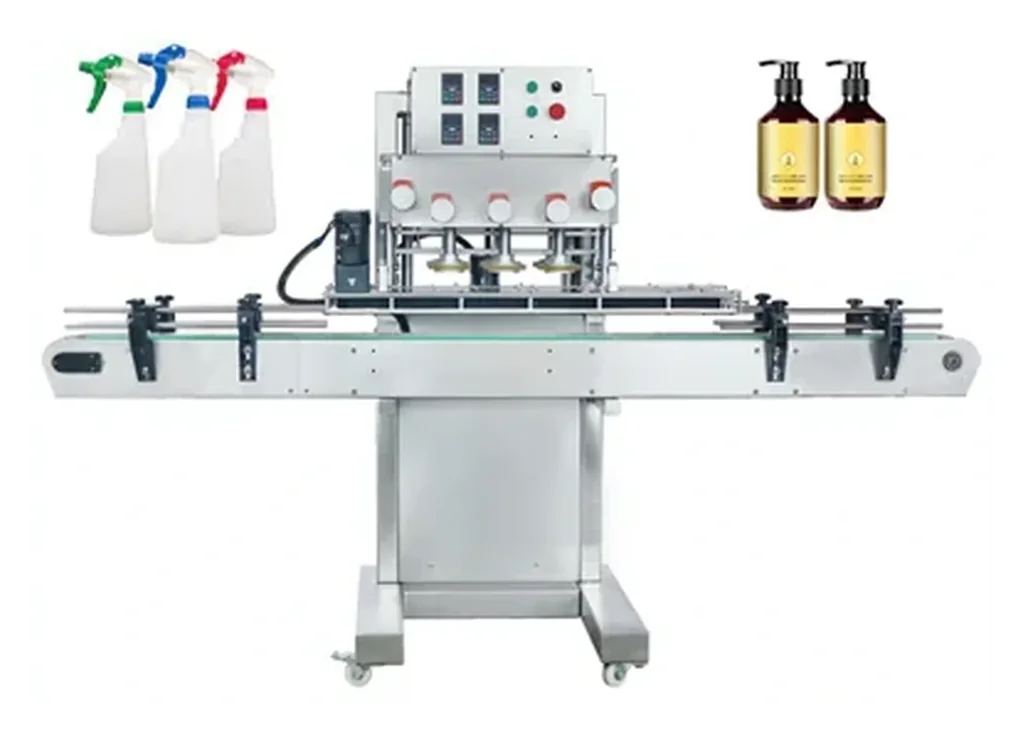
Screw capping machine
Inline automatic screw capper for sprays, pumps and screw caps
Production screw-capping route for spray bottles, pump closures and standard screw caps with adjustable guides and stable in-line handling.
Ask about this machine →Pump bottle capping and pump cap feeding systems for cosmetics, soaps, lotions, gels and other dispenser products.
The right capping system depends on closure geometry, bottle stability, torque or seating requirement, cap presentation and integration with your existing line.
Production screw-capping route for spray bottles, pump closures and standard screw caps with adjustable guides and stable in-line handling.
Ask about this machine →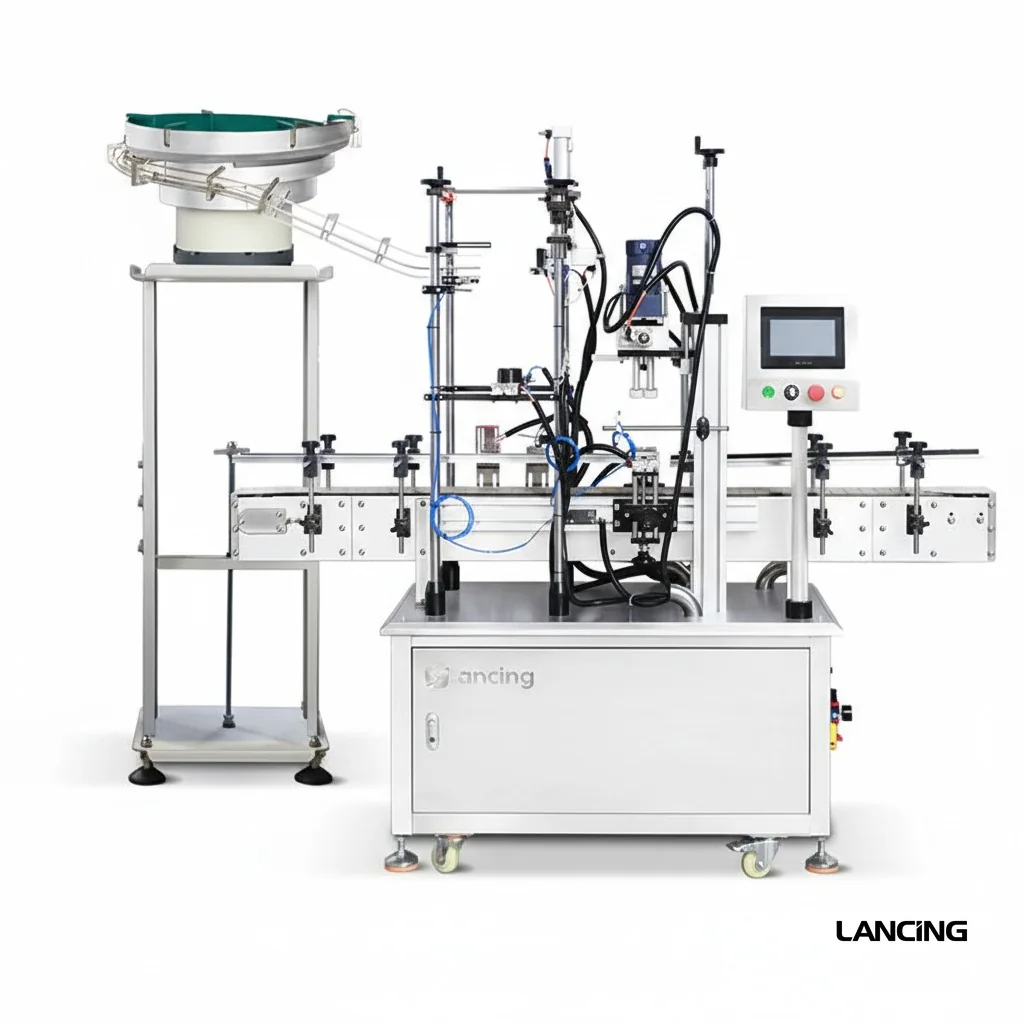
Automatic pump closure capping with vibrating bowl sorting and guided bottle transfer for cosmetic and personal-care lines.
Ask about this machine →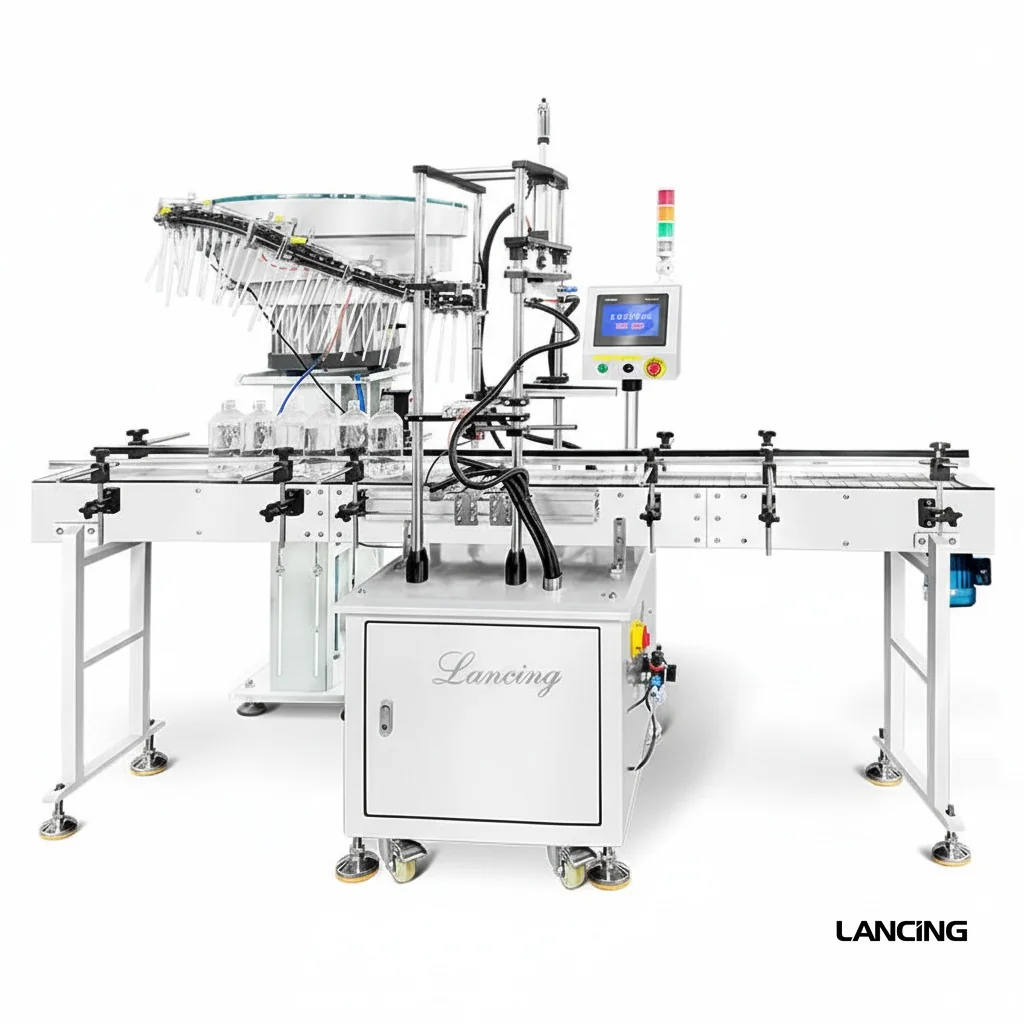
Specialist pump-cap feeding and placement support for difficult pump and dispenser closures that need correct orientation before closing.
Ask about this machine →Pump closures are taller and less symmetrical than standard screw caps. The dip tube, actuator head and closure skirt can all affect feeding, placement and tightening.
Pump capping is used for liquid soap, hand wash, creams, lotions, gels, sanitisers, haircare, skincare and other products where a dispenser pump is fitted to the bottle.
Confirm pump closure dimensions, dip tube length, bottle height, bottle stability, output target and whether caps will be placed manually or fed automatically.
Photos, dimensions and target output help shortlist the correct machine. Physical samples can then be checked before the final capping specification is confirmed.
Some pump caps can be fed automatically, but the closure design, dip tube and orientation requirements need to be checked before a feeding system is specified.
Sometimes, but the tooling, bottle guides, head setup and changeover requirements need to be checked for each closure family.
The visible machine examples on this page are a starting point. Final selection depends on samples and line information, especially where a cap looks simple but behaves differently under torque, pressure, feeding or conveyor handling.
Check cap diameter, cap height, liner, thread or seating method, bottle neck finish, bottle material and how firmly the container can be held while the closure is applied.
Confirm whether caps will be placed by hand, presented from a bowl, elevated from bulk storage or orientated by a custom track. Feeding can be the limiting factor on automatic systems.
Agree how a good cap will be checked: torque, tamper-band formation, seated height, leak risk, visual alignment, operator access and repeatability during changeover.
Compare this route with the parent closure technology guide, the capping route matrix, the torque and quality guide and the quote checklist. For deeper specialist information use Pump Capping Machines UK where the closure type is already confirmed.
Send bottle and cap details