
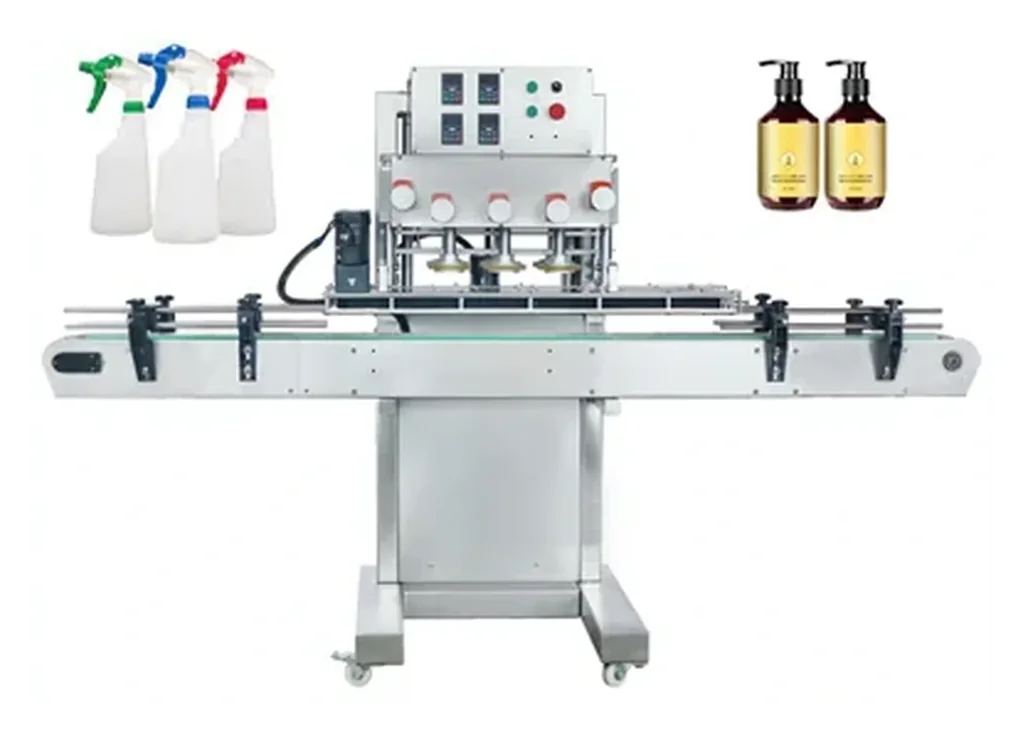
Screw capping machine
Inline automatic screw capper for sprays, pumps and screw caps
Production screw-capping route for spray bottles, pump closures and standard screw caps with adjustable guides and stable in-line handling.
Ask about this machine →Trigger capping systems for long, angled and difficult-to-feed trigger spray closures used in household, chemical and care products.
The right capping system depends on closure geometry, bottle stability, torque or seating requirement, cap presentation and integration with your existing line.
Production screw-capping route for spray bottles, pump closures and standard screw caps with adjustable guides and stable in-line handling.
Ask about this machine →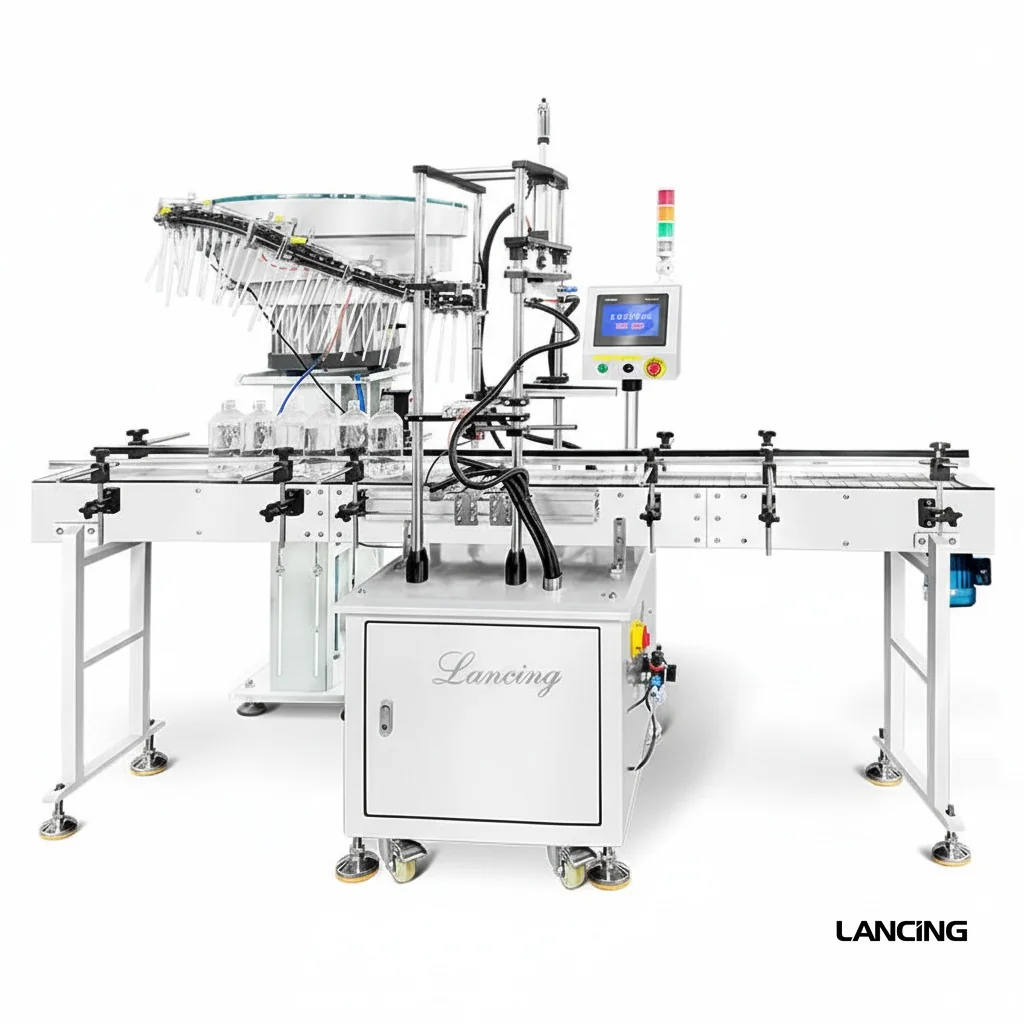
Specialist pump-cap feeding and placement support for difficult pump and dispenser closures that need correct orientation before closing.
Ask about this machine →
Dedicated trigger sprayer capping for cleaning, household and care bottles with cap handling designed around long trigger heads.
Ask about this machine →Trigger heads are long, angled and often difficult to orient. A standard screw capper may not be enough unless cap presentation, bottle control and tightening access are suitable.
Trigger cappers are used for cleaning sprays, household chemicals, automotive liquids, garden products, pet care, janitorial products and other spray bottle formats.
Send photos and dimensions of the trigger head, bottle size, bottle shape, neck finish, desired speed and current filling or labelling line layout.
Photos, dimensions and target output help shortlist the correct machine. Physical samples can then be checked before the final capping specification is confirmed.
Yes, but the trigger head geometry and bottle shape need to be checked so the cap can be controlled and tightened without twisting the bottle out of position.
Yes, trigger capping is common for cleaning and chemical bottles, but machine materials, guarding and product handling should be reviewed for the application.
The visible machine examples on this page are a starting point. Final selection depends on samples and line information, especially where a cap looks simple but behaves differently under torque, pressure, feeding or conveyor handling.
Check cap diameter, cap height, liner, thread or seating method, bottle neck finish, bottle material and how firmly the container can be held while the closure is applied.
Confirm whether caps will be placed by hand, presented from a bowl, elevated from bulk storage or orientated by a custom track. Feeding can be the limiting factor on automatic systems.
Agree how a good cap will be checked: torque, tamper-band formation, seated height, leak risk, visual alignment, operator access and repeatability during changeover.
Compare this route with the parent closure technology guide, the capping route matrix, the torque and quality guide and the quote checklist. For deeper specialist information use Trigger Cappers UK where the closure type is already confirmed.
Send bottle and cap details