
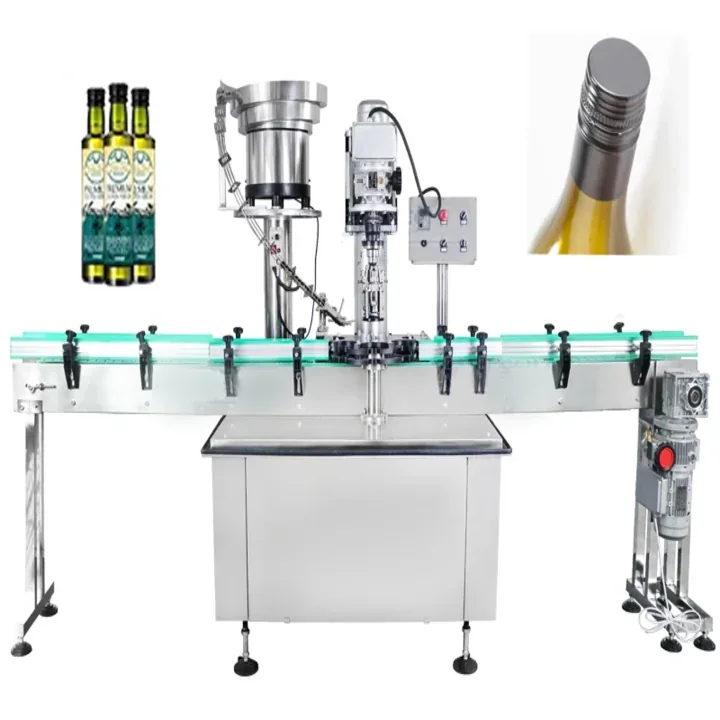
Glass bottle capping machines for ROPP and screw closures
Glass bottles are commonly capped with ROPP aluminium closures or threaded caps, with machine choice depending on neck finish, bottle height and closure style.
Ask about this application →Glass bottles are commonly capped with ROPP aluminium closures or threaded caps, with machine choice depending on neck finish, bottle height and closure style.
Lancing can help shortlist practical capping machinery after reviewing cap type, neck finish, bottle stability, output target, torque requirement and the way caps are presented to the machine.

Glass bottles are commonly capped with ROPP aluminium closures or threaded caps, with machine choice depending on neck finish, bottle height and closure style.
Ask about this application →ROPP machines form an aluminium closure onto the bottle neck to create a pilfer-proof finish. The head, rollers and neck finish need to match the closure specification.
Some glass bottle applications use threaded caps rather than ROPP. Torque, liner compression and bottle grip must be assessed against the actual bottle.
Glass bottle capping is common in drinks, oils, sauces, spirits, cosmetics and premium products where appearance and sealing consistency are important.
Photos, dimensions and target output help identify the most likely capping route. Physical samples are normally the best way to confirm tooling, cap feeding and bottle support.
No. Many glass bottles use screw caps or specialist closures. ROPP is used where an aluminium pilfer-proof closure and compatible neck finish are required.
Yes. Semi-automatic ROPP capping can be practical for short runs and controlled batches.
Neck finish, closure dimensions, bottle height, diameter, stability and required tamper-evident finish should be checked.