Capping machinery specialists — UK supply, installation and support01494 623015 · sales@lancinguk.com
Capping machine range

Capping machine range.

Compare screw, ROPP, pump, trigger, press cappers and cap feeders.

Screw cappersROPP cappersPump cappersTrigger cappersCap feeders
Shortlist by cap type

Compare capping machines by cap type and production requirement.

Use the range below to compare likely machine routes. We confirm the final specification against your real bottle, cap, liner, required torque, line speed and production layout.

Screw capping

Screw cappers for threaded caps, sprays, droppers and pump closures.

Torque repeatability, cap feed method and bottle stability decide whether a compact inline capper, automatic screw capper or belt/spindle capper is the right route.

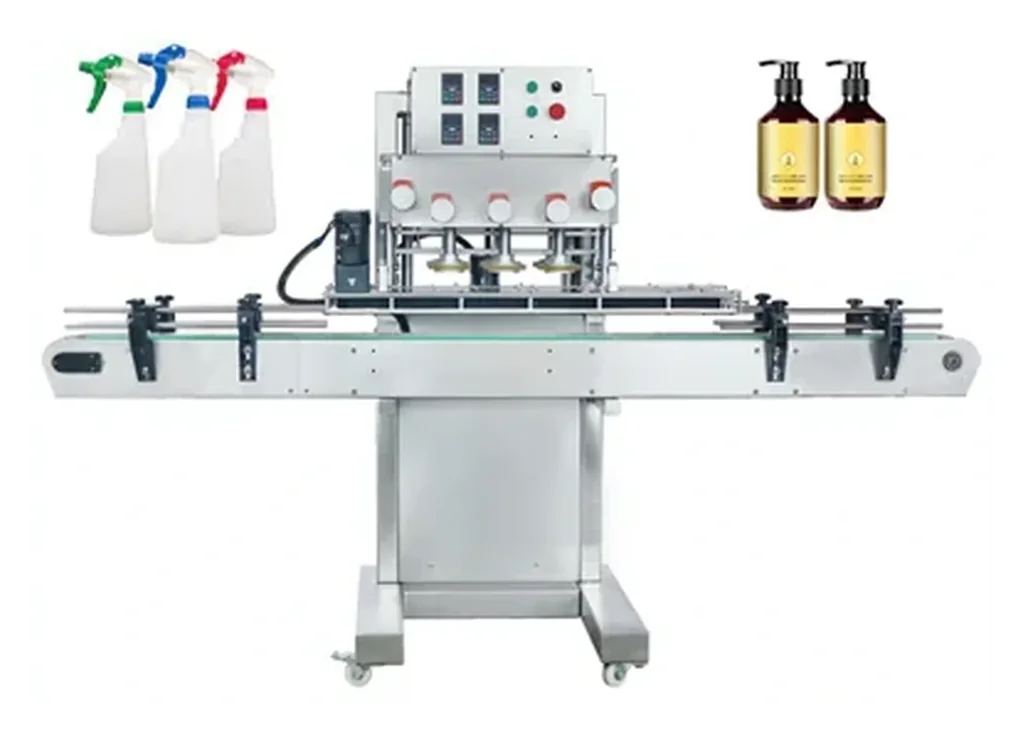
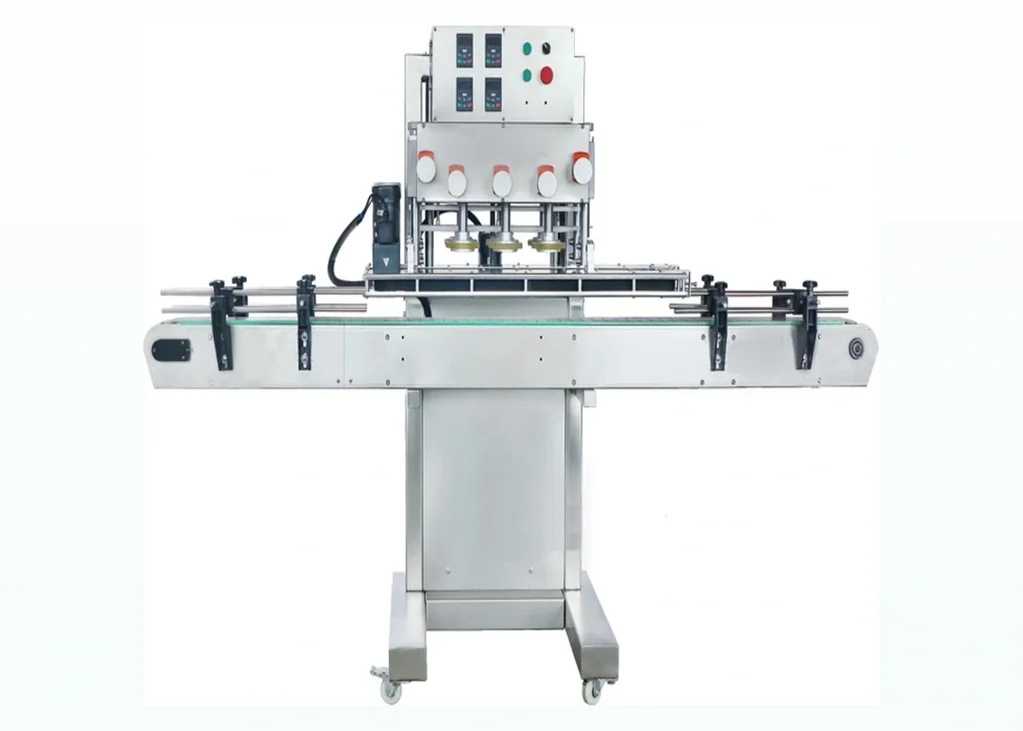
Automatic belt spindle screw capping machine
Screw capping

Automatic belt / spindle screw capping machine

Inline belt and spindle capping for round plastic bottles and higher-output screw-cap lines where repeatable torque and conveyor stability are required.

Best for
Round bottles, screw caps, plastic closures
Typical output
3000–5000 BPH options
Ask about this machine →
Inline automatic screw capping machine for sprays pumps and screw caps
Screw capping

Inline automatic screw capper for sprays, pumps and screw caps

A production screw-capping route for spray bottles, pump closures and standard screw caps, with adjustable guides and stable in-line handling.

Best for
Sprays, pumps, droppers, standard screw caps
Typical output
20–60 bottles/min
Ask about this machine →
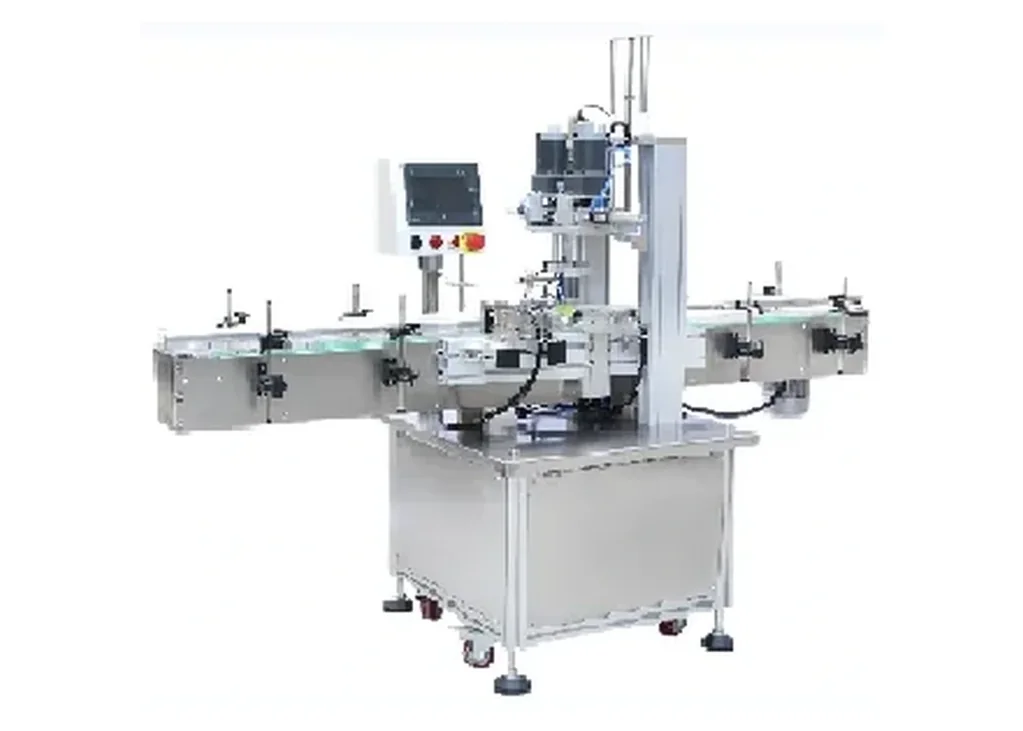
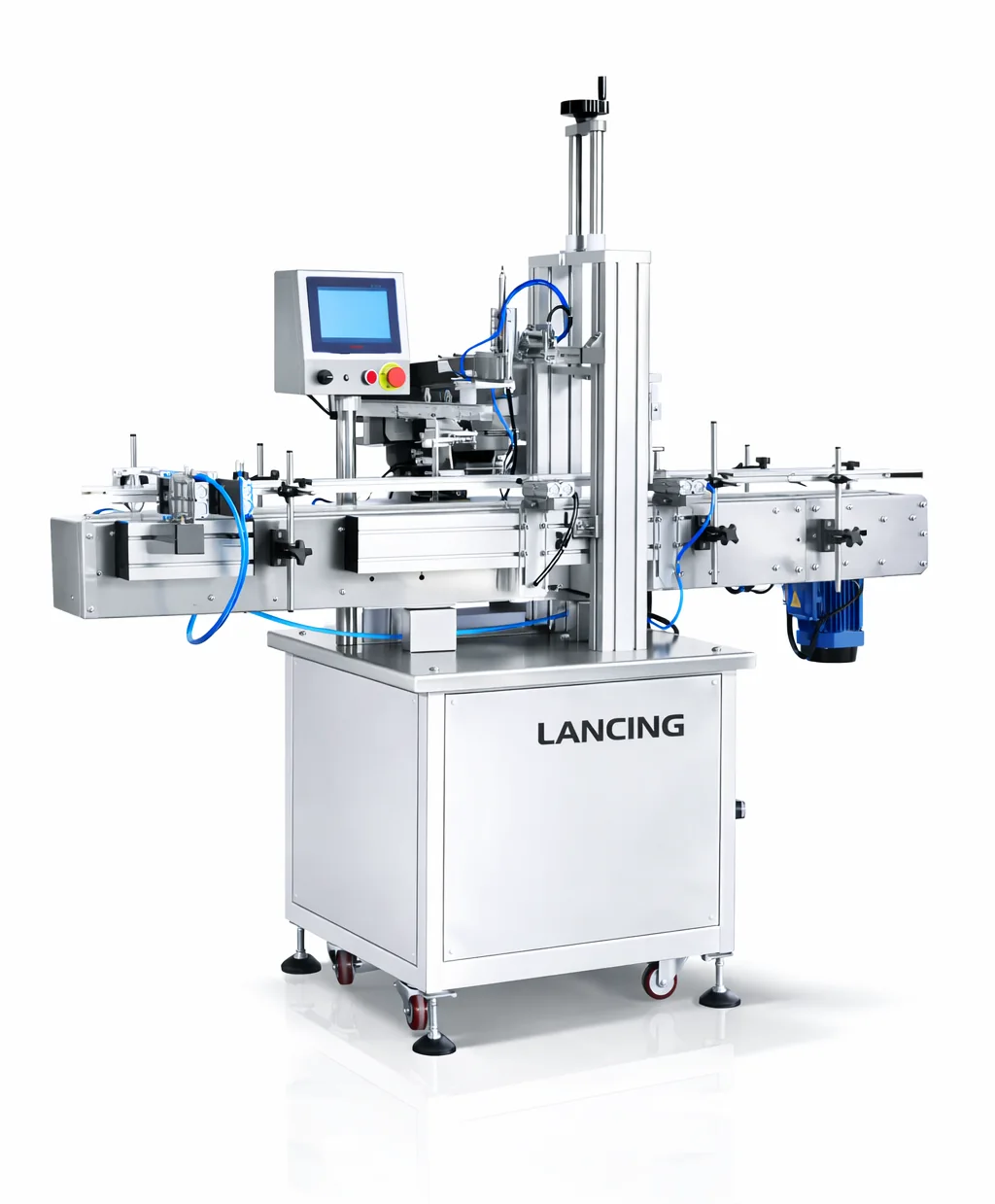
Compact inline screw capping machine
Compact capping

Compact inline screw capping machine

Space-saving inline capping for compact production rooms, laboratories and pilot lines where layout and fast changeover are important.

Best for
Bench and compact conveyor lines
Typical output
Approx. 20–40 bottles/min
Ask about this machine →
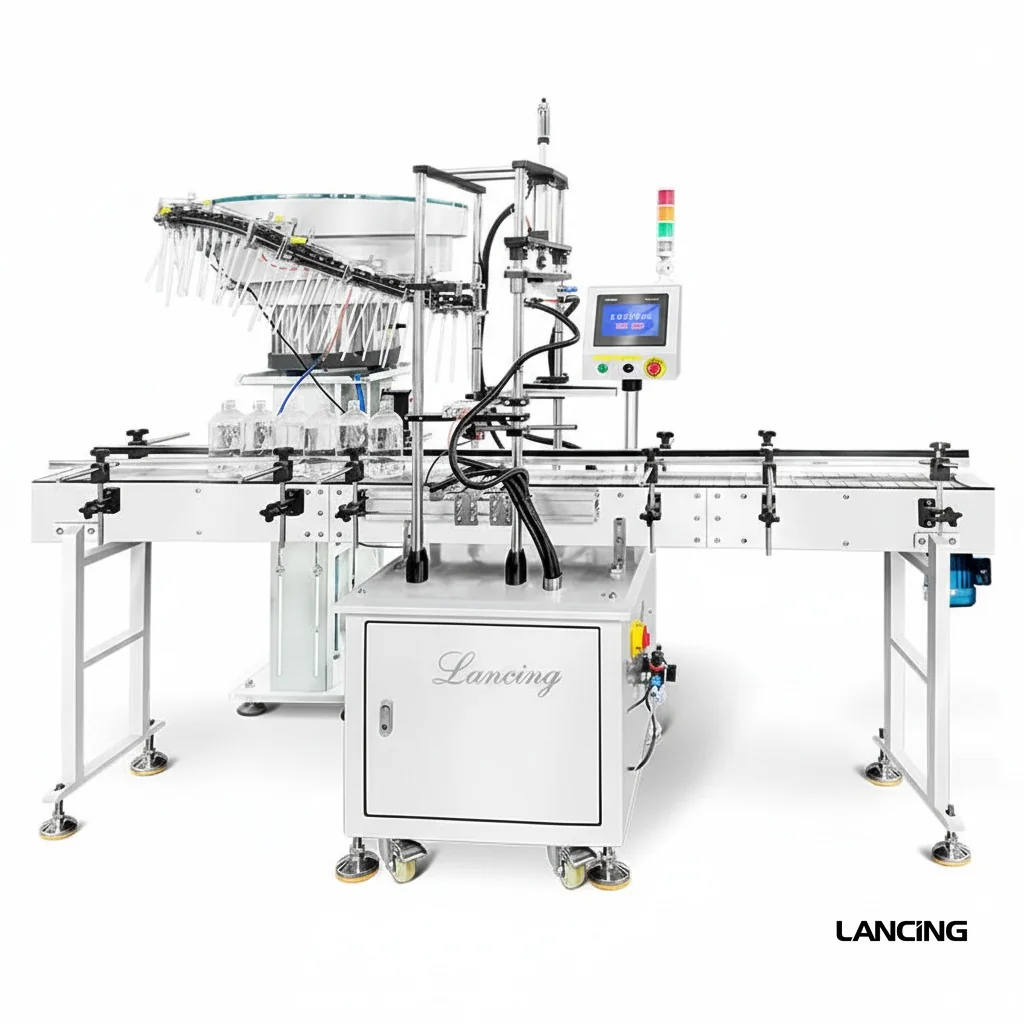
Bowl feed automatic screw capping machine
Screw capping

Bowl-feed automatic screw capper

Automatic screw cap handling with bowl feeding for threaded closures where operator cap placement would limit line speed or consistency.

Best for
Automatically fed screw-cap applications
Typical output
Format dependent
Ask about this machine →
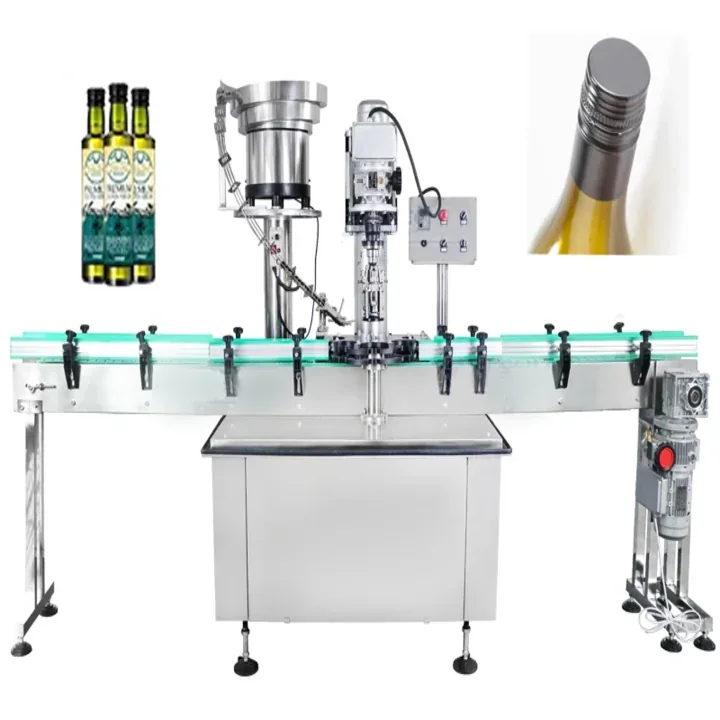
ROPP capping

Roll-on pilfer-proof cappers for aluminium closures.

ROPP cappers form the thread and tamper band on the bottle neck. They are commonly used for wine, spirits, oils, beverages, syrups and premium glass bottles.

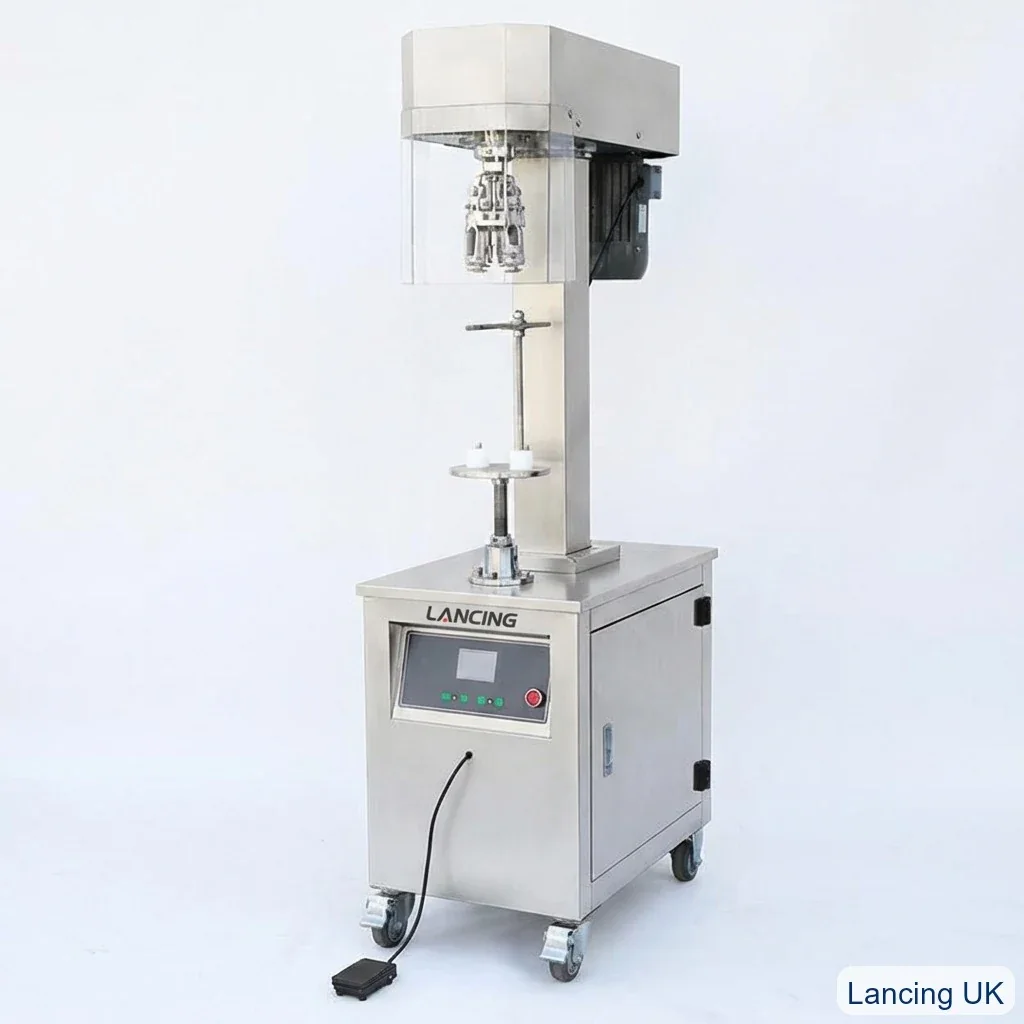
Semi automatic ROPP cap sealing machine
ROPP capping

Semi-automatic ROPP capper

Operator-fed roll-on pilfer-proof capping for aluminium closures on glass bottles, short runs and controlled batch production.

Best for
Wine, spirits, oils, glass bottles
Typical output
25–30 bottles/min typical
Ask about this machine →
Automatic ROPP capping machine with conveyor and cap sorter
ROPP capping

Automatic ROPP capping machine

Automatic ROPP capping with conveyor, cap sorting and line integration for beverage, oil and premium bottle production.

Best for
Inline ROPP closure production
Typical output
2,000–8,000/h options
Ask about this machine →
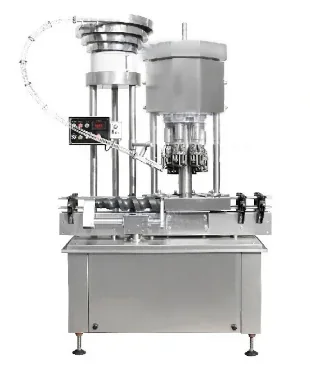
Multi head ROPP capping machine
ROPP capping

Multi-head ROPP capping machine

Multi-head ROPP format for higher line speeds where secure thread forming and pilfer-band finish must remain consistent.

Best for
Higher-output ROPP applications
Typical output
High-speed rotary options
Ask about this machine →
Pump & trigger capping

Capping systems for pumps, dispensers and trigger sprayers.

Pump and trigger closures often require dedicated orienting, placement and tightening support because the cap shape is not symmetrical.

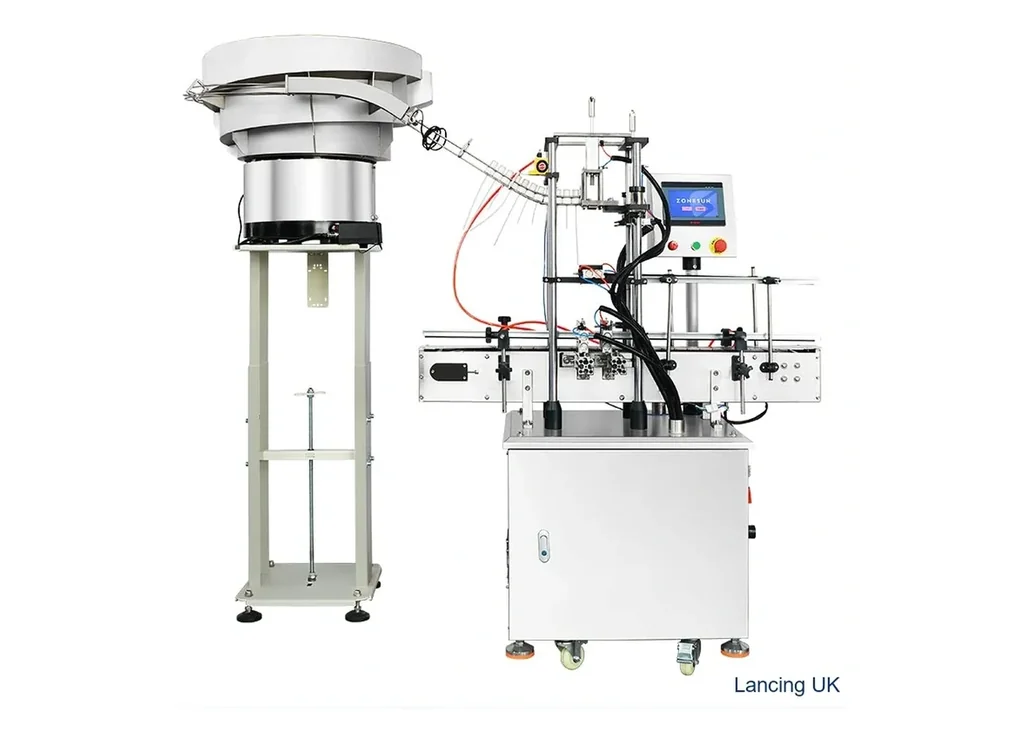
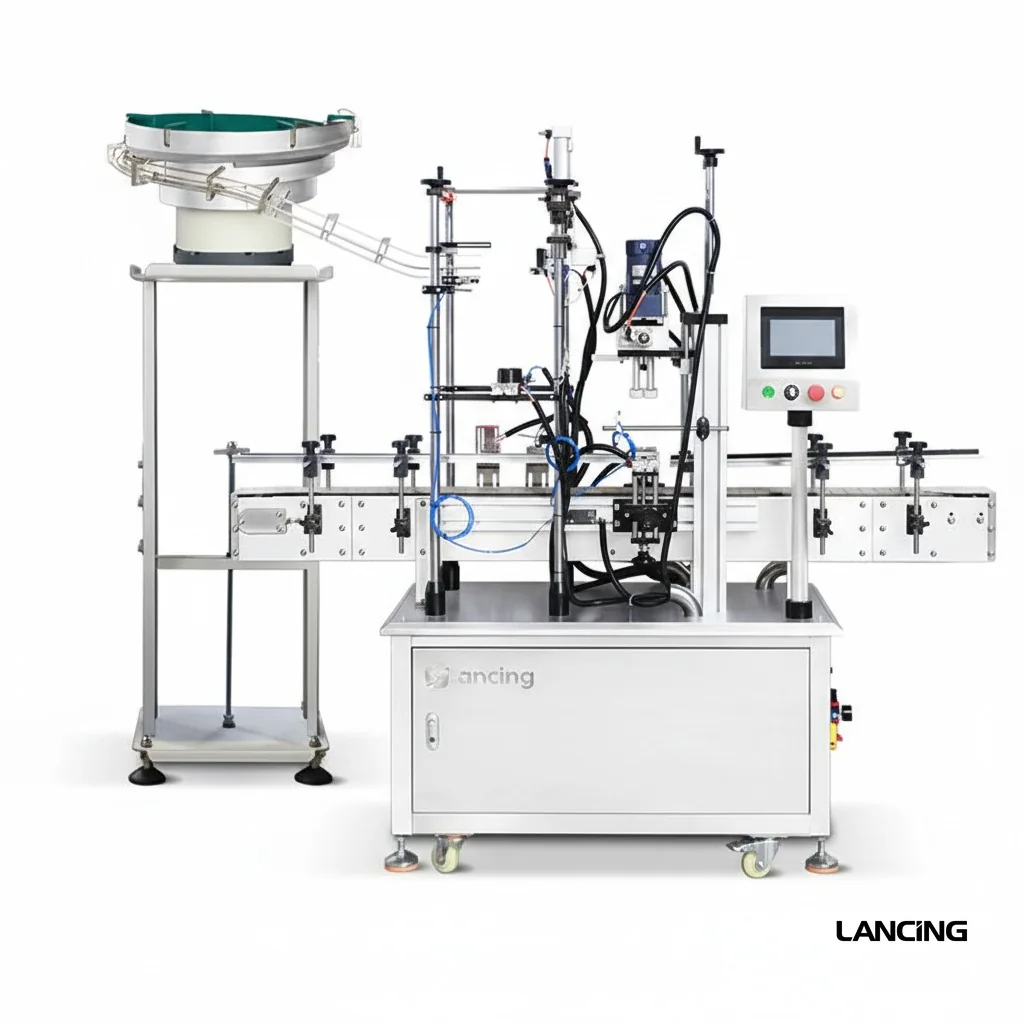
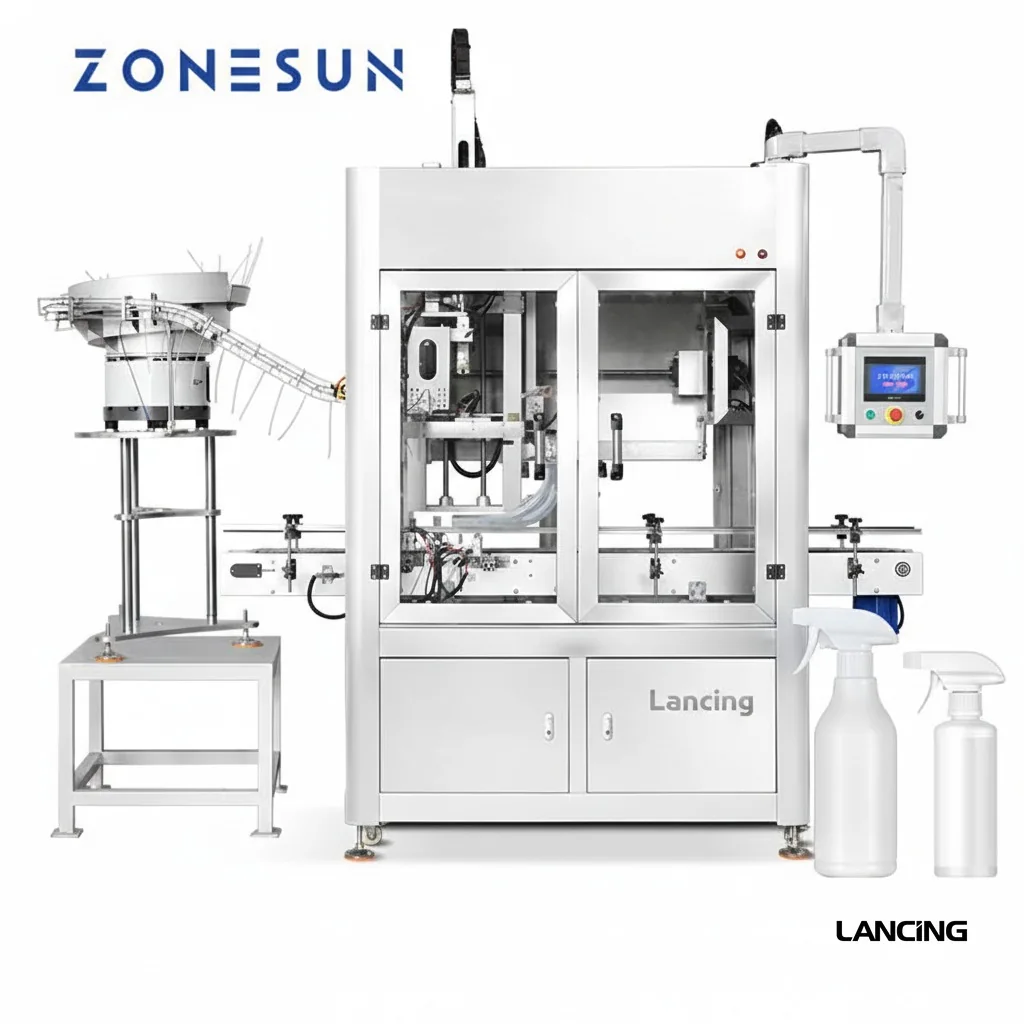
Automatic pump bottle capping machine with vibrating bowl
Pump capping

Automatic pump bottle capping machine with vibrating bowl

Automatic pump closure capping with vibrating bowl sorting and guided bottle transfer for cosmetic and personal-care lines.

Best for
Pump closures and dispenser bottles
Typical output
10–25 bottles/min
Ask about this machine →
Pump bottle cap feeding machine
Cap feeding

Pump bottle cap feeding machine

Specialist pump-cap feeding and placement support for difficult pump and dispenser closures that need correct orientation before closing.

Best for
Pump, dispenser and closure feeding
Typical output
5–25 bottles/min
Ask about this machine →
Trigger sprayer pump bottle capping machine
Trigger capping

Trigger sprayer pump bottle capping machine

Dedicated trigger sprayer capping for cleaning, household and care bottles with cap handling designed around long trigger heads.

Best for
Trigger sprays and angled closure formats
Typical output
5–23 bottles/min
Ask about this machine →
Automatic bottle cap pressing machine with cap feeder
Press capping

Automatic bottle cap pressing machine with cap feeder

Press capping for push-on caps, lids and cover-style closures where vertical seating force and repeatable cap presentation are critical.

Best for
Push-on caps, lids and cap pressing
Typical output
Configured to application
Ask about this machine →
Engineering check

Choose by real samples, not speed figures alone.

Published speed figures assume a compatible closure, stable bottle and suitable feed method. Lancing will help test real samples before final machine selection.

Quote checklist

  • Closure photos and dimensions
  • Bottle dimensions and material
  • Target line speed
  • Torque or seating requirement
  • Manual, bowl, elevator or pump cap feeding
  • Integration with filling and labelling
Send bottle and cap details
Specification pathway

Compare capping machine routes before committing to a capper.

A capping project should be checked in sequence: closure type, bottle stability, torque or seating requirement, cap presentation, conveyor control and the evidence needed for a reliable quotation. The pages below add detail without changing the existing machine range or application pages.

Compare closures

Closure technology comparison

Compare screw, ROPP, pump, trigger, press-on and cap-feeding routes in one parent-hub page before moving to specialist detail.

Compare capping routes →
Machine route

Model and route matrix

Use a qualitative model matrix to shortlist semi-automatic, chuck, spindle, inline, rotary, ROPP and cap-feeding routes without unsupported speed claims.

View the model matrix →
Trials and feeders

Trial and cap-feeder evidence

Prepare the practical evidence Lancing needs: cap samples, bottle stability checks, feeder orientation, layout photos and production constraints.

Prepare trial evidence →
Route decision points

Choose the capping machine style by risk, not by name alone.

The same bottle cap can behave differently once it is on a moving conveyor, held by a flexible container, or presented by a cap feeder. Before selecting a machine style, confirm how the cap is placed, how the bottle is supported and how the finished pack will be accepted.

Machine styleWhere it usually fitsMain risk to checkUseful internal page
Bench-top or semi-automatic capperShort runs, start-up production, pilot batches and formats needing operator judgement.Operator cap placement, repeatable bottle positioning and the correct tightening method.Bench-top capping machines
Chuck or torque-controlled capperThreaded caps where a controlled tightening action is more important than automatic cap feeding.Bottle turning, over-tightening, low torque and tooling fit.Chuck capping machines
Inline spindle or belt capperConveyor-fed screw-cap lines where caps can be presented reliably and bottles are stable.Cross-threading, guide setting, cap pick-up and bottle side-grip consistency.Spindle capping machines
ROPP capperAluminium pilfer-proof closures on compatible neck finishes.Head tooling, roll formation and cap/neck compatibility.ROPP capping machines
Cap feeder with automatic applicatorLines where manual placement limits output, consistency or staffing.Cap orientation, bowl/elevator suitability, transfer track stability and sensor logic.Controls and integration checks
Additional closure routes

Crown, vial and T-cork closures need dedicated application methods.

Not every closure is tightened by a conventional screw-capping head. Crown caps are formed onto the bottle finish, vial seals are crimped around a matched vial-and-stopper assembly, and T-corks are pressed to a controlled seating position. Treating these as separate routes improves the quality of the machine shortlist.

Crown capping

Form the crown around the bottle finish.

Selection depends on the bottle finish, crown dimensions, bottle support, operator cycle and whether cap placement is manual or fed automatically.

Compare crown capping machines →
Vial crimping

Control the complete vial closure assembly.

The vial, elastomeric stopper and aluminium seal must be reviewed as one system. Samples are required to confirm head tooling and the inspection method.

Review vial crimp capping →
T-cork insertion

Seat bar-top closures without damaging the pack.

Closure material, insertion force, seating depth, bottle support and presentation method all influence the correct machine configuration.

Review T-cork capping machines →

Confirm the closure route with samples.

Send representative closures and containers, including filled samples where product weight or bottle flexibility changes stability. Lancing can then compare the practical capping method and the level of automation.

Request a machine review
Buyer questions

Questions that distinguish one capping machine route from another.

The same broad description can hide important differences in closure geometry, bottle support, tooling, cap presentation and everyday changeover work.

Why can two closures that look similar need different capping routes?

Closures that appear similar can differ in thread start, liner, tamper band, stiffness, surface finish, height or the way they must be presented. Those differences can change whether the correct route is chuck, spindle, ROPP, press-on, pick-and-place or another dedicated method.

A visual photograph is useful for early screening but does not show every functional feature. Compare controlled drawings and production samples, then check how the closure engages, seats and releases from the tooling. The machine route should follow the closure behaviour rather than its general appearance.

What makes a capping machine practical to change over?

A practical changeover restores a previously approved format without guesswork, excessive dismantling or repeated trial-and-error adjustment. Good changeover design combines clearly identified parts, accessible adjustments, recorded settings, first-off checks and enough space for the operator to work safely.

The quickest theoretical adjustment is not always the most repeatable. Review the actual bottle guides, clamps, belts, capping heads, feed tracks and sensors that must change. Ask how the previous settings are recovered and how the first bottles are approved before normal production resumes.

Review capping machine changeover planning →

When is a dedicated capping cell better than adding a capper to an existing line?

A dedicated cell can be preferable when the existing conveyor cannot stabilise the pack, the production schedule needs independent operation, or the cap application requires operator access and controls that do not fit the current line. Adding a capper inline is usually stronger when product flow, accumulation and interfaces can be defined cleanly.

Compare the full operating route: container infeed, cap loading, good-pack outfeed, rejects, cleaning, access and production ownership. A compact stand-alone cell may reduce integration risk, while an inline solution may reduce handling and labour. The correct answer depends on the real process rather than floor space alone.

Which capping decisions should be fixed before a detailed quotation?

Fix the pack identity, required production outcome, cap presentation method, line boundary and acceptance approach before requesting a detailed quotation. These decisions define the tooling, controls, guarding interfaces, change parts and testing scope that form the machine price and technical responsibility.

Some information can remain as an option, but assumptions should be visible. List the base format, additional formats, target sustained output, utilities, current conveyor or filler, operator tasks, sample availability and who supplies any upstream or downstream signals.

Use the capping machine quote checklist →

Compare routes against the same evidence.

Send representative bottle and cap details plus the required production flow. Lancing can identify which machine families deserve a sample trial and which can be ruled out early.

Request capping advice
Verified model specifications

Compare documented Lancing screw-capper configurations.

These model-level pages use published first-party Lancing specifications as a screening guide. Final speed, tooling, footprint and acceptance conditions must be confirmed with the actual bottle, closure, product condition and production layout.

Screw capper decision detail

Match the tightening mechanism to the closure surface and bottle control.

A threaded closure may need a shaped chuck, progressive spindle-wheel contact or another application route. Compare how the cap is gripped, how the bottle is restrained and how the finished pack will be inspected before choosing from a headline machine category.

Send the actual closure profile.

Include cap height, side-wall shape, hinge or tamper feature, bottle neck finish, target output, cap placement method and accepted finished samples.

Request capping advice
Call nowContact us