Capping equipment specified around your closure, bottle and production target.
The right capping route depends on how your closure is applied and secured, not just its diameter. Compare screw, ROPP, pump, trigger and press-on systems with the required cap feeding, bottle handling and line interfaces, then confirm the choice with production bottle and closure samples.
Screw capping
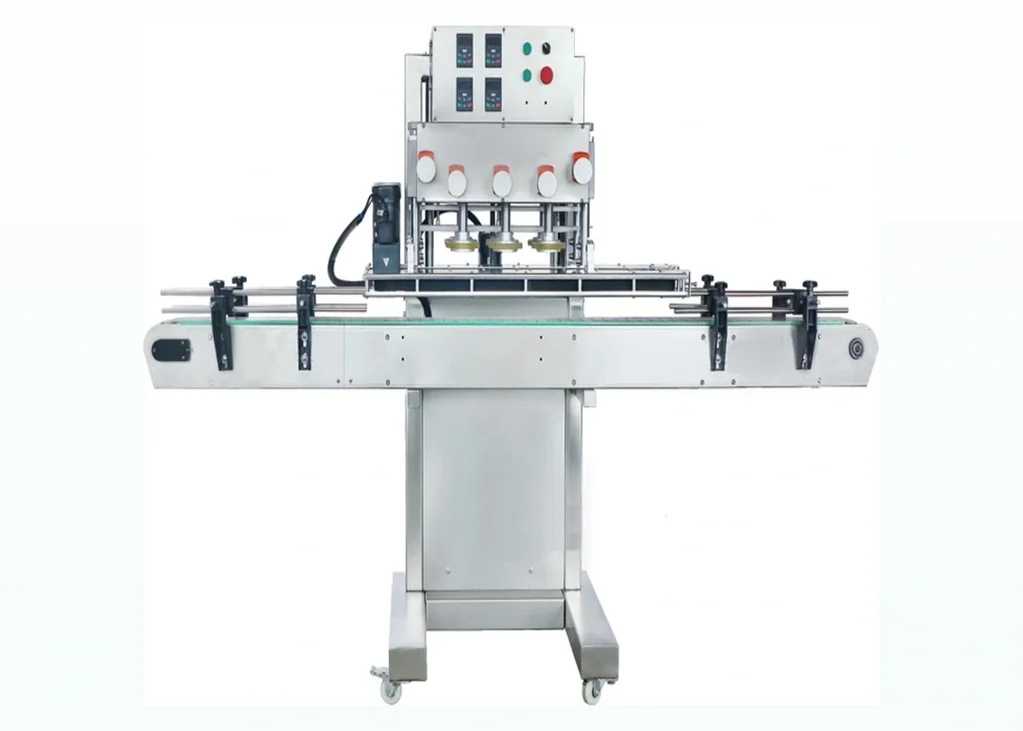
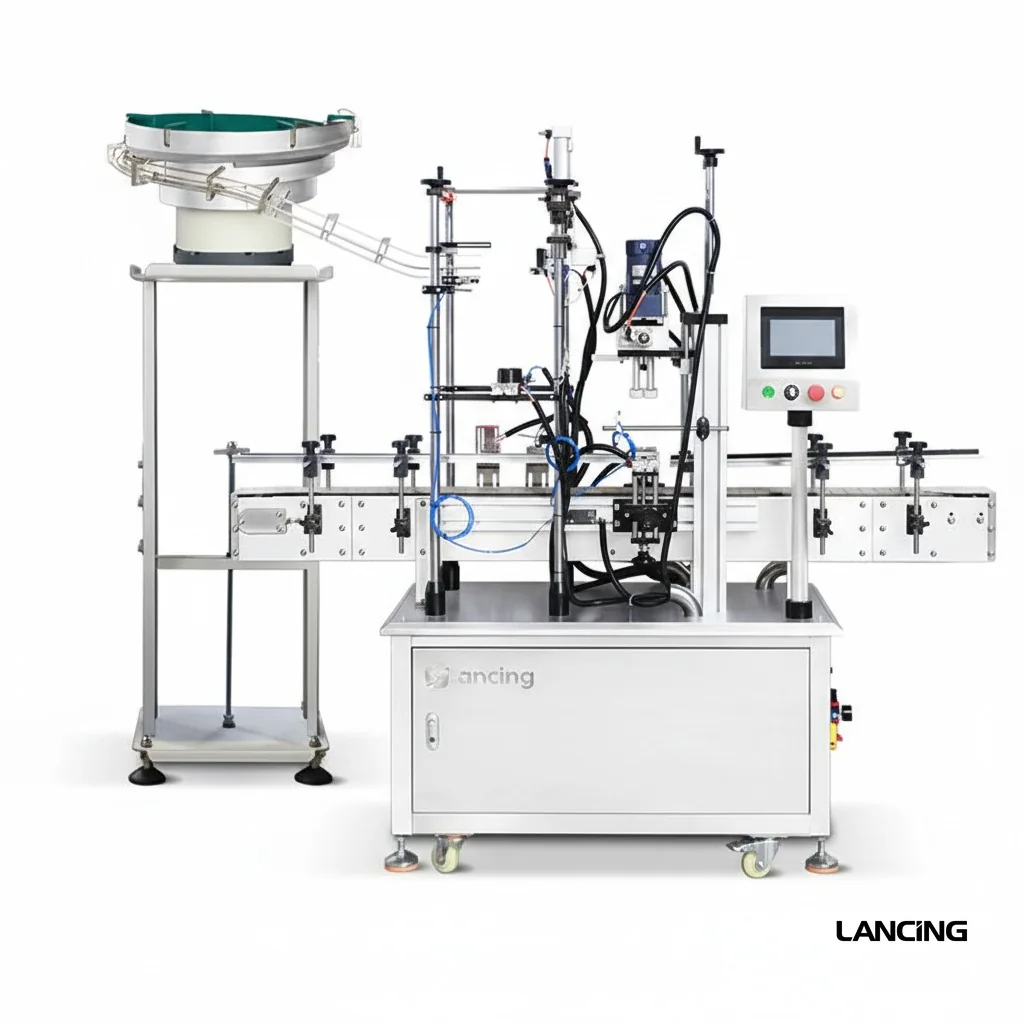
Automatic belt / spindle screw capping machine
Inline belt and spindle capping for round plastic bottles and higher-output screw-cap lines where repeatable torque and conveyor stability are required.
Best for
Round bottles, screw caps, plastic closures
Typical output
3000–5000 BPH options
Screw capping
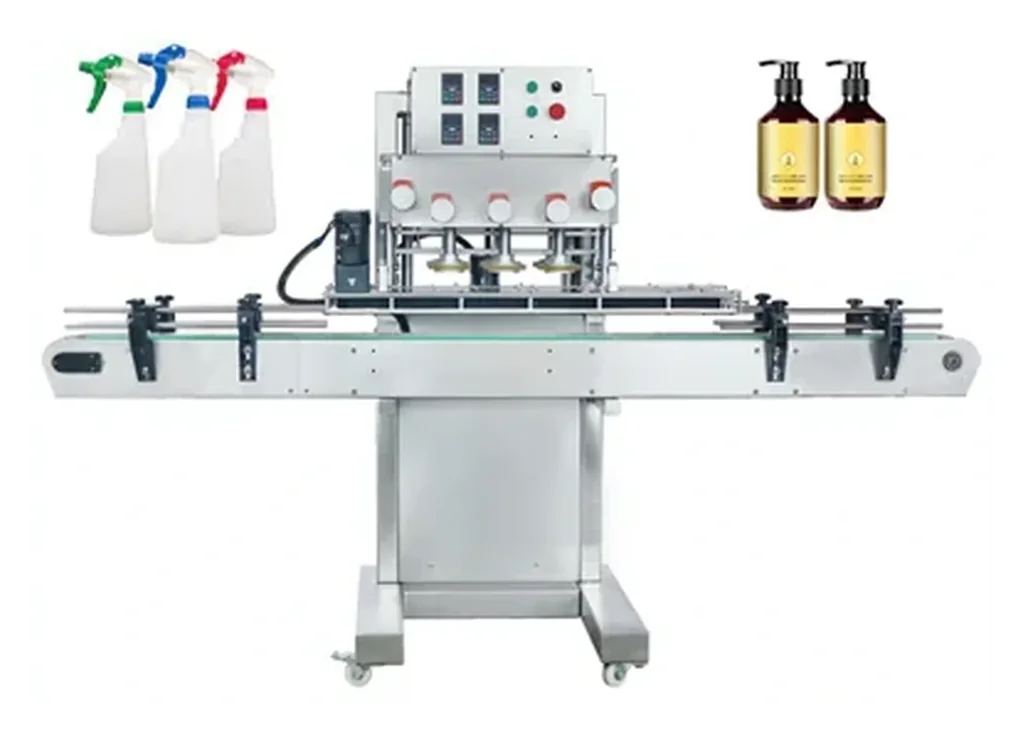
Inline automatic screw capper for sprays, pumps and screw caps
A production screw-capping route for spray bottles, pump closures and standard screw caps, with adjustable guides and stable in-line handling.
Best for
Sprays, pumps, droppers, standard screw caps
Typical output
20–60 bottles/min
ROPP capping
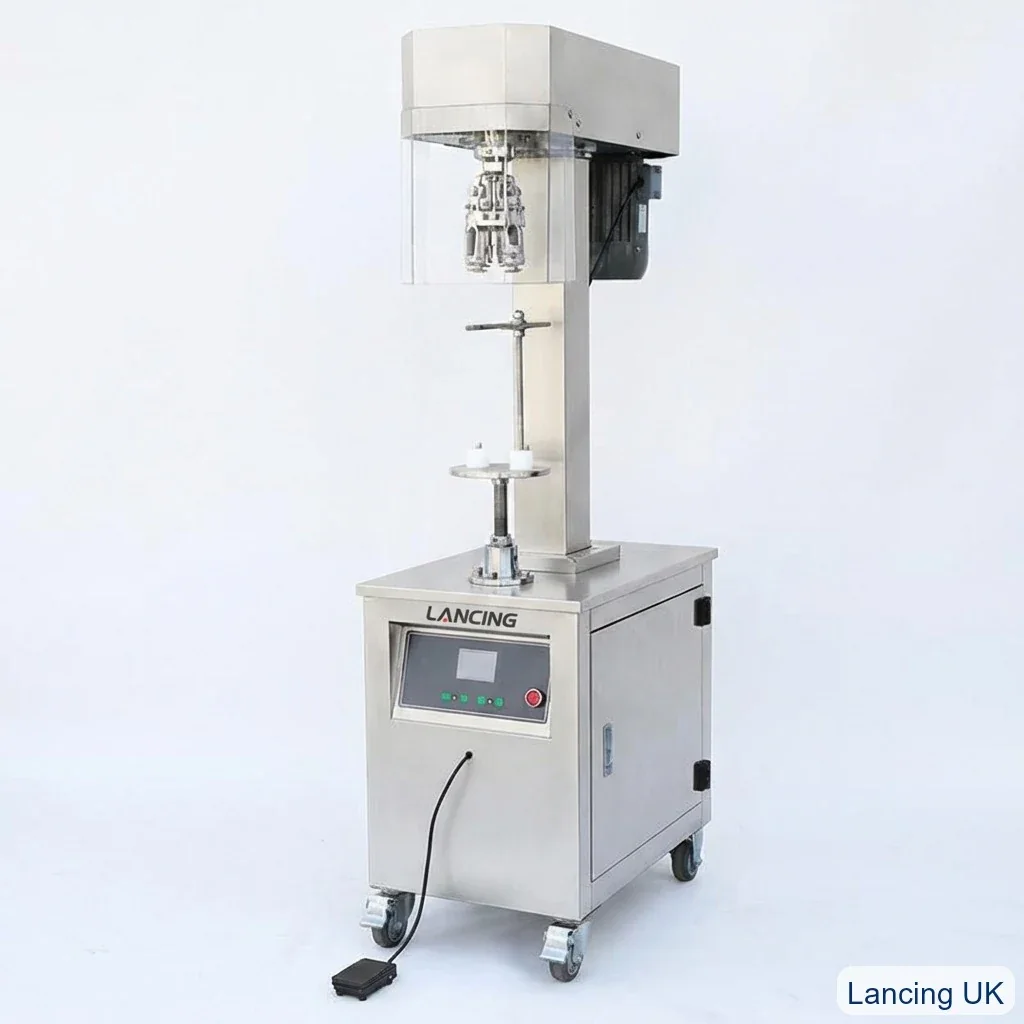
Semi-automatic ROPP capper
Operator-fed roll-on pilfer-proof capping for aluminium closures on glass bottles, short runs and controlled batch production.
Best for
Wine, spirits, oils, glass bottles
Typical output
25–30 bottles/min typical
ROPP capping
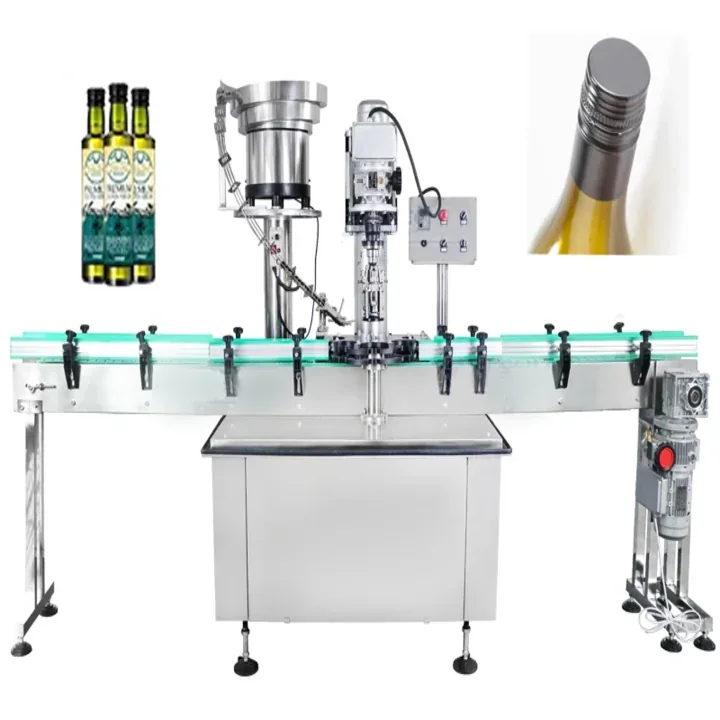
Automatic ROPP capping machine
Automatic ROPP capping with conveyor, cap sorting and line integration for beverage, oil and premium bottle production.
Best for
Inline ROPP closure production
Typical output
2,000–8,000/h options
Pump capping
Automatic pump bottle capping machine with vibrating bowl
Automatic pump closure capping with vibrating bowl sorting and guided bottle transfer for cosmetic and personal-care lines.
Best for
Pump closures and dispenser bottles
Typical output
10–25 bottles/min
Trigger capping
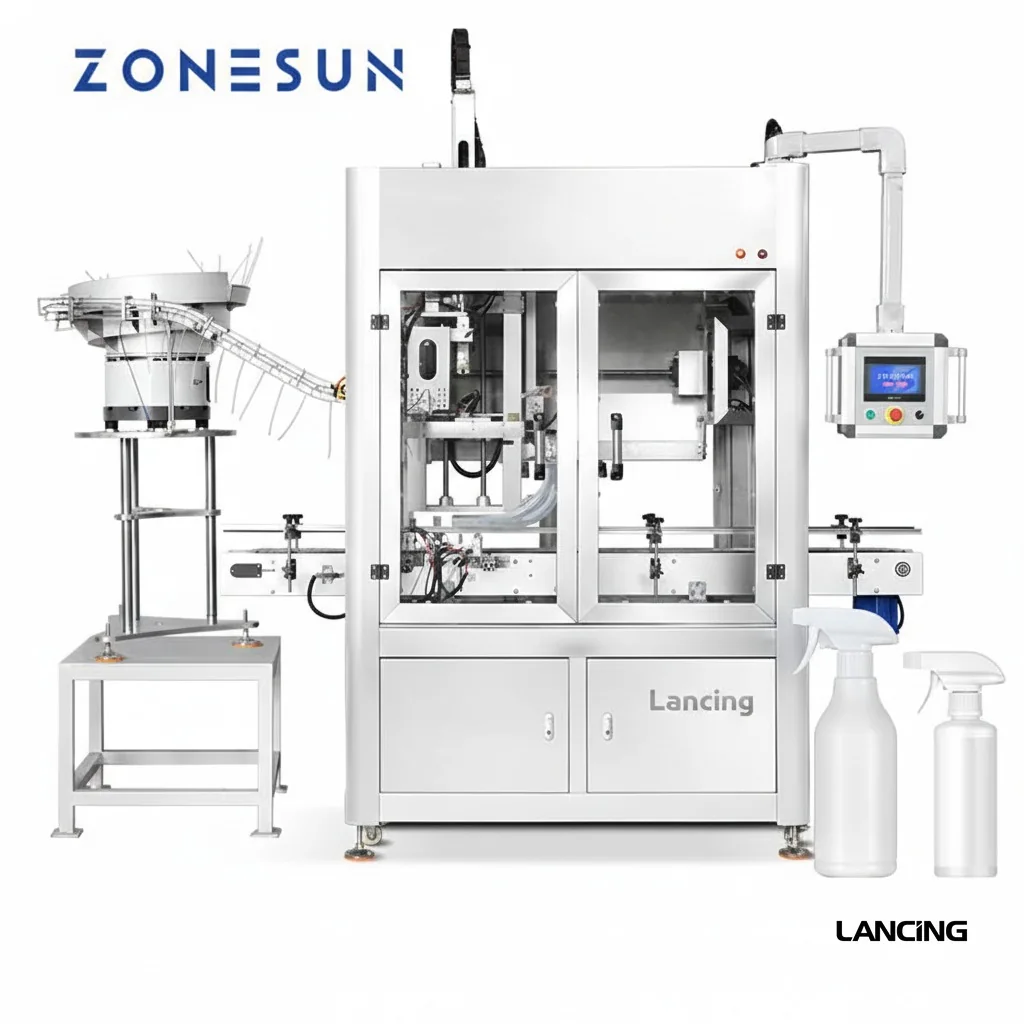
Trigger sprayer pump bottle capping machine
Dedicated trigger sprayer capping for cleaning, household and care bottles with cap handling designed around long trigger heads.
Best for
Trigger sprays and angled closure formats
Typical output
5–23 bottles/min
Specification support
Send your bottle, cap and output target before final machine selection.
Reliable capping depends on thread engagement, neck finish, liner compression, pilfer-band formation, cap presentation, bottle stability and torque repeatability. Lancing can review your samples and recommend the right route from bench capping to fully automatic systems.
20–60bottles/min compact options
8,000/hROPP range options
UKinstallation support
Useful details for a quote
Cap diameter, cap height and closure type
Bottle height, diameter, shape and material
Target bottles per minute or per hour
Torque target or opening-force requirement
Manual cap placement, bowl feeder or cap elevator
Existing filler, labeller, conveyor or line layout
Screw, ROPP, pump, trigger and push-on caps all require different handling and torque or seating methods.
02
Check bottle stability
Tall, light, tapered or flexible bottles can change the correct machine style and conveyor handling.
03
Plan cap feeding
Manual placement, bowl feeding, pump-cap feeding and cap elevators should be selected early.
FAQ
Capping machine questions
Which capping machine should I choose?
Choose by closure type first. Screw caps normally use semi-automatic, chuck, belt or spindle capping. Aluminium pilfer-proof closures use ROPP capping. Pumps and triggers often need specialist handling, cap feeding and tightening systems.
Can one machine run several caps?
Often yes, but it depends on cap diameter, cap height, thread style, liner, bottle stability, tooling, torque range and how frequently you change format.
Can Lancing integrate capping with filling and labelling?
Yes. Capping can be supplied as a stand-alone machine or integrated with filling, labelling, coding, conveyors and accumulation.
Capping machinery selection hub
Compare the closure technology before choosing the machine.
This site is designed as the parent capping machinery hub for UK buyers who need to shortlist the correct capping route before moving into a specialist screw, ROPP, pump, trigger or cap-feeding discussion. The first decision is normally the closure behaviour, not the machine brand or line speed.
Closure or handling route
When it is usually considered
Key checks before quoting
Best next page
Screw caps and threaded closures
Plastic or metal threaded caps, droppers and many standard bottle closures.
Thread engagement, required torque, bottle grip, liner compression and cap placement method.
Broad capping searches are handled here so buyers can compare screw, ROPP, pump, trigger, press-on and cap-feeding options without being pushed into the wrong specialist technology too early.
When the closure route is clear, the relevant Lancing specialist site can provide narrower detail for screw cappers, spindle cappers, trigger cappers, pump cappers or ROPP capping.
For an accurate recommendation, send cap and bottle samples where possible, plus photos, dimensions, torque targets, current line layout and target output.
Choose a capping machine for your bottle and closure.
A buyer searching for a capping machine may need a simple bench-top cap tightener, a semi-automatic ROPP unit, an inline screw capper, a pump or trigger handling system, or a complete filling, capping and labelling line. This site keeps that broad comparison together and then points the buyer to the correct specialist route when the cap behaviour is known.
What the buyer already knows
What Lancing needs to check next
Best page to use
The bottle uses a threaded screw cap.
Thread start, torque range, liner compression, bottle grip and whether cap placement is manual or automatic.
Use this site when the cap type or level of automation is still being compared. Specialist Lancing domains can then support detailed screw, spindle, trigger, pump or ROPP requirements without competing with this selector hub.
Samples
Base the recommendation on evidence.
Photos are useful for early screening, but a final recommendation is safest when bottle and cap samples can be checked against grip, presentation, seating and torque requirements.
Line fit
Check upstream and downstream equipment.
A capper should be selected as part of the real line flow, including filling, conveying, coding, labelling, accumulation and operator access.
Project route selector
Match the closure, container and proof requirement before selecting a capper.
A capping machine enquiry becomes more accurate when the closure route, container behaviour and acceptance evidence are considered together. Use the matrix below to identify the specialist checks that matter before samples are tested or a line layout is agreed.
Project characteristic
Primary engineering question
Useful next resource
Crown caps for bottles
Is the closure placed consistently, is the bottle supported correctly and what level of automation is required?
Record the closure, container, product, production pattern, utilities, guarding interfaces, changeovers and acceptance evidence before the final machine scope is fixed.
Confirm access, floor space, services, conveyor heights, drainage or cleaning needs, and the responsibilities for positioning, commissioning and training.
Representative samples, dimensioned photographs, target output, closure-quality requirements and a line sketch give Lancing a stronger basis for recommending the correct route.
Questions to settle before comparing capping machine models.
These questions help a buyer separate closure compatibility, production evidence and future-format planning before individual capping machine models are compared.
What should be decided before comparing capping machine models?
Decide the closure route, container behaviour, required quality check and level of automation before comparing model names. A model comparison is meaningful only when every option is being judged against the same bottle, cap, product condition, output target, operator task and line interface.
Start with the actual pack rather than a catalogue category. Record whether the closure is threaded, formed, pressed or crimped; whether cap placement is manual or automatic; how the bottle will be stabilised; and how a good closure will be accepted. This prevents a fast machine with the wrong handling method from appearing to be the best choice.
Closure type, dimensions, liner or insert and neck finish
Bottle material, rigidity, filled weight and centre of gravity
Target sustained output, changeover pattern and operator involvement
Required torque, seating, visual, leak or tamper-evidence checks
When should the closure supplier be involved in a capping project?
Involve the closure supplier when torque targets, liner behaviour, neck-finish compatibility, tamper-evident features or unexplained package damage cannot be confirmed from approved drawings and samples. The capping machine applies the closure, but the closure supplier owns critical information about the component design and intended application conditions.
Early involvement is particularly useful when a cap family is new, several liner constructions are being considered, the closure is child-resistant or tamper-evident, or opening performance changes after storage. The objective is to agree a package specification that the machine can reproduce, not to use machine force to compensate for incompatible packaging components.
Request current closure and container drawings
Confirm the intended application and removal test method
Identify approved liner, insert and material variants
Retain traceable samples from the packaging batches used in trials
What proves that a capping route is suitable for sustained production?
A sustained run using representative bottles, closures and operating conditions provides stronger evidence than a few correctly capped samples. The trial should show stable cap supply, bottle handling, closure quality, stop-and-restart behaviour, reject handling and operator recovery over a period that is meaningful for the proposed line.
The evidence should record what was tested, the machine settings, sample identity, stops, interventions, rejected packs and the agreed inspection method. A short demonstration can prove the basic mechanism; it cannot by itself prove feeder recovery, format repeatability or interaction with the filler, conveyor and downstream machines.
How should future bottle and closure formats influence the first specification?
Future formats should be listed before tooling, guides, cap feeding and control ranges are fixed. The aim is not to make one machine universal; it is to identify which future products can share a practical format family and which will need dedicated tooling, a separate feed route or a different capping technology.
Provide drawings or samples for credible future packs and rank them by likelihood and timing. Lancing can then consider adjustment range, change parts, stored settings, access and feeder flexibility without compromising the main production format. Unsupported “future proof” requirements usually add complexity without guaranteeing compatibility.
Separate confirmed future packs from speculative ones
Group formats by closure technology and container handling
Identify the expected changeover frequency
Agree which future formats require proof during the original trial
Send the bottle, closure, target output, current process and any future formats that must be considered. Lancing can use that evidence to compare the appropriate capping routes.
Check who supplies and supports the capping machinery.
Review Lancing's company details, UK contact route and technical resource library before preparing a machine enquiry.
Detailed selection and troubleshooting
Use the closure details to answer the next technical question.
The guides below cover distinct decisions that arise after the broad capping route has been identified: how the cap is contacted, how a tamper-evident band behaves, why threads can strip and how hinged dispensing closures should be handled.
Comparison
Chuck or spindle capping?
Compare cap contact, bottle control, torque method, cap feeding and continuous or indexed operation before selecting a screw capper.
How do I choose between screw, press-on and ROPP capping?
Start with the bottle finish and the closure specification. Define the required application result and how it will be checked, then compare the appropriate closing method using samples. Include closure feeding, bottle support, change parts and any tamper-evident feature in the proposed machine scope.
Choose the automation step that solves the production constraint
Before comparing capping equipment, identify the task that currently limits the line. It may be presenting loose caps, holding an awkward bottle, tightening the closure, checking the result or handling finished packs. Describe the constraint with a short production observation, dated and linked to a named pack, so the enquiry addresses the right part of the process.
Keep machine families tied to the closure drawing. A pre-threaded cap, a roll-on aluminium closure, a press-fit lid and a pump assembly need different questions answered. Where a production range contains several families, request a proposal that names the supported formats and any separate equipment, tooling or manual work needed.
A useful quotation separates standard equipment from the project-specific elements. Ask which bottle guides, cap handling components, inspection functions, interfaces and trial activities are included. Show the filling and downstream equipment that the capper must work with, even if those machines will remain unchanged.
Production baseline
Record the present accepted output, staffing and recurring interruptions over a representative run; label estimates clearly.
Future capacity
Distinguish the packs and output required at installation from optional expansion, and ask what the initial design allows for.
Release checks
Agree the appearance and closure checks for each pack before interpreting a trial as a successful demonstration.
Is the machine with the highest quoted speed always the best choice?
Compare the required accepted output, pack range and complete operating task. Ask what sample, staffing and line conditions support each quoted figure and which assumptions still need to be demonstrated with your production materials.