
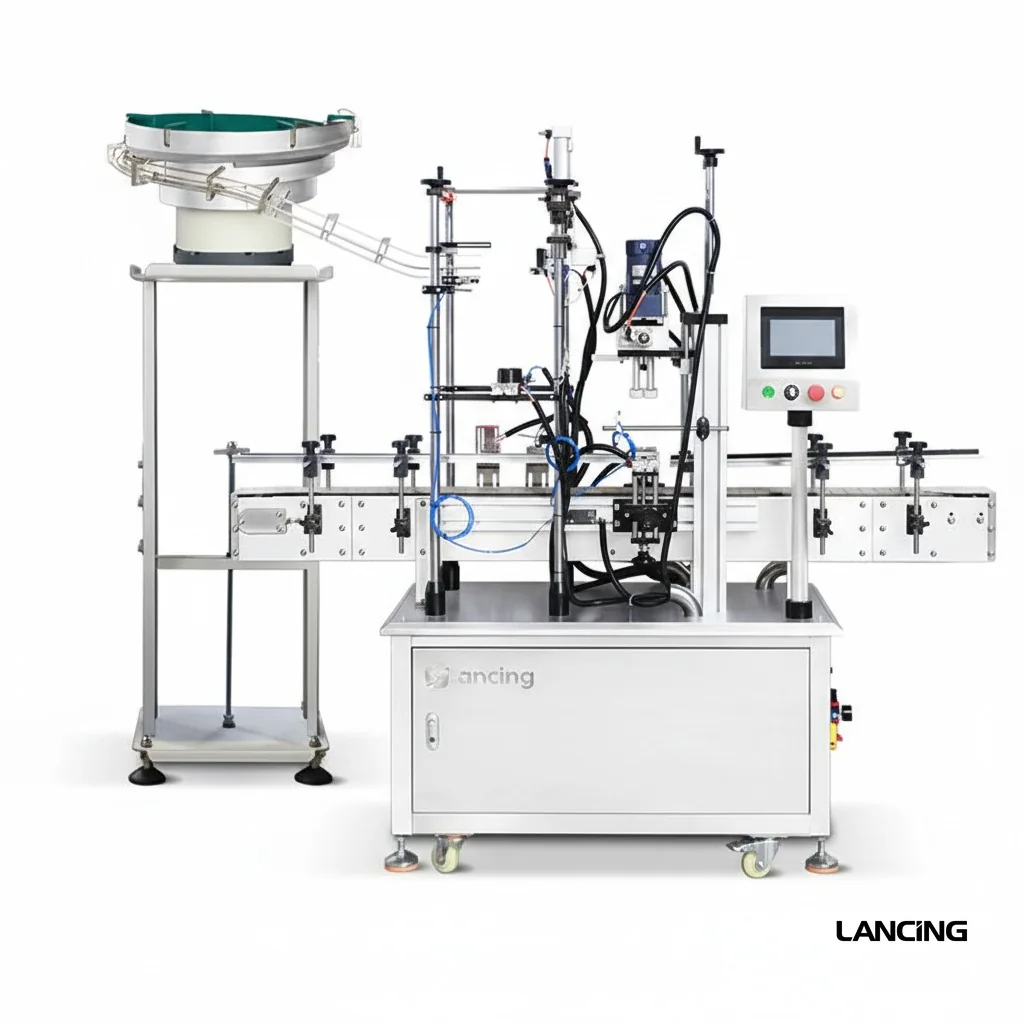
Cosmetics & personal care
Pump caps, sprays, droppers, screw caps and trigger formats for shampoos, lotions, serums and toiletries.
Capping routes for cosmetics, drinks, oils, chemicals, healthcare and contract packing.
Bottle stability, cap orientation, closure shape and line speed usually matter more than the industry name alone. These examples show common starting points for a practical specification.
Pump caps, sprays, droppers, screw caps and trigger formats for shampoos, lotions, serums and toiletries.
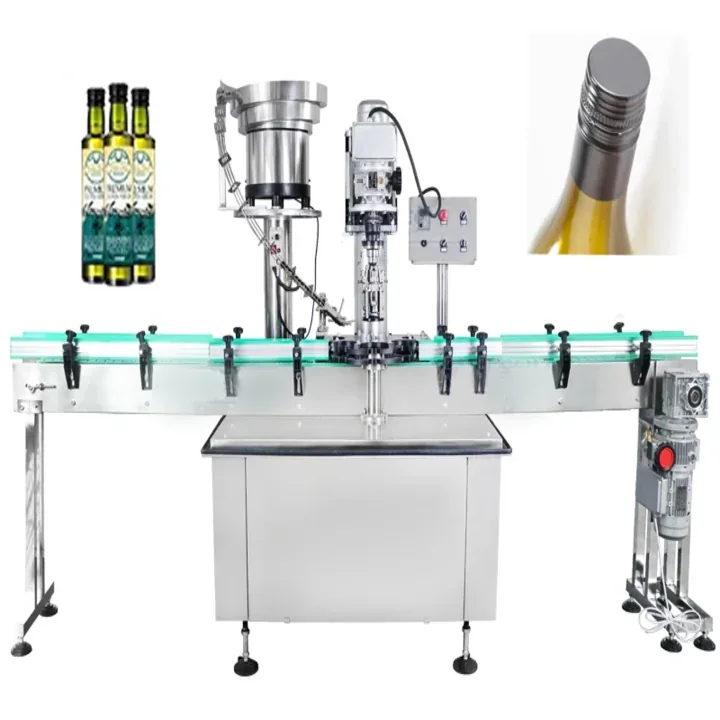
ROPP closure systems for tamper-evident aluminium closures on premium glass bottles.

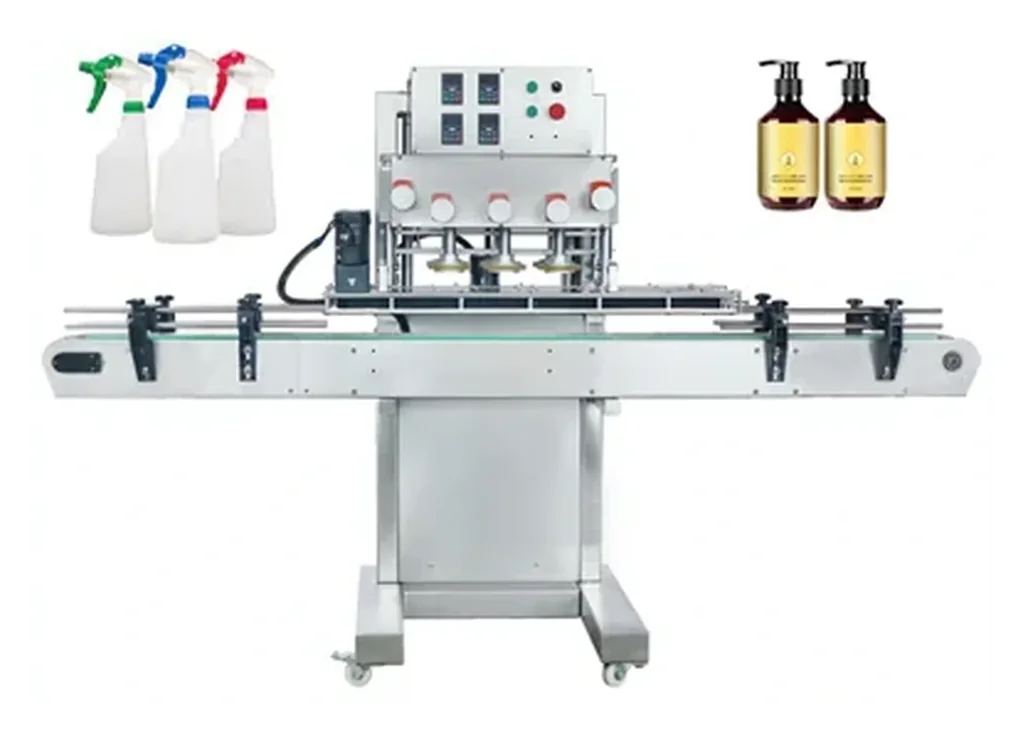
Trigger sprays, screw caps and larger closures requiring stable handling and repeatable torque.
Jar and bottle capping routes where hygiene, presentation and changeover control matter.
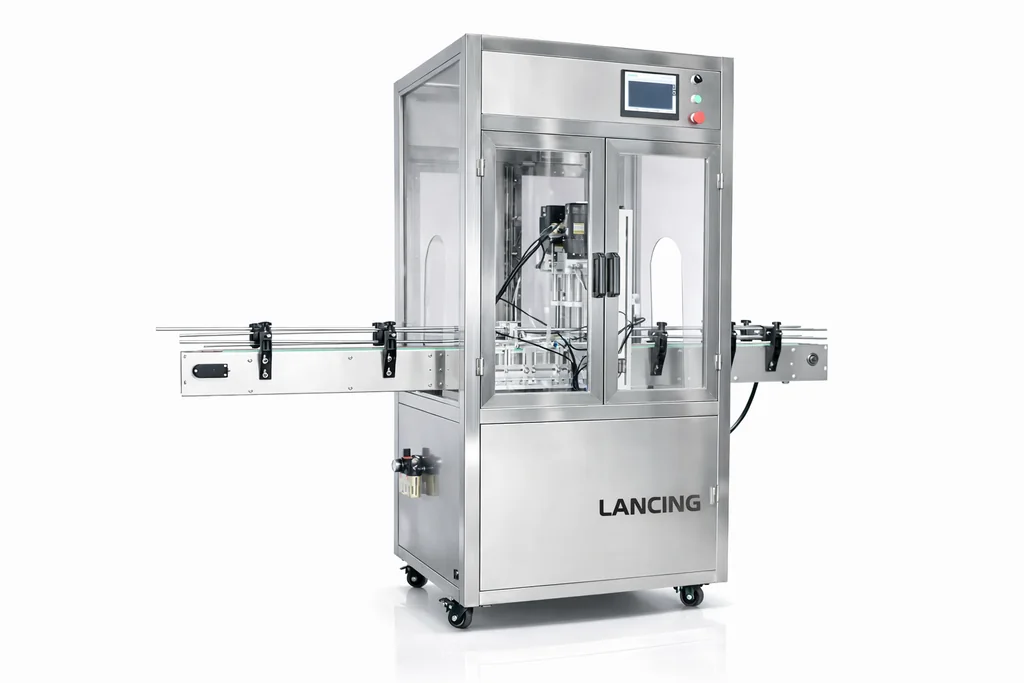
Guarded automatic capping, clean operation and controlled closure application.
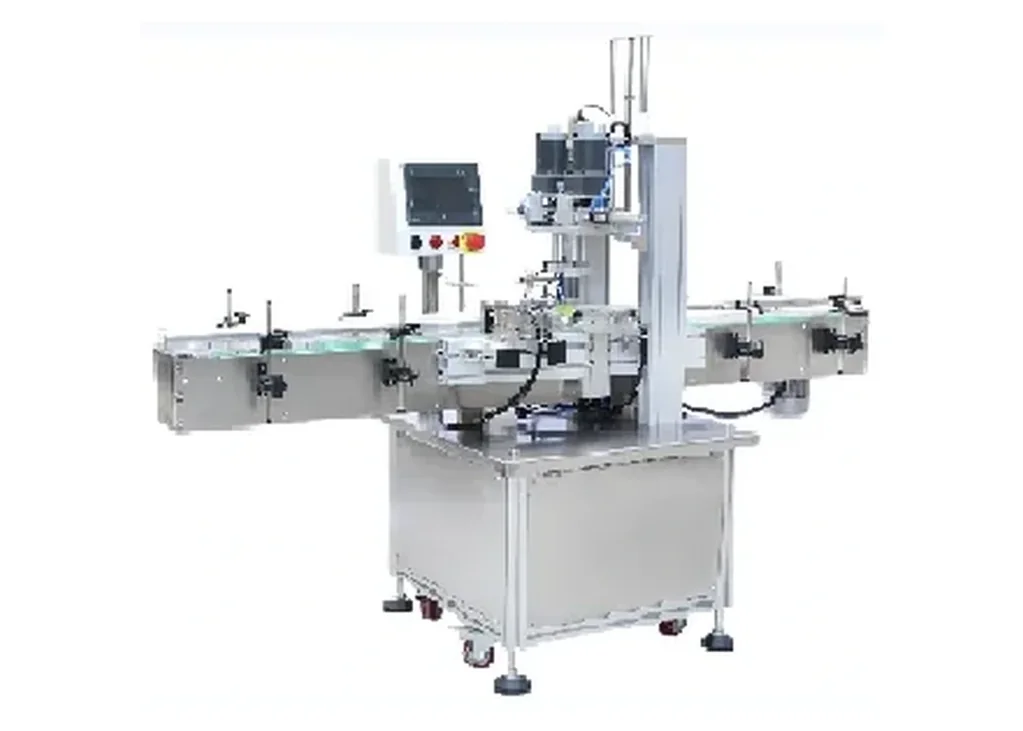
Flexible capping solutions for multiple bottle and cap formats with changeover planning.
Photos are useful, but sample bottles and caps allow us to check torque, cap start, liner compression, thread engagement, trigger orientation and pilfer-band finish more accurately.
A capping project should be checked in sequence: closure type, bottle stability, torque or seating requirement, cap presentation, conveyor control and the evidence needed for a reliable quotation. The pages below add detail without changing the existing machine range or application pages.
Compare screw, ROPP, pump, trigger, press-on and cap-feeding routes in one parent-hub page before moving to specialist detail.
Compare capping routes →Use a qualitative model matrix to shortlist semi-automatic, chuck, spindle, inline, rotary, ROPP and cap-feeding routes without unsupported speed claims.
View the model matrix →Prepare the practical evidence Lancing needs: cap samples, bottle stability checks, feeder orientation, layout photos and production constraints.
Prepare trial evidence →Industry terms are useful for search, but the engineering choice is normally driven by the closure, bottle and line environment. A cleaning product bottle with a trigger head, a cosmetic bottle with a pump and a glass oil bottle with an aluminium closure each need different handling checks.
| Application group | Likely capping considerations | Where to continue |
|---|---|---|
| Cosmetics and personal care | Pumps, sprays, droppers, flip-tops and lightweight bottles can require careful presentation and bottle support. | Cosmetic capping machines |
| Cleaning and chemical products | Trigger heads, screw caps, product residue and container stability can affect tightening and feeding reliability. | Chemical capping machines |
| Drinks, oils and glass bottles | Screw caps and ROPP closures must be matched to neck finish, liner behaviour and tamper evidence requirements. | Drinks and oil capping machines |
| Contract packing | Multiple bottle and cap formats make changeover, recipe notes, sample sets and tooling storage more important. | Contract packing cappers |
| Integrated bottle lines | The capper should be specified with the filler, conveyor, labeller, coder and accumulation method in mind. | Fill, cap and label lines |
Two products using apparently similar caps may need different machinery because the containers behave differently, the closure performs a safety or tamper-evident function, or the line must prove that every pack has been closed correctly.
| Application | What changes the specification | Detailed guidance |
|---|---|---|
| Jerrycans and larger containers | Pack weight, handle position, neck offset, operator lifting, conveyor support and the force needed to start and tighten the cap. | Large-container capping guide |
| Child-resistant packaging | The complete container-and-closure combination, pack instructions, test evidence and controls that preserve the approved assembly. | Child-resistant closure capping |
| Vials and crimp seals | Vial finish, stopper condition, seal size, crimp profile, cleanliness boundaries and inspection criteria. | Vial crimp capping machines |
| Fill-cap-label lines | Container transfer, cap availability, missing-cap detection, reject routing, accumulation and communication between machines. | Integrated line planning |
Use the application pages to identify bottle-stability, closure-handling, hygiene and changeover factors before comparing individual machines.
Personal-care, household and chemical bottles can use threaded caps with hinges, dispensing tops or breakaway bands. These closure details can change the tooling, feeder and quality checks even when the bottle application is similar.