
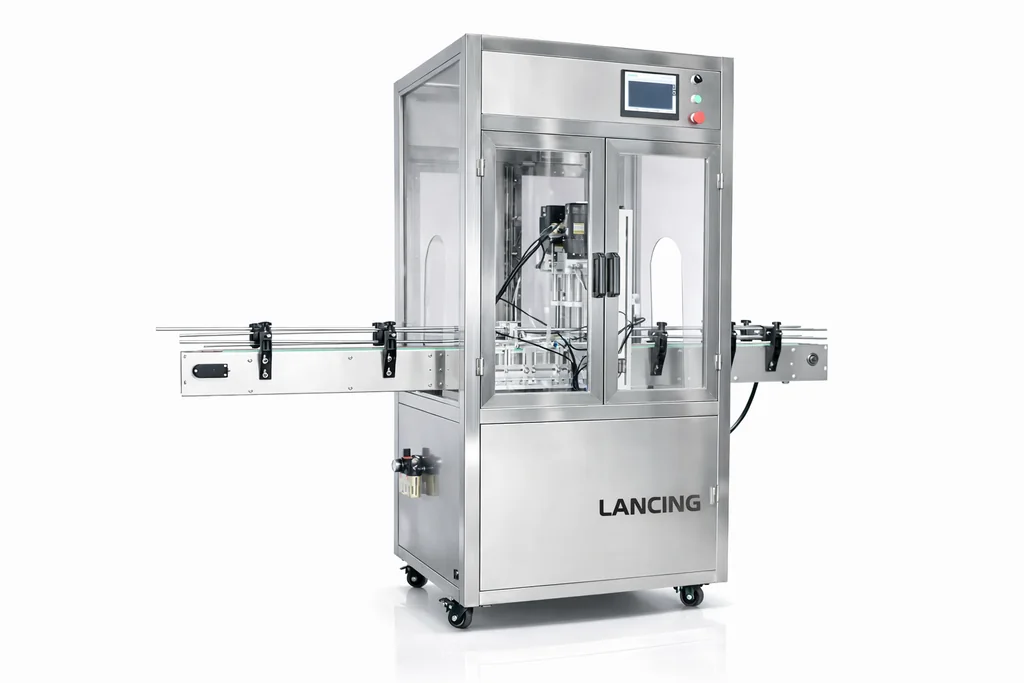
Capping machine quote checklist: what to send for accurate advice.
Checklist for requesting a capping machine quote. Send bottle dimensions, cap type, torque target, output, photos, samples and line layout details.
Discuss this requirement →The fastest way to get useful capping machine advice is to provide the right bottle, cap and production information at the start. Photos are useful, but samples are normally the best route for final machine specification.
The fastest way to get useful capping machine advice is to provide the right bottle, cap and production information at the start. Photos are useful, but samples are normally the best route for final machine specification.

Checklist for requesting a capping machine quote. Send bottle dimensions, cap type, torque target, output, photos, samples and line layout details.
Discuss this requirement →Confirm whether the cap is a screw cap, ROPP closure, pump, trigger, press-on cap, dropper cap or another format.
Diameter, height, material and neck finish help identify the likely machine style and tooling needs.
State current output, target output, cap placement method, existing filler/labeller and available space.
Photos and dimensions can start the discussion. Physical bottle and cap samples are normally the best way to confirm tooling, cap feeding, bottle support and realistic output.
For final specification, physical bottle and cap samples are strongly recommended.
Yes, photos and dimensions can start the conversation, but samples are normally needed to confirm tooling.
Send the cap and bottle details. Lancing can discuss practical torque testing and closure requirements.
A quotation is more accurate when the enquiry includes both the product details and the production context. This avoids quoting a capper that can tighten the cap but cannot feed it, support the bottle or fit into the line.
For broad selection, start with the capping route matrix. For final specification, Lancing will normally need physical samples where tooling, feeding or torque repeatability must be confirmed.
A capping quote can start with photos, but the final recommendation depends on real closure behaviour. A short evidence pack helps avoid quoting the wrong level of automation or the wrong capping head for the bottle and closure.
| Evidence item | Why Lancing needs it | Useful note |
|---|---|---|
| Good production samples | Shows the intended finished pack, acceptable cap position and normal appearance. | Send filled or empty examples depending on what is safe and practical. |
| Problem or rejected samples | Shows leakage, cross-threading, poor tamper formation, bottle collapse or inconsistent tightening. | Rejected packs are often more useful than a perfect marketing sample. |
| Cap and neck details | Confirms whether the route is screw capping, ROPP, pump, trigger, press-on or another closure method. | Include supplier drawings only where you already have them. |
| Line layout | Explains how bottles arrive, stop, transfer, accumulate and move to labelling or packing. | A simple sketch is enough to start the discussion. |
| Acceptance method | Defines how the customer will decide whether the capper is performing correctly. | May include torque, leak checks, visual checks or tamper-band condition. |
The information sent for a quotation should not disappear once a machine route is selected. Convert the agreed pack formats, operating conditions and quality requirements into a short user requirement specification so the proposal, trial and acceptance checks refer to the same evidence.
| Quotation evidence | URS statement to create | Acceptance evidence |
|---|---|---|
| List of bottles and closures | Identify every included format and clearly separate samples provided for information only. | Format-by-format trial or agreed representative worst-case set. |
| Target production rate | Define pack, duration, cap-placement method, operator provision and quality basis. | Timed run under the agreed conditions, with stops and rejects recorded. |
| Closure-quality requirement | State seating, torque, crimp, tamper, leak or appearance checks and who owns the method. | Recorded results using approved instruments and samples. |
| Line layout and interfaces | Record conveyor height, flow direction, upstream/downstream handovers and control signals. | Drawing review plus functional stop/start and accumulation tests. |
| Utilities and environment | State available power, air and relevant cleaning, temperature, dust or washdown constraints. | Pre-installation check and confirmation at commissioning. |
| Documentation and training | List manuals, drawings, format records and operator/maintenance instruction required. | Document review and completion record before project sign-off. |
The URS does not need to be lengthy to be effective. It needs to be specific enough that both parties can identify what is included and how success will be judged. Use the detailed capping machine URS guide to structure the final requirement.
Send your project pack