
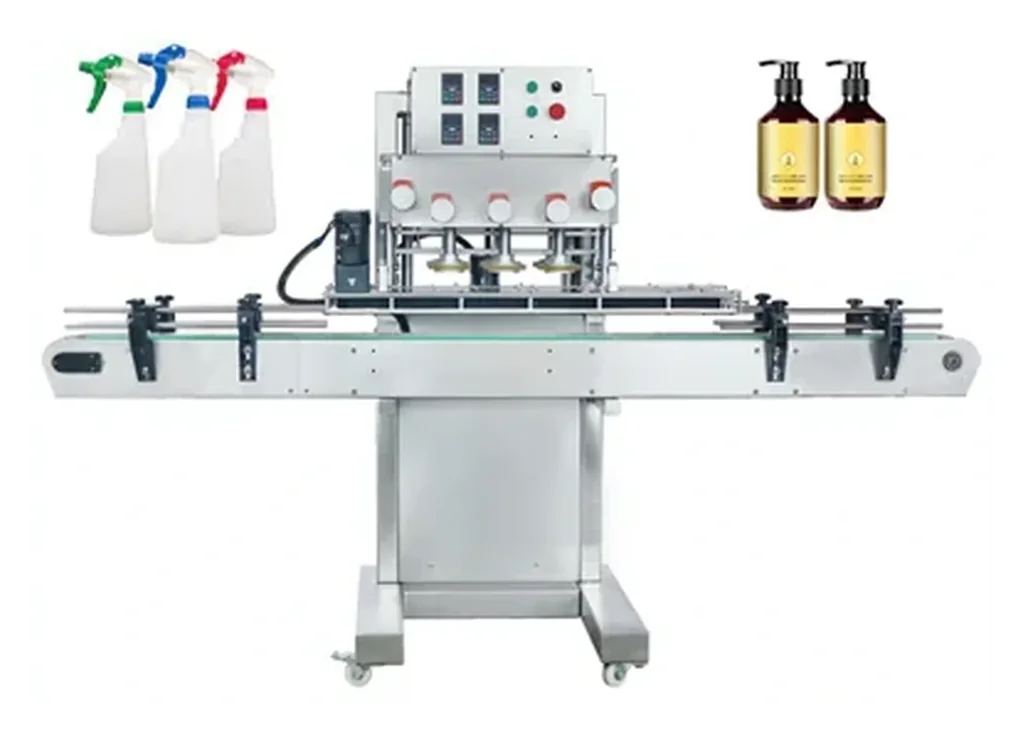
Screw capping machine
Inline automatic screw capper for sprays, pumps and screw caps
Production screw-capping route for spray bottles, pump closures and standard screw caps with adjustable guides and stable in-line handling.
Ask about this machine →Trigger, pump, screw and press capping machinery for cleaning sprays, household liquids, automotive products and chemical bottles.
The right capping system depends on closure geometry, bottle stability, torque or seating requirement, cap presentation and integration with your existing line.
Production screw-capping route for spray bottles, pump closures and standard screw caps with adjustable guides and stable in-line handling.
Ask about this machine →
Dedicated trigger sprayer capping for cleaning, household and care bottles with cap handling designed around long trigger heads.
Ask about this machine →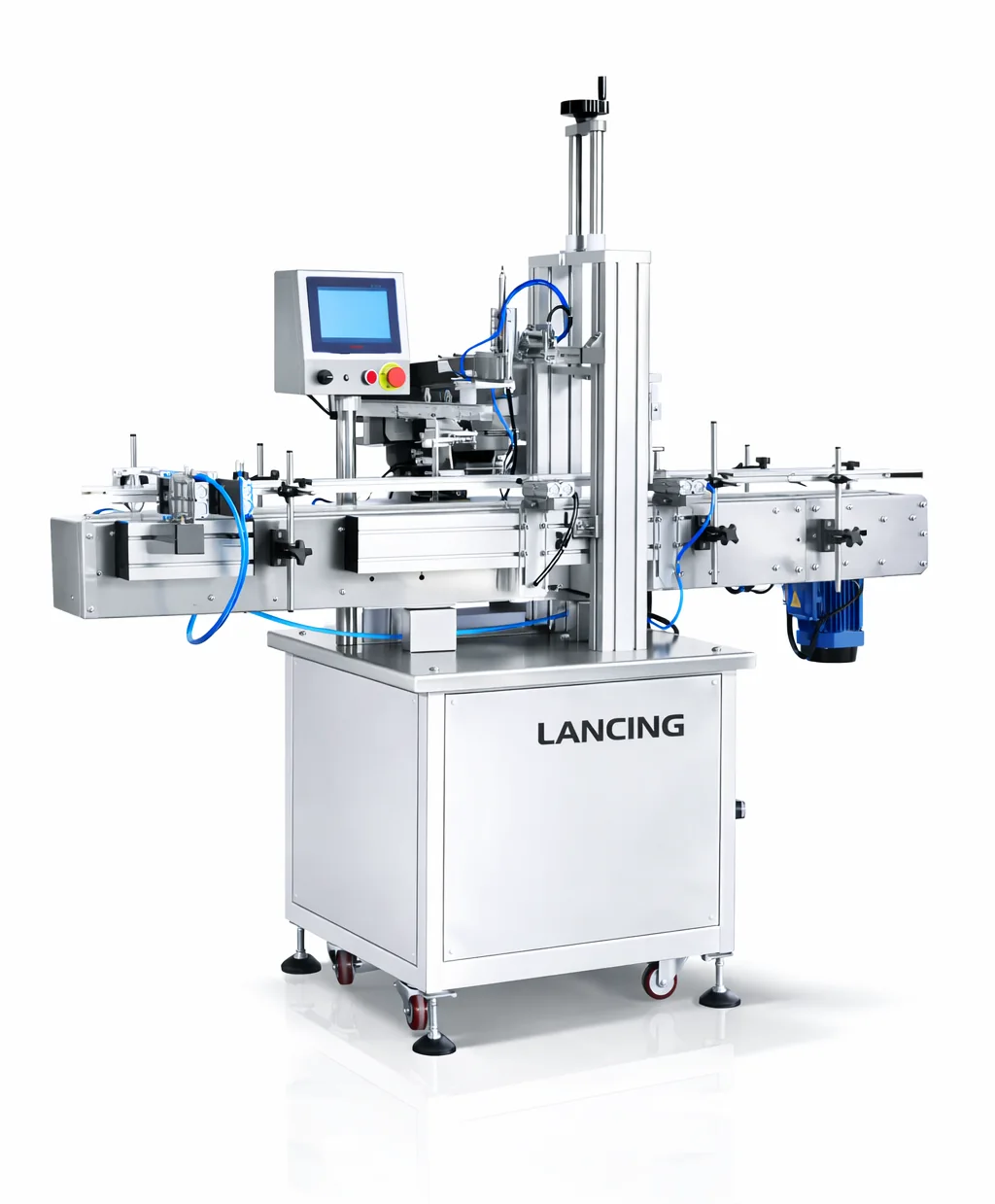
Press capping for push-on caps, lids and cover-style closures where vertical seating force and repeatable cap presentation are critical.
Ask about this machine →Household and chemical products often use trigger sprayers, pumps, screw caps, push-on caps and larger closures. Bottle stability and cap handling are important for reliable automation.
Applications include cleaning sprays, detergents, automotive fluids, garden products, janitorial products, sanitisers and other household or chemical liquids.
Check product compatibility, bottle material, closure geometry, required throughput, cap torque or seating force, guarding and line integration requirements.
Photos, dimensions and target output help shortlist the correct machine. Physical samples can then be checked before the final capping specification is confirmed.
Yes, provided the trigger closure, bottle shape and feeding method are compatible with automatic handling.
Some applications may require particular contact materials, guarding or handling considerations. Product details should be reviewed during specification.
Chemical products can change the capping requirement through container material, closure function, product residue, vapour, cleaning method and the consequences of leakage. The machinery review should use the product safety information and a competent site assessment rather than assuming one chemical bottle behaves like another.
| Information area | What Lancing needs to understand | Why it affects the capping route |
|---|---|---|
| Product and safety information | Relevant SDS information, handling restrictions and whether a safe trial product or substitute is required. | Influences materials review, cleaning, containment and how samples can be tested. |
| Container behaviour | Material, wall flexibility, filled weight, handle or offset neck and stability on the conveyor. | Determines grip, support and whether the pack can resist tightening forces. |
| Closure function | Standard screw cap, tamper evidence, induction-seal liner, trigger, pump or child-resistant feature. | Changes cap placement, application method and the checks needed after capping. |
| Finish cleanliness | Likelihood of drips, foam, powder or residue on the neck and sealing surface. | Can affect friction, torque, liner sealing and downstream cleanliness. |
| Area and cleaning constraints | Ventilation, corrosion risk, washdown method and site zoning or restrictions confirmed by the customer. | Must be considered in machine materials, guarding and installation planning. |
| Pack verification | Required torque, leak, tamper or child-resistance evidence for the finished package. | Defines trials and controls; the capper alone cannot certify the complete pack. |
For hazardous chemical products, UK packaging duties include requirements for suitable packaging and, in defined circumstances, child-resistant fastenings or tactile warnings. The Health and Safety Executive provides current packaging guidance. A machine recommendation must remain subordinate to the customer's classification, packaging assessment and legal responsibilities.