
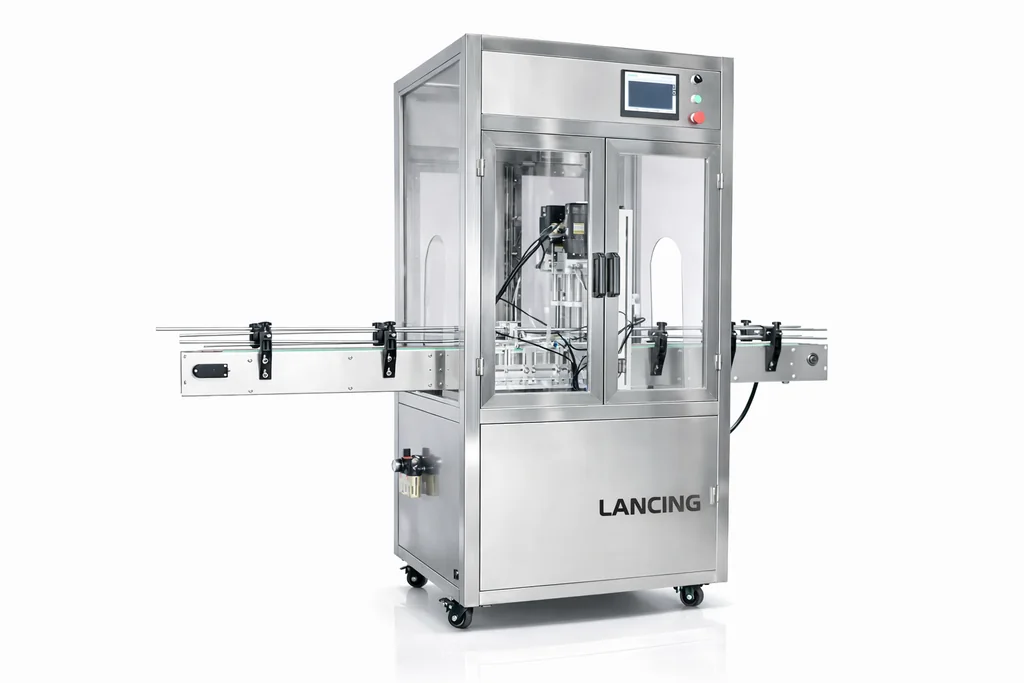
Capping machine changeover: what to plan before running multiple formats.
Guide to capping machine changeover for multiple bottles and closures. Plan tooling, guides, torque settings, cap feeding and operator checks.
Discuss this requirement →A capping machine may technically run several containers, but the real question is how long changeover takes and how repeatable the setup is. Guides, tooling, torque settings and cap feeders all influence flexibility.
A capping machine may technically run several containers, but the real question is how long changeover takes and how repeatable the setup is. Guides, tooling, torque settings and cap feeders all influence flexibility.

Guide to capping machine changeover for multiple bottles and closures. Plan tooling, guides, torque settings, cap feeding and operator checks.
Discuss this requirement →List every bottle, cap and label position that the machine needs to run. Future formats should be included if known.
Some changes are simple adjustments. Others need capping chucks, starwheels, side belts, grippers or feed tracks.
Documented settings help operators return to proven setups and reduce start-up rejects after changeover.
Photos and dimensions can start the discussion. Physical bottle and cap samples are normally the best way to confirm tooling, cap feeding, bottle support and realistic output.
Often yes, but speed, changeover time and tooling cost need to be realistic.
Poor access, unrecorded settings, too many manual adjustments and cap feeder changes are common causes.
Yes. Future formats can change the best machine style and tooling package.