
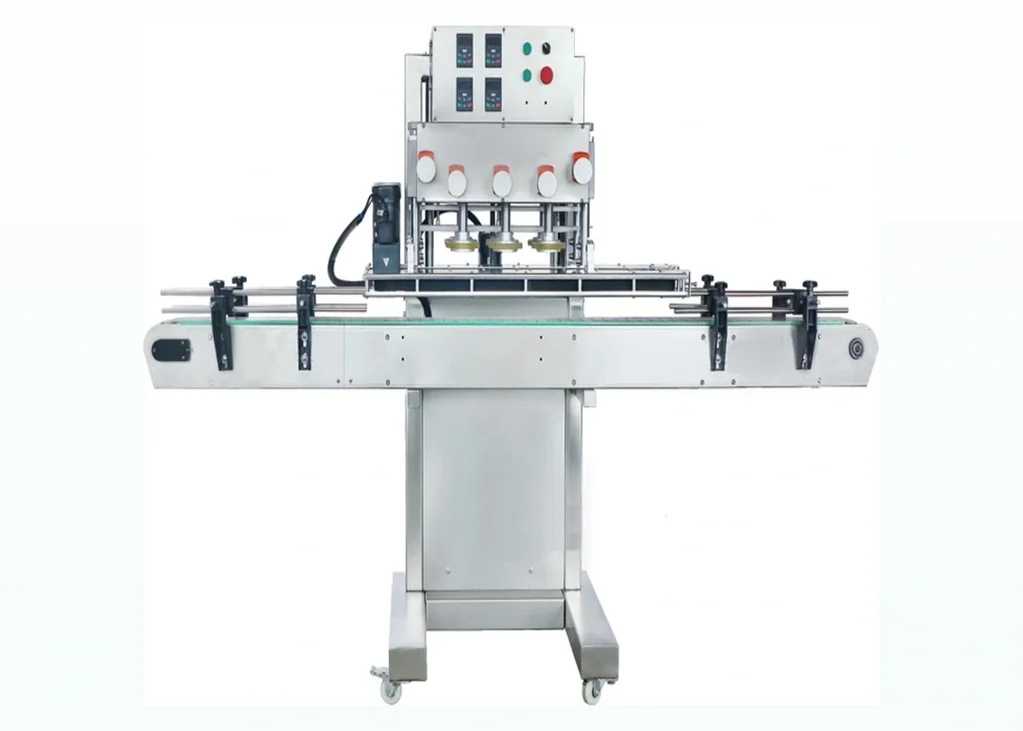
Capping heads and tooling
Capping heads and tooling for bottle closure control.
Capping heads and tooling advice for bottle capping machines. UK support for chucks, spindles, ROPP heads, press tooling and change parts.
Discuss this requirement →Capping heads and tooling determine how the machine contacts the closure. The wrong head can mark caps, miss the target torque, damage a tamper band or fail to seat the closure correctly.
Capping heads and tooling determine how the machine contacts the closure. The wrong head can mark caps, miss the target torque, damage a tamper band or fail to seat the closure correctly.
Capping heads and tooling advice for bottle capping machines. UK support for chucks, spindles, ROPP heads, press tooling and change parts.
Discuss this requirement →Chucks, spindles, press heads and ROPP rollers all solve different closure problems. Selection starts with cap shape, cap material, liner and neck finish.
If several bottle or cap sizes are planned, change parts and adjustment time should be considered before final machine choice.
Samples can reveal marking, slippage, liner compression or unstable bottle handling before a machine is delivered.
Photos and dimensions can start the discussion. Physical bottle and cap samples are normally the best way to confirm tooling, cap feeding, bottle support and realistic output.
A capping chuck is a tool shaped to grip a particular closure while the machine applies tightening torque.
No. Some ranges can be covered with adjustment, but different cap profiles often need different tooling.
Cap marking can come from wrong tooling material, excessive pressure, slipping, poor alignment or unsuitable cap surface finish.
No. A chuck or insert grips one cap with a shaped tool, while spindle discs contact the cap sides progressively as the bottle moves through the tightening zone. Their wear patterns, adjustment methods and suitable cap surfaces differ.
Compare chuck and spindle methods →Tool material, contact zone, fit, pressure, alignment and cleanliness should be selected so the cap can be tightened without scuffing, embossing, opening a hinge or transferring debris. Trials should use production decoration and retain approved visual samples.
Use clear part identification, a format-specific parts list, controlled storage, inspection criteria and a setup record linked to the machine and closure reference. Confirm the installed set during first-off approval after every changeover.
Plan changeover records →