
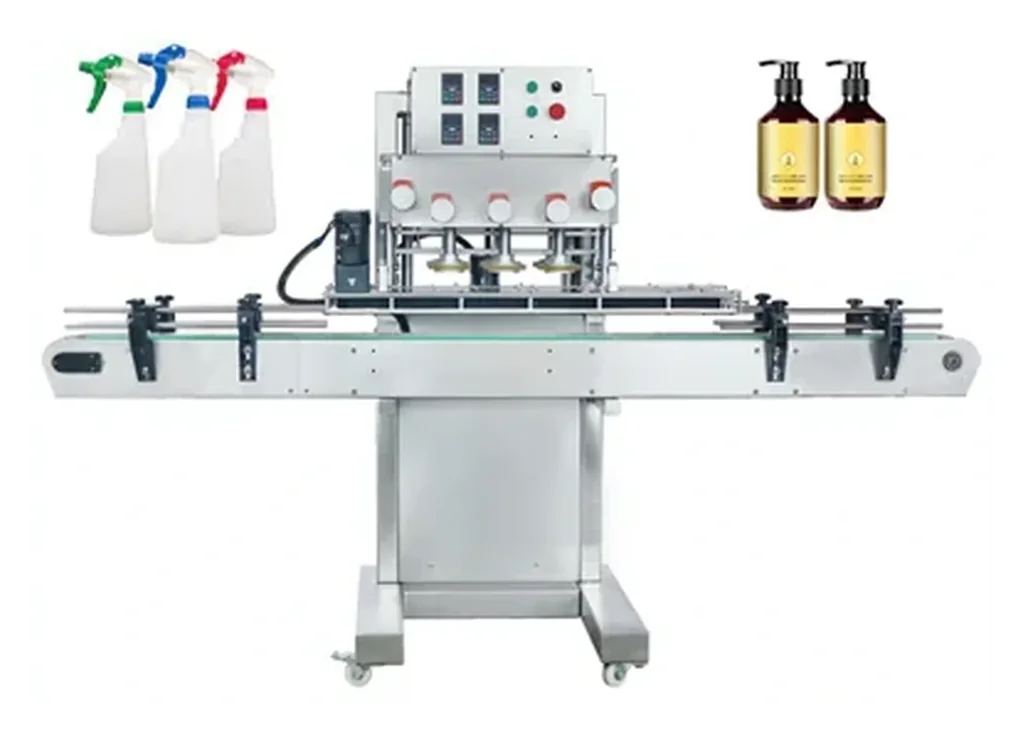
Bottle cap torquers for repeatable closure tightening.
Bottle cap torquers and controlled cap tightening machines for repeatable closure application. UK advice on torque settings, bottle grip and testing.
Discuss this requirement →Bottle cap torquers apply controlled tightening force to threaded closures. They are used when hand tightening is inconsistent, when operators struggle to maintain repeatability or when closure torque needs documented control.
Bottle cap torquers apply controlled tightening force to threaded closures. They are used when hand tightening is inconsistent, when operators struggle to maintain repeatability or when closure torque needs documented control.

Bottle cap torquers and controlled cap tightening machines for repeatable closure application. UK advice on torque settings, bottle grip and testing.
Discuss this requirement →Cap material, thread condition, liner compression, bottle grip and operator placement can all affect final removal torque.
If the bottle rotates or flexes, the torque setting at the head may not translate into a consistent closure result.
Opening torque checks and sample testing help confirm the machine setting is producing the required closure performance.
Photos and dimensions can start the discussion. Physical bottle and cap samples are normally the best way to confirm tooling, cap feeding, bottle support and realistic output.
No. Application torque is the torque applied during closing. Removal torque is measured later when opening the cap, and can change with liner compression and product conditions.
They help, but leak prevention also depends on cap liner, neck finish, fill level, thread quality and bottle condition.
Torque equipment should be checked as part of normal quality procedures, especially where closure performance is critical.