
Capping machinery specialists — UK supply, installation and support01494 623015 · sales@lancinguk.com
Cap tightening machines

Cap tightening machines for bottles and containers.

A cap tightening machine should be selected around the closure type, bottle support and torque target so the finished pack is secure, repeatable and practical to produce.

Cap tightening

Specify the capper around the closure, bottle and production target.

Lancing can help shortlist practical capping machinery after reviewing cap type, neck finish, bottle stability, output target, torque requirement and the way caps are presented to the machine.

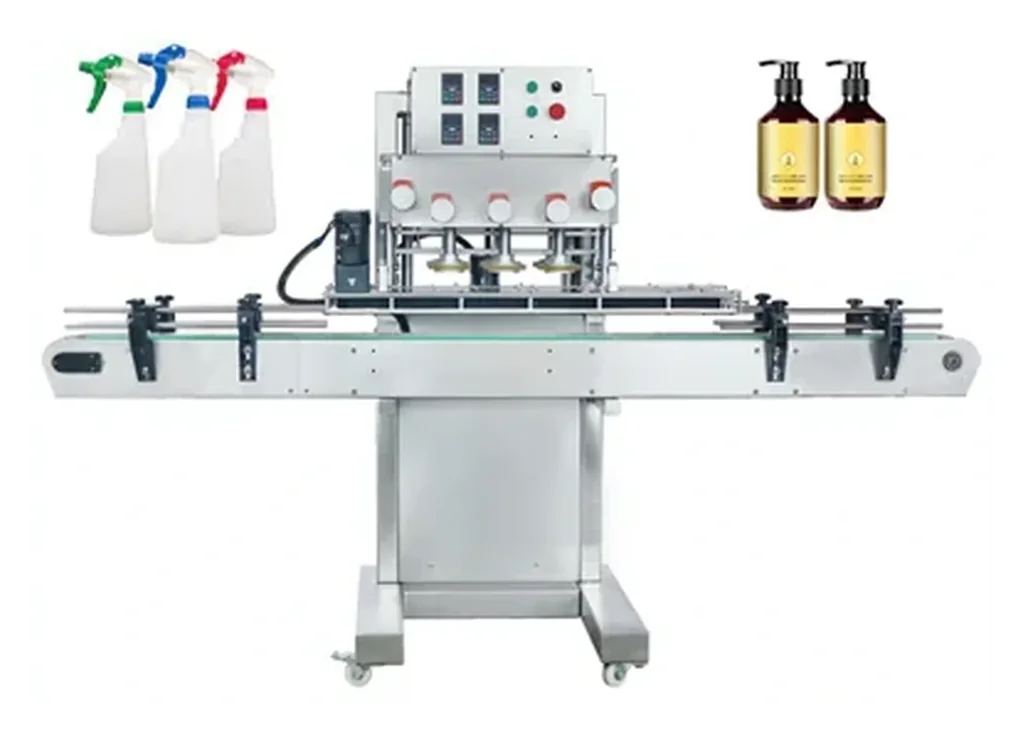
Bottle cap tightening machine for screw caps and sprays
Cap tightening

Cap tightening machines for bottles and containers

A cap tightening machine should be selected around the closure type, bottle support and torque target so the finished pack is secure, repeatable and practical to produce.

Ask about this application →

Useful details for a quote

  • Cap diameter, height and closure type
  • Bottle height, diameter, shape and material
  • Target bottles per minute or per hour
  • Manual cap placement or automatic cap feeding
  • Existing filler, labeller, conveyor or line layout
Selection notes

Which factors affect repeatable cap tightening?

From hand tightening to machine capping

Machine tightening is often introduced when hand application causes inconsistent torque, operator fatigue, slower throughput or rejects caused by cross-threading and poor cap seating.

Closure types

Screw caps, pumps, sprays, droppers, triggers and ROPP closures each need different handling. A general cap tightening machine may not be suitable for every closure family.

Production fit

The right solution may be a semi-automatic capper, an inline screw capper, a spindle capper, a pump capper or a fully automatic machine with cap feeding.

Next step

Send bottle and cap information before final machine selection.

Photos, dimensions and target output help identify the most likely capping route. Physical samples are normally the best way to confirm tooling, cap feeding and bottle support.

FAQ

Common questions

Is a cap tightening machine the same as a capping machine?

In many searches the terms overlap, but some capping machines also place, sort, feed or seal caps rather than only tightening them.

Can a cap tightening machine reduce leaks?

It can help where leaks are caused by inconsistent application, but the cap, liner, neck finish and filling process must also be checked.

Can Lancing advise from photos?

Photos and dimensions are a useful first step. Physical samples are normally better for confirming tooling and final specification.

Torque evidence

Separate the machine setting from the measured behaviour of the finished pack.

A cap-tightening machine applies a controlled process, but the setting shown by the machine is not automatically the same as the torque later measured when the closure is removed. Closure material, liner compression, thread finish, product contamination, dwell time, temperature and the test method can all affect the result.

TermWhat it describesHow to use it in a project
Application settingThe setting or control value used by the capping equipment during closure application.Record by format and control access so operators can restore an agreed setup.
Application torqueThe torque acting while the closure is being applied, where the selected equipment can measure or infer it.Use only with a defined method and do not assume it equals later removal torque.
Removal torqueThe torque measured when opening the closure after an agreed conditioning period.State the elapsed time, sample condition, equipment and test procedure.
Release or opening performanceThe wider user experience, which may include tamper features, push-and-turn action or liner behaviour.Assess the complete pack against its intended use and any applicable packaging requirements.

ASTM publishes methods including ASTM D2063/D2063M for torque retention of continuous-thread closures and ASTM D3474 for calibration and use of torque meters. The correct method for a project depends on the closure system, customer requirements and any sector-specific controls. Agree the method before trials so machine comparisons use the same conditioning and measurement basis.

Practical trial sequence

  1. Approve representative containers, caps, liners and product condition.
  2. Define how caps are started and how the bottle is held.
  3. Apply closures at controlled settings and record the machine setup.
  4. Condition samples for the agreed period and environment.
  5. Measure using the agreed instrument and method, recording both acceptable and failed samples.
  6. Check leak, seating, tamper evidence and opening experience as separate requirements where relevant.
Further cap-tightening checks

Separate the tightening method from the packaging fault.

Call nowContact us