
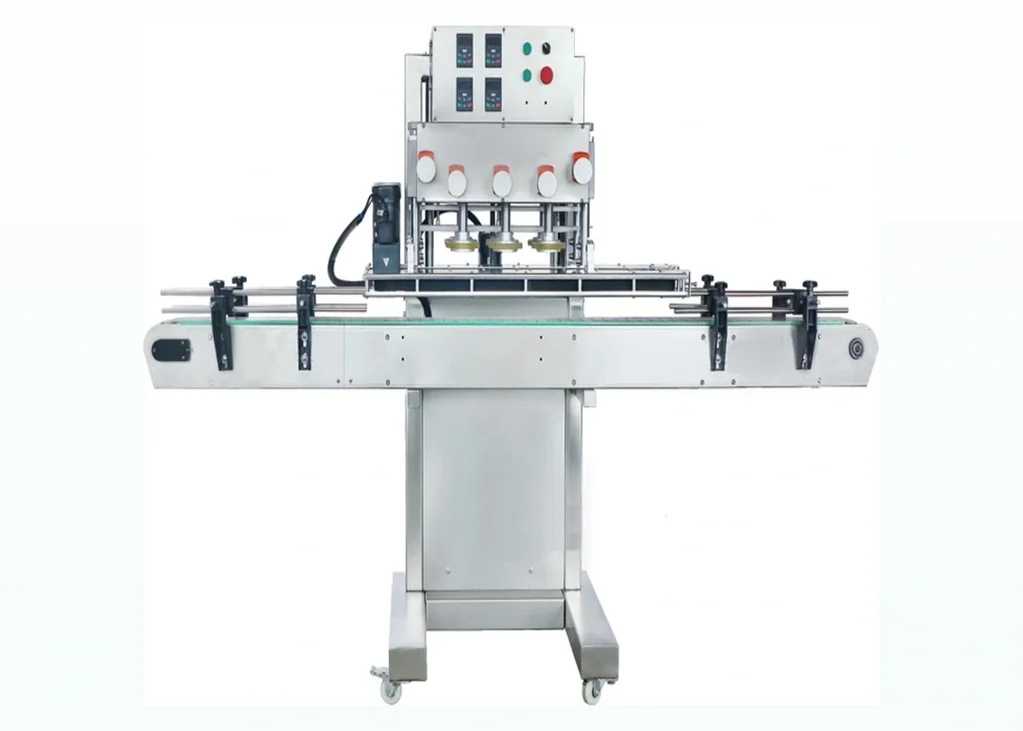
Jar capping machines
Jar capping machines and lid tightening systems.
Jar capping machines and lid tightening systems for screw lids and containers. UK advice for torque, bottle support and closure handling.
Discuss this requirement →Jar capping is usually about controlled lid tightening, container stability and sufficient grip on a wider closure. The right route depends on lid diameter, product type, jar material and whether lids are placed manually or fed automatically.
Jar capping is usually about controlled lid tightening, container stability and sufficient grip on a wider closure. The right route depends on lid diameter, product type, jar material and whether lids are placed manually or fed automatically.
Jar capping machines and lid tightening systems for screw lids and containers. UK advice for torque, bottle support and closure handling.
Discuss this requirement →Larger lids can require different chuck, belt or spindle contact compared with small bottle caps. The container must be held securely during tightening.
Sauces, oils and viscous products may leave residue on the neck or thread. This should be considered when checking torque and seal reliability.
Jar lines often run multiple sizes. Changeover time, guide adjustment and cap tooling should be reviewed before purchase.
Photos and dimensions can start the discussion. Physical bottle and cap samples are normally the best way to confirm tooling, cap feeding, bottle support and realistic output.
Sometimes, if the closure and container size are within range, but wider lids often need different tooling and support.
Lightweight, tapered or slippery containers may need side belts, grippers or pucks to prevent rotation.
Jar diameter, lid diameter, lid height, material, target output and torque or sealing requirement are the starting points.
The term jar capper can describe several different processes. A continuous-thread plastic lid is tightened differently from a lug or twist-off metal closure, a press-on lid or a closure whose seal depends on vacuum and thermal processing.
| Closure family | Machine-selection focus | Pack evidence to review |
|---|---|---|
| Continuous-thread screw lid | Square cap start, controlled tightening, jar grip and liner compression. | Thread finish, cap material, liner, removal-torque method and acceptable seating. |
| Lug or twist-off closure | Correct engagement of the lugs, vertical load, angular travel and handling of metal closures. | Jar finish drawing where available, lid samples and the intended sealing process. |
| Press-on or snap lid | Controlled seating force, support beneath the container and confirmation that the lid is fully engaged. | Closure profile, container stiffness and examples of fully and partly seated lids. |
| Vacuum-dependent pack | The closure application must be considered with product temperature, headspace and the wider process. | Process description and specialist validation rather than a capper-only assumption. |
Jar shape also matters. Wide bodies, short necks, glass surfaces and labels close to the lid can limit where belts, guides or chucks contact the pack. Product on the finish can change friction or sealing behaviour, so trials should use the production fill condition where safe and practical.
Include the jar, lid, liner or compound, target process, accepted finished sample and the expected range of formats. Lancing can then determine whether screw tightening, lug-cap handling, pressing or another specialist route is the appropriate starting point.
Request jar-capping advice