
Pilfer-proof capping
Pilfer-proof capping machines for aluminium ROPP closures.
Pilfer-proof capping machines for aluminium ROPP closures on glass bottles. UK advice for wine, spirits, oils and tamper-evident cap sealing.
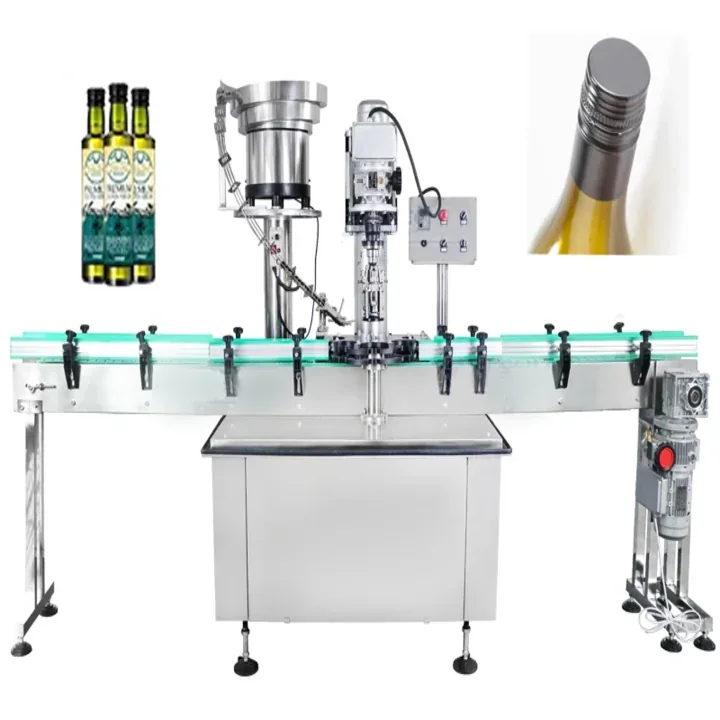
Discuss this requirement →Pilfer-proof capping normally refers to aluminium roll-on pilfer-proof closures, often known as ROPP caps. The machine rolls the cap thread and tamper-evident band onto the bottle finish rather than simply tightening a pre-threaded cap.
Pilfer-proof capping normally refers to aluminium roll-on pilfer-proof closures, often known as ROPP caps. The machine rolls the cap thread and tamper-evident band onto the bottle finish rather than simply tightening a pre-threaded cap.
Pilfer-proof capping machines for aluminium ROPP closures on glass bottles. UK advice for wine, spirits, oils and tamper-evident cap sealing.
Discuss this requirement →ROPP capping needs suitable bottle neck finish, cap dimensions and rolling head tooling. It is not the same process as screw-cap tightening.
Wine, spirits, oils and premium drinks often use aluminium pilfer-proof closures on glass containers. Bottle neck consistency is important.
Short runs can use semi-automatic ROPP cappers, while higher output lines may need cap sorting, feed tracks, conveyor timing and automatic heads.
Photos and dimensions can start the discussion. Physical bottle and cap samples are normally the best way to confirm tooling, cap feeding, bottle support and realistic output.
For aluminium roll-on pilfer-proof closures, yes. The term ROPP describes the rolling process used to form the cap on the bottle.
No, they use different tooling and closing principles. Screw caps and ROPP caps normally need different capping heads.
Yes, cap and bottle samples are highly recommended before tooling is confirmed.
ROPP forms an aluminium thread and pilfer band on the bottle. A plastic tamper-evident screw cap already contains its thread and band and is tightened by a screw-capping process. Samples and neck-finish evidence are required for both, but the tooling and checks differ.