
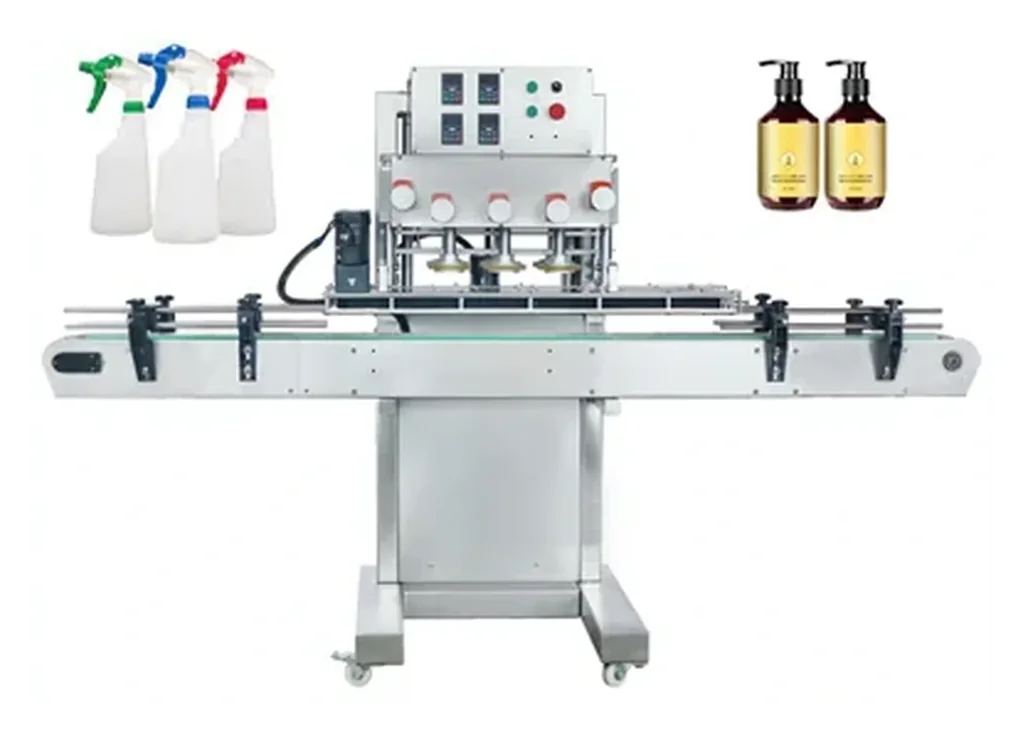
Laboratory and small batch capping machines for controlled short runs.
Laboratory and small batch capping machines for pilot lines, sample production and short-run packaging. UK advice for compact cap tightening systems.
Discuss this requirement →Laboratory and small batch capping projects usually need compact equipment, simple changeover and reliable cap tightening rather than maximum speed. The priority is repeatability, usability and safe bottle handling.
Laboratory and small batch capping projects usually need compact equipment, simple changeover and reliable cap tightening rather than maximum speed. The priority is repeatability, usability and safe bottle handling.

Laboratory and small batch capping machines for pilot lines, sample production and short-run packaging. UK advice for compact cap tightening systems.
Discuss this requirement →At lower outputs, a semi-automatic or bench-top capper may be more practical than full automatic cap feeding.
Labs and pilot lines may run many bottle sizes, so adjustment range and tooling cost should be considered.
Small sample bottles, glass vials and narrow containers may need nests or support to prevent tipping during capping.
Photos and dimensions can start the discussion. Physical bottle and cap samples are normally the best way to confirm tooling, cap feeding, bottle support and realistic output.
A bench-top or semi-automatic capper is often the best starting point when caps are placed manually and repeatable tightening is the main requirement.
Yes, but bottle support and tooling should be checked using samples.
Many production routes start with compact capping and later move to automatic cap feeding or inline machinery once volumes increase.