
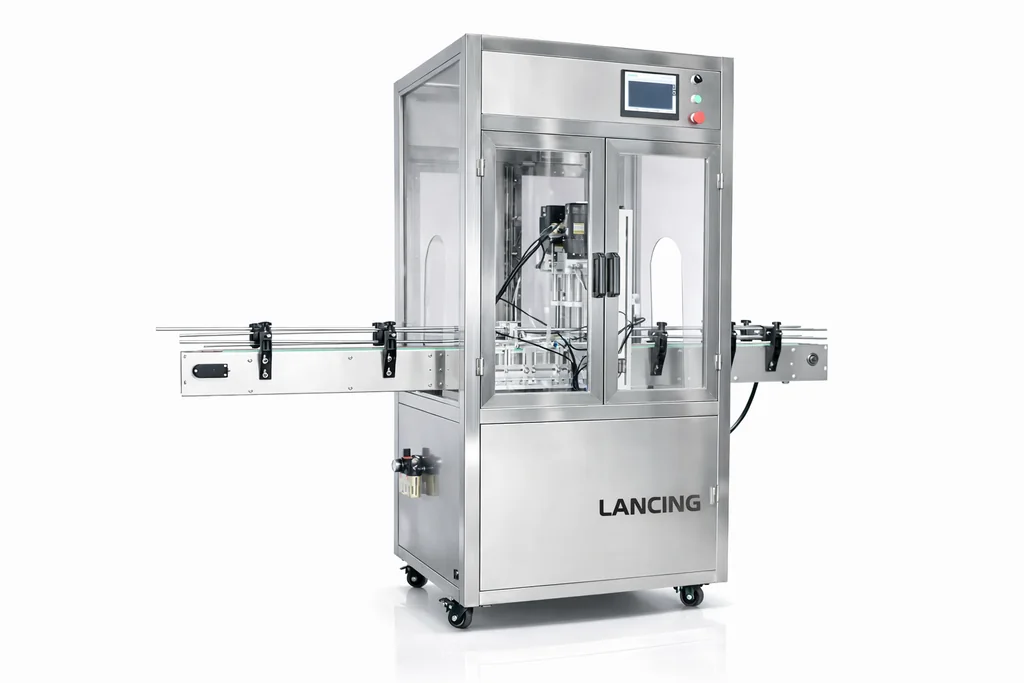
Pharmaceutical and healthcare capping machine specification support.
Pharmaceutical and healthcare capping machine advice for bottle closures, torque control, samples and line integration. UK support from Lancing.
Discuss this requirement →Pharmaceutical and healthcare packaging projects need careful review of closure control, documentation expectations, bottle handling and line integration. The capping machine route should be checked against the specific product, closure and validation process.
Pharmaceutical and healthcare packaging projects need careful review of closure control, documentation expectations, bottle handling and line integration. The capping machine route should be checked against the specific product, closure and validation process.

Pharmaceutical and healthcare capping machine advice for bottle closures, torque control, samples and line integration. UK support from Lancing.
Discuss this requirement →Bottle samples, caps, torque requirements and quality checks should be confirmed before machine selection.
Regulated lines may need additional documentation, commissioning support and agreed test criteria. These points should be discussed before quotation.
Small bottles, child-resistant caps, dropper caps and tamper-evident features need stable handling and consistent alignment.
Photos and dimensions can start the discussion. Physical bottle and cap samples are normally the best way to confirm tooling, cap feeding, bottle support and realistic output.
Yes, Lancing can discuss the capping machinery requirement, but the customer should confirm regulatory, validation and quality requirements for their own product and process.
They can require specific tooling, torque control and testing because closure engagement is more complex than a standard screw cap.
Yes. Physical bottle and cap samples are strongly recommended for regulated packaging projects.
Pharmaceutical and healthcare packaging projects can involve screw closures, child-resistant caps, droppers, pumps, stoppers and aluminium vial seals. The machine can apply a controlled process, but pack suitability, validation and regulatory evidence belong to the complete container-closure-product system.
| Project element | Machine-scope question | Customer evidence or decision |
|---|---|---|
| Container-closure system | Which exact vial, bottle, stopper, liner, cap or seal is included? | Approved component specifications and representative production samples. |
| Application parameter | Which settings or controlled actions does the machine apply and record? | Required quality attribute and approved test method for the finished pack. |
| Product-contact boundary | Which machine parts contact the container, closure or product-exposed surface? | Cleaning, contamination-control and material requirements. |
| Inspection and rejection | Which missing, tilted, unseated or incorrectly presented conditions can be detected? | Defect set, risk assessment and validation of the chosen inspection method. |
| Format control | Which change parts and recipe settings are required for each approved format? | Line-clearance, setup verification and change-control procedure. |
| Documentation and testing | What drawings, manuals, FAT records and training are included? | Site validation plan, approval responsibilities and any additional protocol requirements. |
UK government guidance notes specific packaging and labelling considerations for medicines, including child-resistant packaging in relevant circumstances. Use the current medicines packaging guidance with product-specific regulatory advice. Machinery selection does not establish compliance by itself.
Crimp profile, vial finish, stopper position and inspection criteria should be agreed before vial-capping tooling is selected.
Vial crimp capping →Container, closure, instructions and test evidence form the package; component or setup changes require controlled review.
Child-resistant closure guide →Record machine scope, interfaces, tests and responsibilities in the URS before the project is frozen.
URS guide →