
Capping machinery specialists โ€” UK supply, installation and support01494 623015 ยท sales@lancinguk.com
Shampoo and lotion capping

Shampoo and lotion capping machines for pumps, flip-tops and screw caps.

Shampoo, lotion and personal-care bottles often use pumps, flip-tops, disc-tops or standard screw closures. The bottle shape, closure height and cap orientation decide whether a pump capper, screw capper or specialist handling route is needed.

Application guide

Practical specification points for this capping route.

Shampoo, lotion and personal-care bottles often use pumps, flip-tops, disc-tops or standard screw closures. The bottle shape, closure height and cap orientation decide whether a pump capper, screw capper or specialist handling route is needed.

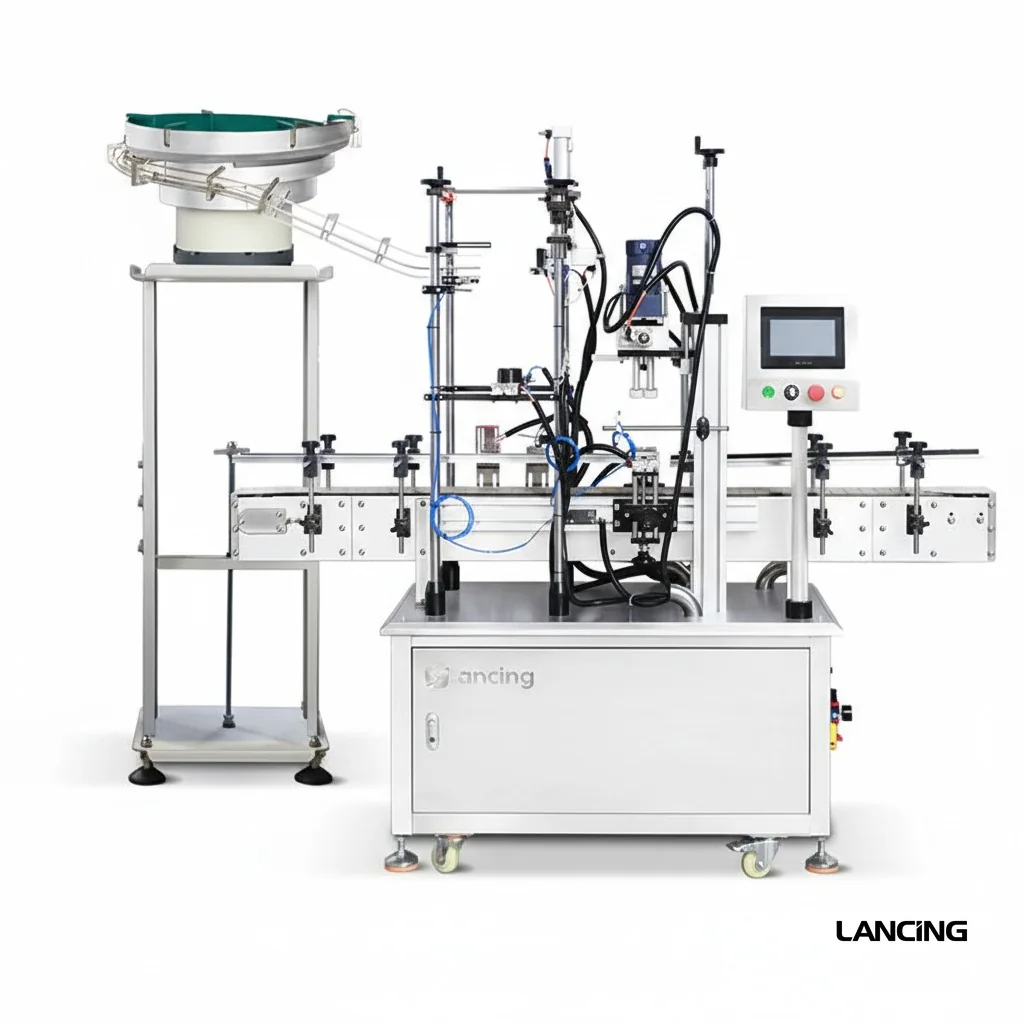
Automatic pump bottle capping machine with vibrating bowl
Shampoo and lotion capping

Shampoo and lotion capping machines for pumps, flip-tops and screw caps.

Shampoo and lotion capping machines for pumps, flip-top caps and screw closures. UK advice for personal-care bottle capping and cap feeding.

Discuss this requirement โ†’

Useful details to confirm

  • Bottle shape and material
  • Closure type: pump, flip-top or screw cap
  • Pump tube length and orientation
  • Target output and changeover frequency
  • Existing filling and labelling line
Selection notes

What to check before selecting machinery.

Bottle shape affects stability

Tall, oval or flexible bottles may need side belts or extra support during tightening.

Pump caps require orientation

Pump closures can have tubes, actuators and direction-sensitive features that influence feeding and placement.

Changeover is common

Personal-care lines often run multiple bottle and closure formats, so adjustment and change parts should be reviewed early.

Next step

Send bottle, cap and output details before final machine selection.

Photos and dimensions can start the discussion. Physical bottle and cap samples are normally the best way to confirm tooling, cap feeding, bottle support and realistic output.

FAQ

Common questions

Can one line cap pumps and screw caps?

Possibly, but tooling, cap feeding and changeover requirements must be checked for each closure.

Do flexible bottles cause capping problems?

They can. Side support or controlled gripping may be needed to prevent collapse or rotation.

Can pumps be automatically fed?

Some pump formats can be automatically handled, but samples are needed to confirm the feed route.

Hinged closure questions

Questions about flip-top and disc-top caps on personal-care bottles.

Can flip-top caps be tightened without damaging the lid?

Yes when the capping tool contacts a structurally suitable part of the threaded base and the hinge, lid and decoration remain clear of damaging loads. Use production closures because tooling that suits one flip-top design may not suit another.

Does a flip-top need to be closed during capping?

The approved state depends on the closure design and feeding route. A closed lid may reduce the envelope; an open lid may obstruct the head or guides. Confirm the supplier's intended condition and prove it in a trial.

Review hinged closure handling โ†’

Can disc-top caps be fed automatically?

Automatic feeding is possible when the cap's asymmetry, nesting, lid state, surface finish and chute handover can be controlled. Test bulk caps from normal production batches, not a small hand-selected set.

Which personal-care samples should be supplied?

Supply every bottle and closure format, bottles at realistic filled weight, caps in their normal incoming state, accepted finished packs and any pumps, liners or seals included in the product range. Add label position, target output and cleaning requirements.

Call nowContact us