
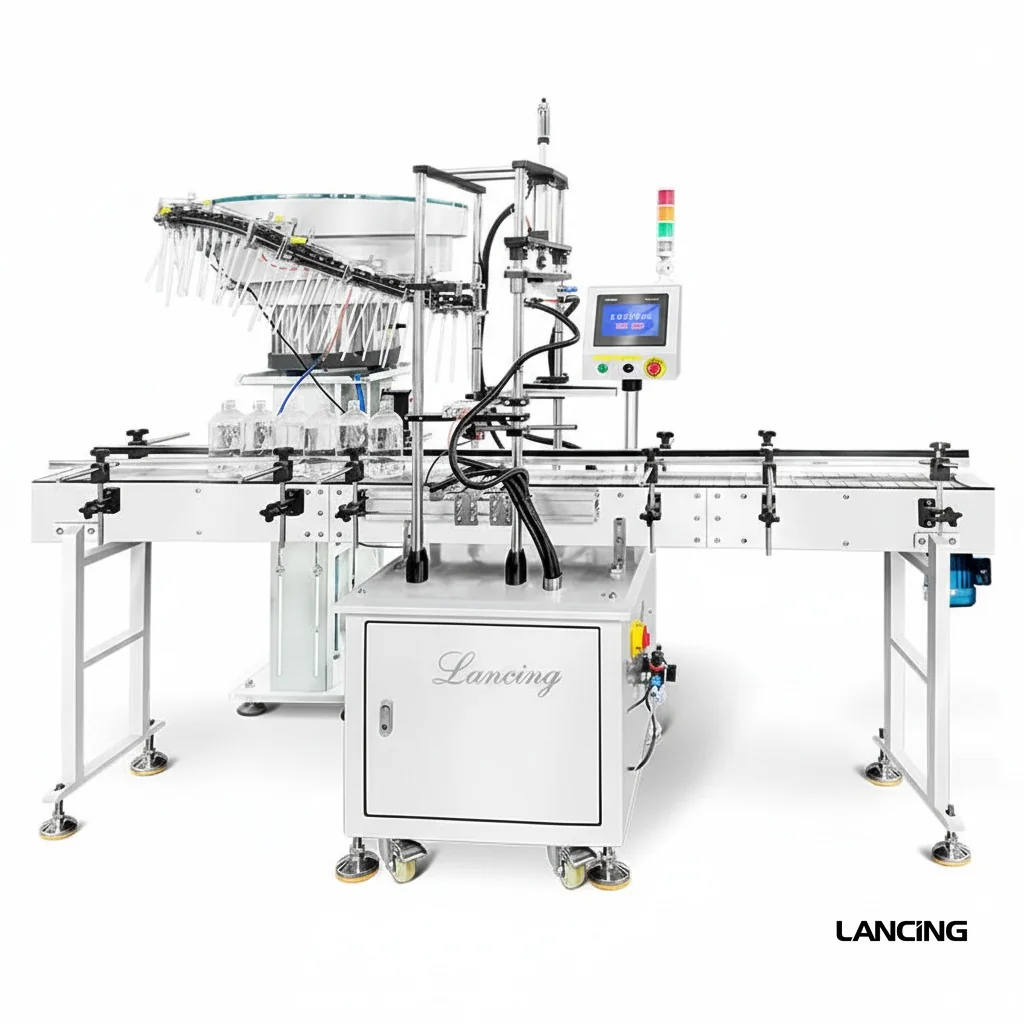
Cap sorting for capping machines: what affects reliable feeding.
Guide to cap sorting for capping machines, including bowl feeders, elevators, feed tracks and closure orientation for automatic cap placement.
Discuss this requirement →Cap sorting is the process of orientating caps so they arrive at the capping head correctly. A well-designed cap sorter can make the whole line more reliable; a poor feed route can cause jams, missed caps and lost output.
Cap sorting is the process of orientating caps so they arrive at the capping head correctly. A well-designed cap sorter can make the whole line more reliable; a poor feed route can cause jams, missed caps and lost output.

Guide to cap sorting for capping machines, including bowl feeders, elevators, feed tracks and closure orientation for automatic cap placement.
Discuss this requirement →Diameter, height, centre of gravity, skirt shape, liner and tamper band all affect how caps behave in a bowl or track.
The cap sorter needs to supply caps consistently faster than the line consumes them, with enough buffer to handle normal variation.
Pumps, triggers and highly decorated caps may need special handling, testing and sample-led design.
Photos and dimensions can start the discussion. Physical bottle and cap samples are normally the best way to confirm tooling, cap feeding, bottle support and realistic output.
A cap sorter orients caps so they can be fed to a capper in the correct position.
No. Some closure shapes are difficult and may need alternative handling.
Common causes include unsuitable cap geometry, worn tooling, wrong feed rate, contamination or incorrect adjustment.