
Capping machinery specialists — UK supply, installation and support01494 623015 · sales@lancinguk.com
Pick-and-place capping

Pick-and-place capping machines for difficult closures.

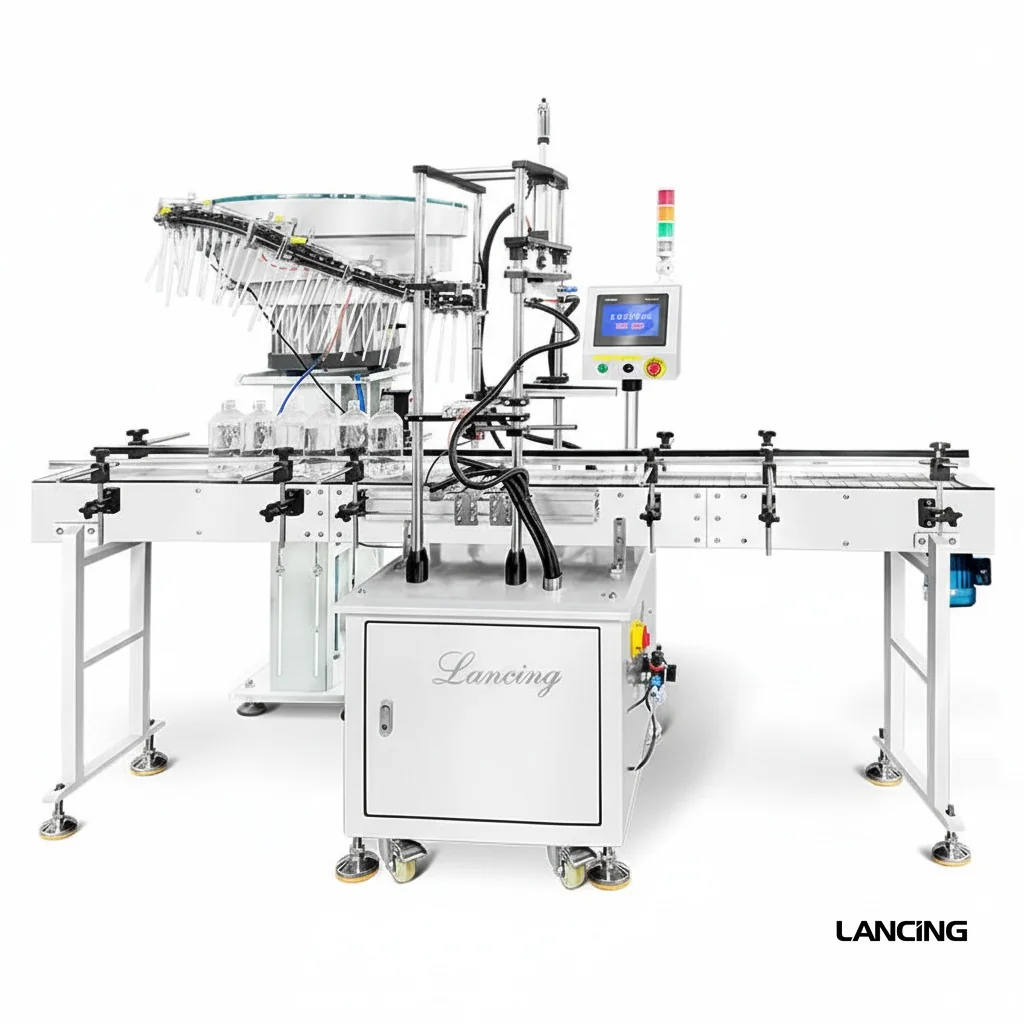
Pick-and-place capping is used when a closure needs careful orientation and controlled placement before tightening, pressing or seating. It can be helpful for pumps, triggers, plugs and closures that do not feed like a simple flat cap.

Machine specification

Practical specification points for this capping route.

Pick-and-place capping is used when a closure needs careful orientation and controlled placement before tightening, pressing or seating. It can be helpful for pumps, triggers, plugs and closures that do not feed like a simple flat cap.

Pump bottle cap feeding machine
Pick-and-place capping

Pick-and-place capping machines for difficult closures.

Pick-and-place capping machines for caps that need controlled presentation before tightening or pressing. UK advice for pumps, triggers and special closures.

Discuss this requirement →

Useful details to confirm

  • Cap geometry and orientation requirement
  • Bottle neck access
  • Manual or automatic cap supply
  • Target bottles per minute
  • Available space for pick movement
Selection notes

What to check before selecting machinery.

Placement quality prevents rejects

If a cap lands at an angle or misses the neck, tightening cannot correct the problem. Pick-and-place systems focus on reliable cap presentation before closing.

Tooling is closure-specific

The gripper, nest, vacuum pick-up or mechanical pick-up route depends on the cap shape, balance point and surface finish.

Cycle time must be matched

Pick-and-place movements add time. Output targets should be checked against the number of heads and the required placement accuracy.

Next step

Send bottle, cap and output details before final machine selection.

Photos and dimensions can start the discussion. Physical bottle and cap samples are normally the best way to confirm tooling, cap feeding, bottle support and realistic output.

FAQ

Common questions

When is pick-and-place capping needed?

It is considered when caps cannot be reliably dropped or fed directly onto the bottle neck.

Can pick-and-place handle pumps?

Often yes, but the pump tube, actuator and orientation must be reviewed using samples.

Is pick-and-place slower than direct cap feeding?

It can be slower, but it may be more reliable for awkward closures where direct feeding causes rejects.

Call nowContact us