
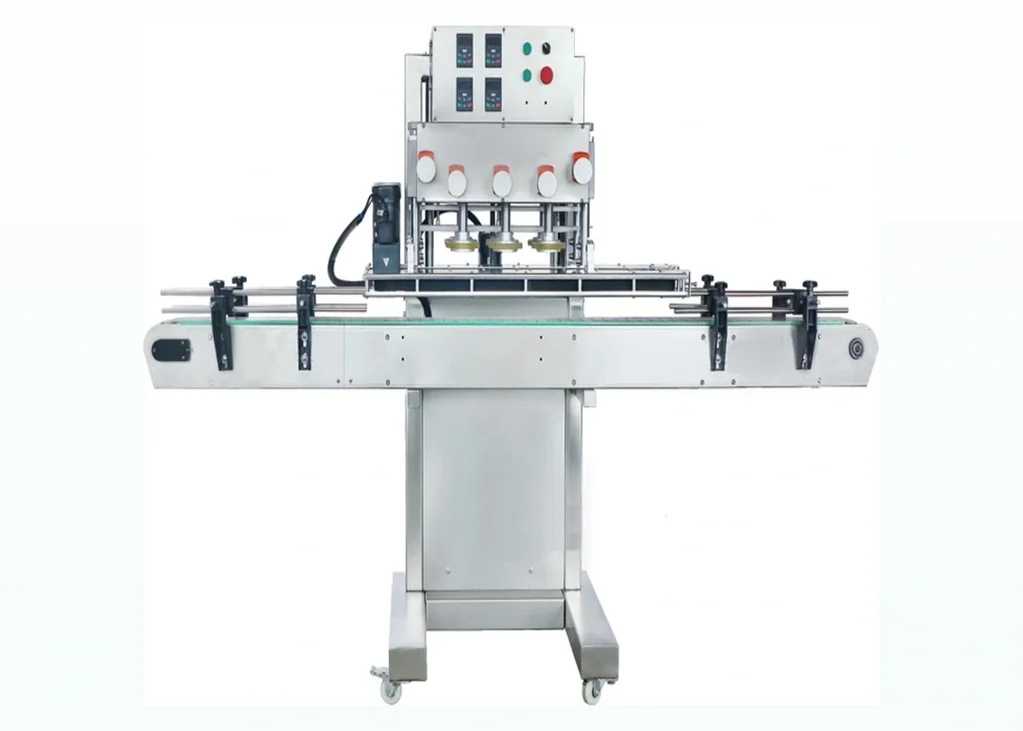
Spindle capping machines for inline screw-cap production
Belt and spindle cappers can tighten threaded closures while bottles move through a line, making them useful for higher-output screw cap production.
Ask about this application →Belt and spindle cappers can tighten threaded closures while bottles move through a line, making them useful for higher-output screw cap production.
Lancing can help shortlist practical capping machinery after reviewing cap type, neck finish, bottle stability, output target, torque requirement and the way caps are presented to the machine.

Belt and spindle cappers can tighten threaded closures while bottles move through a line, making them useful for higher-output screw cap production.
Ask about this application →Spindle cappers are often considered for round bottles, stable containers and threaded caps where continuous movement and repeatable tightening are needed.
The bottle must be controlled as the cap is tightened. Side belts, guides and conveyor settings become important where containers are light, tall or flexible.
Spindle capping can be combined with manual cap placement at lower speeds or cap feeding equipment where output and operator workload justify it.
Photos, dimensions and target output help identify the most likely capping route. Physical samples are normally the best way to confirm tooling, cap feeding and bottle support.
Choose a spindle capper when you need inline screw-cap tightening and the bottle can be controlled reliably through the capping section.
Some pump closures need specialist handling because of dip tubes and cap geometry. Samples should be checked before choosing a standard spindle route.
Sometimes, but shaped bottles need careful guide and side-belt assessment to prevent rotation or instability during tightening.